
May 9, 2025
Did you know that poor intimate hygiene can cause health problems like infections and discomfort? Keeping up with good hygiene practices is key for your health, more so after intimate activities.
By following the right intimate hygiene steps, you can lower the chance of getting infections and feel more comfortable. This article will show you why hygiene is important after intimacy. It also offers practical tips for staying clean.
Key Takeaways
- Understanding the importance of hygiene after intimacy
- Learning effective hygiene practices to prevent infections
- Discovering tips for maintaining good intimate hygiene
- Recognizing the impact of hygiene on overall health
- Practicing hygiene for comfort and well-being
Understanding the Connection Between Hygiene and Intimate Health
Knowing how hygiene impacts intimate health helps us prevent infections. Good hygiene is key for our intimate health and happiness.
Common Infections Related to Intimate Activities
Intimate activities can cause infections like urinary tract infections (UTIs), yeast infections, and bacterial vaginosis. These can be uncomfortable and may lead to serious health problems if not treated.
How Infections Spread During Intimacy
Infections spread through direct contact with infected bodily fluids during sex. This shows why good hygiene is vital to avoid infection.
Risk Factors That Increase Infection Susceptibility
Some things make you more likely to get infections. These include poor hygiene, having many sexual partners, and medical conditions. Knowing these risks helps us protect our intimate health.
By understanding hygiene’s role in intimate health, we can keep ourselves clean. This reduces the chance of getting infections.
Essential Pre-Intimacy Hygiene Practices
Good hygiene before intimacy is key to avoiding infections and enjoying a healthy time together. Simple habits can greatly lower infection risks and keep your intimate moments safe and enjoyable.
Personal Cleanliness Before Sexual Activity
Keeping yourself clean before sex is very important. Wash your genital area with mild soap and water to get rid of harmful bacteria. This easy step helps stop infections and makes intimacy healthier.
Also, dry your genital area well after washing to stop bacteria from growing. Wear clean clothes and change your underwear often to stay clean.
Proper Hand Hygiene and Its Importance
Good hand hygiene is key before getting intimate. Wash your hands with soap and water before touching your private areas or sex toys. This helps keep your intimate space clean and lowers infection risks.

Hygiene Considerations for Sex Toys and Accessories
It’s important to use clean sex toys and accessories. Choose ones made from non-porous materials and clean them as the maker suggests. Regularly disinfecting sex toys helps prevent infections.
Products and Practices to Avoid
Stay away from harsh soaps, douches, and other irritating products. They can upset your natural balance and cause irritation. Instead, use gentle, fragrance-free products made for intimate care.
The Role of Hygiene in Preventing Infections After Intimacy
Good hygiene after intimacy is key to keeping your intimate health safe. It’s important to practice good hygiene to lower infection risks and stay healthy.
Immediate Post-Intimacy Cleansing Routines
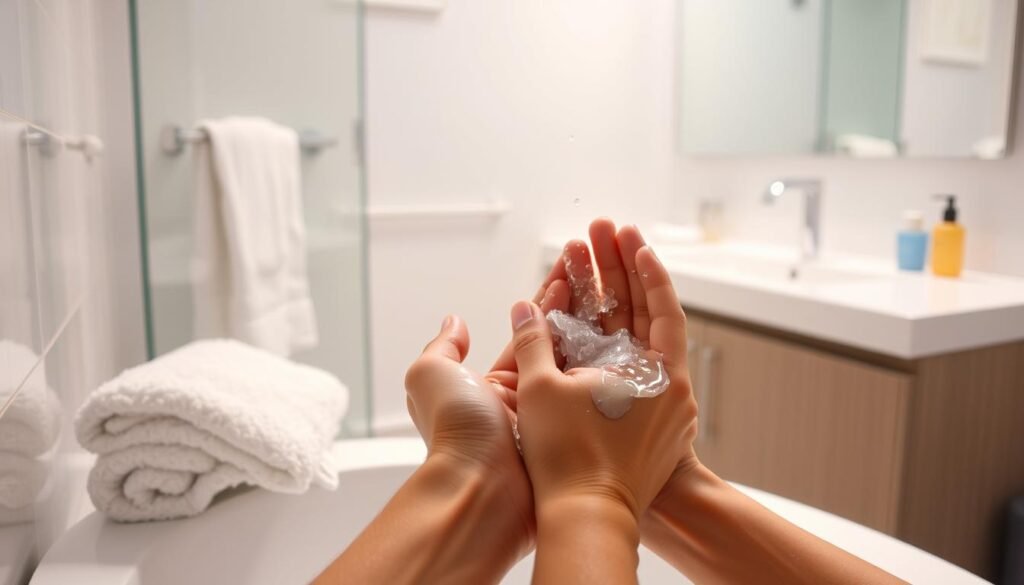
It’s important to clean your genital area right after intimacy. Use mild soap and water to wash it gently. This helps stop infections and keeps you clean.
Urinating After Sexual Activity: Why It Matters
Urinating after sex helps get rid of bacteria in your urinary tract. This can lower the chance of getting a urinary tract infection (UTI). It’s a simple step that can help a lot, mainly for women.
| Benefits of Urinating After Sex | Description |
|---|---|
| Reduces UTI Risk | Flushes out bacteria from the urinary tract |
| Promotes Genital Health | Helps maintain cleanliness and prevent infections |
Showering vs. Spot Cleaning: What's Necessary
Showering and spot cleaning both have their uses after intimacy. Showering is better for removing bacteria and pathogens. Spot cleaning is quicker when you can’t shower. Always use mild soap and water for both.
Maintaining Ongoing Hygiene in Relationships
Keeping hygiene up in relationships is essential for avoiding infections and keeping intimate health in check. Regular washing, cleaning sex toys, and urinating after sex are key. By making these habits part of your daily life, you can greatly reduce infection risks and keep your relationship healthy.
Special Hygiene Considerations for Different Types of Intimacy
Knowing the hygiene needs for different types of intimacy can lower infection risks. Each form of intimacy has its own hygiene needs to stop infections from spreading.
Hygiene Practices for Oral Intimacy
Good oral hygiene is key for oral intimacy. This means brushing and flossing regularly. It’s also important for both partners to know about any oral health problems. Using a mouthwash can also help.
Anal Activity and Infection Prevention
Anal activity needs careful hygiene to avoid bacteria spread. Proper cleaning of the anal area before and after is vital. Using condoms can also stop bacteria from spreading.
Menstruation and Intimate Hygiene
Intimate hygiene is very important during menstruation. Regularly changing sanitary products and keeping genital areas clean can stop bacterial growth and infections.
When to Postpone Intimacy for Health Reasons
Knowing when to delay intimacy for health reasons is key. If you or your partner have active infections or symptoms, wait until they’re gone.
- Listen to your body and act on it.
- Talk openly with your partner about health issues.
- Focus on hygiene practices for your intimate activities.
Conclusion
Good hygiene is key for your health, even more so for intimate activities. Knowing the role of hygiene in preventing infections after intimacy helps protect your intimate health. This way, you can avoid infections.
Keeping up with sexual health and hygiene is vital. It helps prevent infections and makes intimate moments more comfortable. This includes following important hygiene steps before and after intimacy. It also means considering special needs for different types of intimacy.
By focusing on hygiene, you can have healthier, more enjoyable intimate relationships. It’s about being careful with your hygiene and making it a regular part of your health routine. This supports your overall well-being and keeps your intimate life healthy and comfortable.
FAQ
Why is hygiene important for preventing infections after intimacy?
Hygiene is key in stopping infections after intimacy. It helps cut down on bacteria and pathogens. This can prevent UTIs, yeast infections, and bacterial vaginosis.
What are some essential pre-intimacy hygiene practices?
Before intimacy, keep yourself clean. Wash your genital area well. Also, wash your hands properly. Make sure sex toys and accessories are clean too.
How can I maintain good hygiene after intimacy?
After intimacy, urinate to flush out bacteria. Shower or spot clean to remove pathogens. Keep good hygiene in your relationship ongoing.
Are there special hygiene considerations for different types of intimacy?
Yes, different types of intimacy need special care. Oral intimacy needs good oral hygiene. Anal activity requires cleaning the anal area. Menstruation needs extra attention to hygiene.
What products and practices should I avoid for good intimate hygiene?
Stay away from harsh soaps and douches. They can upset the natural balance of bacteria in your genital area.
When should I postpone intimacy for health reasons?
Postpone intimacy if you have an active infection. Also, if you have symptoms like itching, burning, or unusual discharge. This protects your health and your partner’s.
How can I maintain ongoing hygiene in my relationship?
For ongoing hygiene, wash regularly. Clean sex toys and accessories well. Talk to your partner about your hygiene needs and practices.