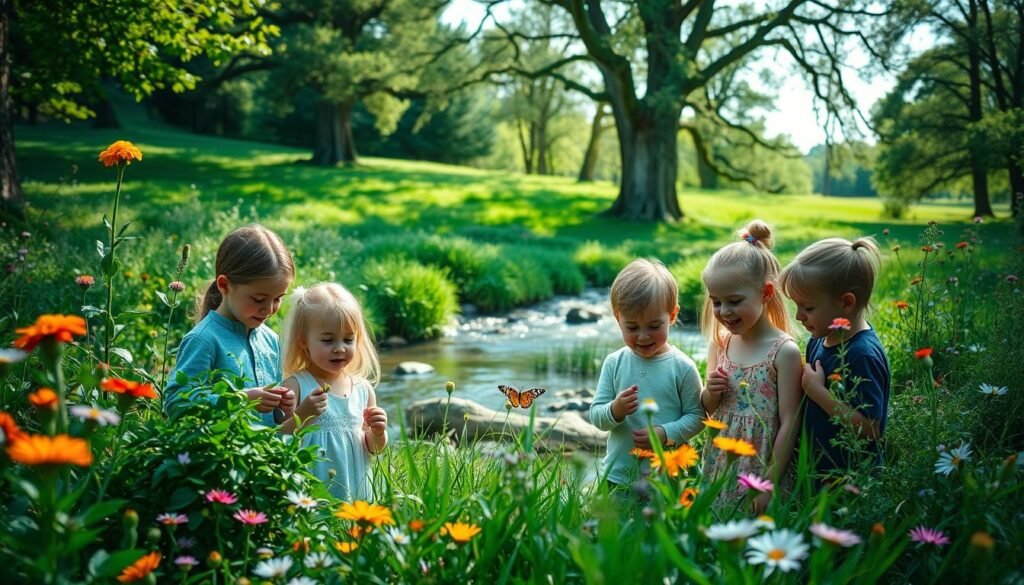
Nature Deficit Disorder” in Kids:

May 25, 2025

Children today are spending less time outdoors. This trend worries parents and health experts. Richard Louv’s term, “Nature Deficit Disorder,” points out the dangers of this shift away from nature.

This trend affects children’s health a lot. Studies show that playing outside can make kids healthier and happier.

Looking into “Nature Deficit Disorder,” we see its effects go beyond just physical health. It also impacts how kids think and feel emotionally.

Key Takeaways

  • Children’s exposure to outdoor activities is declining.
  • “Nature Deficit Disorder” is linked to various health concerns.
  • Outdoor play benefits children’s physical and mental health.
  • Early exposure to nature can have long-term benefits.
  • Parents and caregivers play a crucial role in promoting outdoor activities.

Understanding Nature Deficit Disorder

The concept of Nature Deficit Disorder shows how crucial it is for kids to connect with nature. This issue has become more well-known in recent years. It affects kids’ health and how they grow.

Origin of the Term and Its Creator

Richard Louv, an American author, introduced the term Nature Deficit Disorder. His book, “Last Child in the Woods,” made people aware of the issue. Louv’s work emphasizes the role of nature in kids’ lives.

Definition and Core Concepts

Nature Deficit Disorder happens when kids don’t spend enough time outside. It leads to physical, emotional, and mental problems. To fix this, we need to get kids outside more. Activities like connecting children with nature and nature therapy for kids can help.

The Historical Context: Children's Changing Relationship with Nature

Children’s bond with nature has changed a lot over time. In the past, kids spent most of their free time outside. They did things that helped them connect deeply with nature.

How Children Interacted with Nature in Previous Generations

In the old days, kids played outside until the streetlights turned on. They explored their neighborhoods and played games. They climbed trees, picked wild berries, and played in creeks.

This outdoor play was key for childhood development outdoors. It helped kids stay active, think creatively, and solve problems.

As one author said, “Children need freedom and responsibility to learn from their actions. They should feel the effects of their choices, take pride in their work, and learn from failures.” This shows how important outdoor experiences are for kids.

The Shift Toward Indoor, Screen-Based Activities

Nowadays, kids spend more time inside, looking at screens. Digital technology has made outdoor play less common. Many kids prefer video games and watching videos over playing outside.

This change worries people because kids are missing out on outdoor play benefits. They’re not as active and don’t get to socialize as much.

ActivityPrevious GenerationsCurrent Generation
Outdoor PlayCommon, unstructured, and frequentLess common, structured, and less frequent
Screen TimeLimited or non-existentPrevalent and often excessive

Parents and caregivers can help by encouraging outdoor play. They should limit screen time. This way, kids can enjoy the outdoors and develop a better relationship with nature.

Nature Deficit Disorder in Kids: Recognizing the Signs

It’s key for parents and caregivers to spot Nature Deficit Disorder early. Doing so helps in taking steps to lessen its impact.

Behavioral Indicators

Children with Nature Deficit Disorder show certain behavioral changes. These changes fall into several main areas.

Attention and Focus Issues

One major sign is trouble focusing and staying attentive. Children with Nature Deficit Disorder may find it hard to concentrate and get easily sidetracked.

Physical Activity Patterns

They tend to do less outdoor play and more sitting around. Getting them involved in nature-based activities can help.

Emotional and Cognitive Symptoms

Nature Deficit Disorder also shows up in emotional and cognitive ways.

Stress and Anxiety Manifestations

Not enough nature can lead to more stress and anxiety in kids. Nature therapy can help lower these feelings.

Creativity and Problem-Solving Impacts

It can also hurt a child’s creativity and problem-solving abilities. Activities that connect them with nature can boost these skills.

Symptom CategorySpecific Indicators
BehavioralAttention and focus issues, decreased physical activity
Emotional and CognitiveStress, anxiety, reduced creativity, impaired problem-solving skills

The Science Behind Nature's Impact on Child Development

Scientists have been studying how nature affects kids’ growth. They found that being in nature helps kids in many ways. This includes their brains, bodies, and minds.

Neurological Benefits of Nature Exposure

Being outside helps kids think better and be more creative. Studies show that nature makes kids’ brains work better. It also helps them relax and feel less stressed.

Physical Development and Nature Interaction

Playing outside is key for kids’ health. It makes them strong, coordinated, and skilled. Plus, it helps them get vitamin D, which is good for their bones.

Psychological Well-being and Natural Environments

Nature is great for kids’ mental health. It makes them feel less anxious and happier. Being in nature also helps kids feel safe and calm.

Modern Barriers to Children's Nature Connection

The modern world has made it harder for kids to connect with nature. More people live in cities and use technology, so kids spend less time outside.

Technology and Screen Time Dominance

Digital devices have made kids watch screens a lot. Reducing screen time for kids is a big worry for parents. Too much screen time means kids play outside less and feel less connected to nature.

Urban Planning and Reduced Green Spaces

Urban planning affects how much green space cities have. As cities grow, green areas often get smaller. This makes it hard for kids to find places to enjoy nature. Adding nature connection activities to city plans can help.

Urban Planning StrategiesBenefits for Children
Incorporating green roofs and wallsIncreased exposure to nature
Creating urban parks and gardensOpportunities for outdoor play and exploration
Implementing nature-based education programsEnhanced learning experiences and connection with nature

Parental Fears and Safety Concerns

Parents worry about safety, which keeps kids from playing outside. They might fear traffic, strangers, and other dangers. Teaching parents and starting community programs can help kids play outside safely.

The Consequences of Disconnection from Nature

Children are spending less time outdoors, leading to health problems. Nature deficit disorder in kids is a growing issue. It’s important to understand its effects to help our children.

children's health and nature connection

Physical Health Implications

Not enough outdoor time can harm kids’ health. It can lead to obesity, heart problems, and issues with vitamin D and the immune system.

Obesity and Cardiovascular Health

Less playtime means more sitting, which can cause obesity and heart issues in kids. Playing outside regularly helps keep them healthy and fit.

Vitamin D Deficiency and Immune Function

Sunlight is key for vitamin D, which is good for bones and the immune system. Kids who don’t get enough sunlight are at risk of vitamin D deficiency and weaker immune systems.

Mental Health Concerns

Nature deficit disorder is linked to mental health issues. This includes depression, anxiety, and problems with attention and thinking.

Depression and Anxiety Disorders

Being away from nature can make kids stressed, leading to depression and anxiety. Nature therapy can help improve mental health.

Attention Disorders and Cognitive Function

Being in nature helps kids focus better and think clearer. Kids who don’t get enough nature time might struggle with attention.

Social Development Issues

Not being in nature can also hurt kids’ social skills. It affects how they interact with peers and connect with their community.

Peer Interaction Skills

Outdoor play helps kids learn how to work with others. It’s a key part of developing social skills.

Community Connection and Empathy

Nature activities help kids feel part of a community. They learn to understand and care for others, building empathy and social bonds.

Research and Studies on Nature Deficit Disorder

Concern about kids losing touch with nature is rising. Research on Nature Deficit Disorder is key. It reveals how less nature time affects kids’ health.

Key Scientific Findings

Studies show kids who spend more time outdoors do better in school. They focus better and are more creative. Research also links nature time to fewer ADHD symptoms.

Nature also helps kids feel better emotionally. It lowers stress and anxiety.

Ongoing Research Initiatives

New studies look at how Nature Deficit Disorder affects kids’ social skills and health later in life. They also explore how city planning and green spaces can help. These efforts aim to help kids stay connected to nature and avoid its negative effects.

Nature Therapy: Structured Approaches to Reconnection

Nature therapy offers many programs to help kids connect with nature. These programs are known to improve kids’ health and well-being.

Forest Schools and Nature-Based Education

Forest schools started in Scandinavia. They use nature as a classroom. Kids learn by doing things like foraging and camping.

These activities help kids appreciate nature. They also improve their social, emotional, and thinking skills.

Wilderness Therapy Programs

Wilderness therapy combines outdoor fun with therapy. Kids do things like hiking and rock climbing. This helps them grow stronger and more confident.

It’s great for kids with mental health issues or behavioral problems.

Horticultural Therapy for Children

Horticultural therapy uses gardening to help kids. It lets them connect with nature in a caring way. Kids learn to relax and feel a sense of pride.

It helps kids with different needs, like developmental disorders and emotional challenges.

Therapy TypeKey ActivitiesBenefits
Forest SchoolsForaging, camping, outdoor craftsSocial, emotional, and cognitive development
Wilderness TherapyHiking, camping, rock climbingResilience, self-confidence, teamwork skills
Horticultural TherapyGardening, plant careRelaxation, responsibility, sense of accomplishment

Practical Solutions for Parents and Caregivers

Teaching kids to love nature is a lifelong gift. It begins with simple daily habits. By adding nature to their daily lives, parents can help kids appreciate the outdoors.

Daily Nature Connection Activities

Simple daily tasks can strengthen a child’s bond with nature. These activities include:

Morning and Evening Rituals

Starting the day with a short walk or watching the sunrise together is great. Evening rituals like stargazing or family dinners in the garden also create special memories.

Micro-Nature Experiences

Even in cities, kids can have nature moments. They can watch plants on balconies or birds at backyard feeders.

Weekend Nature Immersion Ideas

Weekends are perfect for deeper nature experiences. Here are some ideas:

Family Hiking and Exploration

Going on hikes or exploring parks and nature reserves is fun and educational for the whole family.

Nature-Based Learning Excursions

Visiting botanical gardens or nature centers can be enriching for kids. They can also join citizen science projects.

Creating Nature-Rich Home Environments

Turning homes into nature-rich spaces encourages kids to connect with nature.

Indoor Plants and Natural Materials

Adding indoor plants and natural decor brings the outdoors inside.

Outdoor Space Optimization

Creating gardens or installing bird feeders makes outdoor time more inviting. Even a simple picnic area can be a great spot to spend time together.

nature connection activities

Educational Approaches to Combat Nature Deficit Disorder

Schools can help kids connect with nature through new learning methods. By adding nature to school subjects, schools can fight Nature Deficit Disorder.

Integrating Nature into School Curricula

One good way is to add nature to school lessons. This means making outdoor places part of learning. For example, science lessons can happen in a school garden, where students can see plants grow.

Outdoor Classrooms and Learning Spaces

Creating outdoor classrooms is another great idea. These spaces can be used for many activities, like reading or science experiments.

BenefitsOutdoor ClassroomsTraditional Classrooms
Learning EnvironmentNature-based, interactiveIndoor, structured
Student EngagementHigh, due to hands-on experiencesVariable, often lecture-based

Teacher Training for Nature-Based Education

Teachers need training to teach nature-based lessons. They learn about outdoor teaching, safety, and adapting lessons for outdoors. This training makes nature-based education better.

By using these methods, schools can fight Nature Deficit Disorder and make learning more fun for students.

Balancing Technology and Nature in Children's Lives

In today’s world, it’s key to balance tech use and nature for kids’ health. With more time indoors and on screens, we need ways to keep a balance. This balance is vital for their well-being.

Setting Healthy Screen Time Limits

Setting up screen-free zones and times, like during meals or before bed, cuts down screen time. Parents can also set daily limits and encourage kids to play outside. The American Academy of Pediatrics suggests 1-2 hours of screen time daily for kids aged 2-18.

Tips for Setting Screen Time Limits:

  • Create a family media plan
  • Designate screen-free areas
  • Encourage outdoor activities

Using Technology to Enhance Nature Connection

Technology can actually help kids connect more with nature. Apps that help identify plants and animals, online resources for outdoor lovers, and digital tools for nature journaling can all make nature more engaging.

App/ResourceDescription
iNaturalistAn app for identifying plants and animals
NatureWatchA platform for recording and sharing nature observations

Digital Detox Strategies for Families

Digital detoxes can help families bond and connect with nature. This means setting aside device-free days or weekends. Or planning trips without devices.

Benefits of Digital Detox:

  • Improved family bonding
  • Increased outdoor activity
  • Enhanced creativity and imagination

Conclusion: Fostering a New Generation of Nature-Connected Children

The world faces a big challenge with nature deficit disorder in kids. It’s vital to reconnect children with nature for their growth. We’ve seen the signs, the science, and the barriers to nature connection.

To fight nature deficit disorder, we need to engage in activities that connect us with nature. This helps kids appreciate and understand the natural world. It boosts their physical, emotional, and mental health.

Parents, caregivers, and teachers can make a big difference. They can add nature connection to daily life. Together, we can raise a generation of kids who care for the environment and are healthy.

Creating a nature-connected generation needs everyone’s effort. We must value nature-based experiences and teach environmental care. By doing this, we can overcome nature deficit disorder and ensure a better future for all.

FAQ

What is Nature Deficit Disorder?

Nature Deficit Disorder is a term by Richard Louv. It describes kids spending less time outside and more on screens. This leads to a disconnection from nature.

What are the signs of Nature Deficit Disorder in kids?

Signs include trouble focusing, less physical activity, and more stress. Kids also show less creativity and problem-solving skills.

How can parents help children connect with nature?

Parents can start by making nature a part of daily life. Morning and evening rituals, small nature moments, and family hikes are great ideas.

What are some benefits of nature exposure for children’s development?

Being in nature boosts kids’ brains, physical health, and mental well-being. It’s very beneficial for their growth.

How can technology be used to enhance nature connection?

Technology can help by using apps and games for outdoor fun. It encourages kids to explore and learn about nature.

What are some strategies for balancing technology use with nature connection?

Setting screen time limits and digital detoxes are good starts. Using tech to support outdoor activities is also helpful.

How can educators integrate nature into school curricula?

Teachers can use outdoor classrooms and nature-based learning. They should also get training on teaching in nature.

What are some benefits of forest schools and nature-based education?

Forest schools boost learning, creativity, and environmental awareness. They offer many benefits for kids.

How can families create nature-rich home environments?

Families can add indoor plants and natural materials. They should also make outdoor spaces inviting for nature exploration.