June 6, 2025
Many think a curved penis means there’s a problem. But, the truth is, some curve is normal. Studies show up to 70% of men have some penile curvature.
So, what’s considered normal, and when should you worry? It all comes down to knowing the types of penis curvature and why they happen. Some men get a curve from injury or health issues. Others are just born with it.
Key Takeaways
- Some degree of penis curvature is normal.
- Up to 70% of men have some degree of curvature.
- The causes of curvature can vary, including injury or condition.
- Understanding the different types of curvature is key.
- Not all curvature requires medical attention.
Understanding Penis Anatomy and Natural Variations
The human penis comes in many shapes and sizes, including curvatures. It’s more common than you might think. Knowing how the penis is made helps us understand why it varies.
Basic Penile Structure and Development
The penis has three main parts: the root, the shaft, and the glans penis. The shaft is filled with spongy tissue that gets hard when excited. How these parts grow can change, leading to different penis shapes.
How Curvature Naturally Occurs
Penis curvature happens because of how the erectile tissue grows. This growth can be influenced by developmental factors and genetic influences.
Developmental Factors
Hormones play a big role in how the penis grows, especially during fetal development and puberty. This can cause the penis to curve.
Genetic Influences
Genetics also shape the penis’s shape and curvature. Just like our faces and body types, the penis’s anatomy is influenced by our genes.
Knowing about these factors can make men feel better about their penis’s shape. Many men have some curvature without it affecting their sex life.
The Reality of Penis Curvature: Common Myths Debunked
There’s a lot of wrong information about penis curvature that worries many men. They often worry about their penis shape because of false beliefs about what’s normal. Let’s look at some common myths and the truth behind them.
Myth: A Straight Penis is the Only Normal Shape
The belief that a penis must be straight to be normal is wrong. Natural variations in penis shape are common, and some curvature is normal. Studies show many men have some curvature.
Myth: Curvature Always Indicates a Medical Problem
While some curvatures can point to health issues, like Peyronie’s disease, not all curvature is a cause for concern. Many men with curvature don’t have any problems or symptoms.
Myth: All Curvature Affects Sexual Performance
As one expert says, “Curvature of the penis does not necessarily impact sexual function.”
‘The impact of curvature on sexual performance varies from man to man.’
Some men with curvature don’t face any sexual performance issues, while others might. It’s key to remember that curvature is just one part of sexual health.
By knowing the truth about penis curvature, men can stop worrying and focus on their overall sexual health.
What Defines “Normal” Penis Curvature
The idea of “normal” penis curvature includes many variations that are seen as typical and healthy. Knowing about these variations can help clear up worries and wrong ideas about penis shape and how it works.
Typical Degrees of Curvature
Many studies show that a lot of men have some penis curvature. Experts say that less than 30 degrees of curvature is normal. But, if the curve is more than that, it might mean there’s a health issue that needs a doctor’s check.
Common Directions of Natural Curvature
Penis curvature can go in different directions, like up, down, left, or right. Most often, it’s up or to the left. But, every man is different, and most don’t have big problems with their curve.
Changes During Different States (Flaccid vs. Erect)
The curve of the penis can change when it’s soft versus when it’s hard. For some, the curve is more noticeable when it’s hard. This is because of how blood flows and the penile tissues change during an erection.
| State | Typical Curvature | Variation Range |
|---|---|---|
| Flaccid | Variable | 0-90 degrees |
| Erect | < 30 degrees | 0-60 degrees |
Understanding these changes can help men get a better grasp of their own body. It can also help reduce worries about penis curvature.
Myths About Penis Curvature: What’s Normal and What’s Not
Misconceptions about penis curvature are common. They come from cultural, historical, and media influences. You might have believed certain things about penis shape or curvature. But how true are these beliefs?
Cultural and Historical Misconceptions
Culture and history have shaped how we see penis curvature. In some places, a curved penis is seen as strong. In others, it’s seen as a flaw. Understanding these cultural views is key to clearing up myths about penis shape.
How Media and Pornography Distort Perceptions
The media, especially pornography, affects how we see penis shape. Porn often shows unrealistic penis sizes and shapes. This can lead to wrong ideas about what’s normal. Remember, these images don’t show most men.
Scientific Reality vs. Popular Beliefs
Science often goes against what people think about penis curvature. Studies say many men have some curvature. In fact, straight penises are not as common as you might think. Knowing the science behind penis shape can help you see the truth and feel better about your body.
By understanding the cultural, historical, and media factors behind penis curvature myths, you can see what’s real. This knowledge helps you view penis shape with a clearer and more informed mind.
When Curvature May Signal a Medical Condition
It’s important to know the difference between normal penis curvature and signs of a medical issue. Some curvature is okay, but certain signs might mean you need to see a doctor.
Peyronie’s Disease: Symptoms and Risk Factors
Peyronie’s Disease causes scar tissue in the penis, leading to curvature. Symptoms include pain when erect, noticeable curvature, and sometimes trouble getting an erection. Risk factors include family history, past injuries, and certain tissue disorders.
Common symptoms of Peyronie’s Disease:
- Pain during erections
- Significant curvature or bending
- Presence of scar tissue (plaque)
- Erectile dysfunction
Congenital Curvature vs. Acquired Curvature
Congenital curvature is there from birth, caused by uneven tissue growth. Acquired curvature happens later, often from injury or Peyronie’s Disease. Knowing the type of curvature helps figure out the right treatment.
| Characteristics | Congenital Curvature | Acquired Curvature |
|---|---|---|
| Time of Onset | Present at birth | Develops later in life |
| Cause | Uneven tissue development | Injury, Peyronie’s Disease, etc. |
| Associated Symptoms | Usually none | Pain, erectile dysfunction |
Pain, Erectile Dysfunction, and Other Warning Signs
Some curvature is normal, but certain signs can mean a bigger problem. Pain during erections, noticeable changes in curvature, or trouble getting an erection are red flags. These could point to Peyronie’s Disease or other issues.
If you notice these symptoms, seeing a doctor is crucial. They can help figure out what’s wrong and treat it. Early action can make symptoms better and prevent more problems.
The Psychological Impact of Penis Curvature Concerns
Did you know how much penis shape and curvature can affect your mind? Worries about penis curvature can lead to body image issues. These issues can hurt your self-esteem and overall well-being.
Body Image Issues and Self-Esteem
Body image issues from penis curvature can make you feel shy about your body. This feeling comes from what society expects. It’s important to know that different penis shapes and curvatures are common.
Relationship and Intimacy Challenges
Penis curvature worries can also mess with your relationships and intimacy. You might worry about talking to your partner about it. Or fear it will affect your sex life. Talking openly with your partner can help ease these worries.
Strategies for Managing Anxiety About Penile Appearance
Handling anxiety about penis appearance needs self-acceptance, learning, and sometimes professional help. Knowing that some curvature is normal can help. If your worries are big, talking to a healthcare expert can offer advice and reassurance.
| Strategy | Description |
|---|---|
| Self-Acceptance | Embracing your body as it is, with its unique characteristics. |
| Education | Learning about normal variations in penis curvature and the causes of curvature. |
| Professional Help | Seeking advice from healthcare professionals if concerns are impacting daily life. |
When to Seek Medical Advice for Penis Curvature
If you’re worried about your penis’s shape, knowing when to see a doctor is key. Penis curvature, or penile curvature, can differ a lot from person to person. While some curvature is normal, certain signs might mean you need to see a doctor.
Specific Symptoms That Warrant Medical Attention
Look for these symptoms to decide if you need to see a doctor:
- Pain during erections or sex
- A noticeable change in the degree or direction of curvature
- Difficulty getting or keeping an erection
- A lump or hard plaque in the penis
These signs might mean you have a condition like Peyronie’s disease or another issue with your penis.
What to Expect During a Urological Consultation
At a urology visit for penis curvature, you’ll get a detailed check-up and talk about your symptoms. The doctor might:
- Do a physical check of your penis
- Ask about your health history and symptoms
- Talk about possible treatments based on your diagnosis
Preparing for Your Doctor’s Appointment
To get the most from your visit, prepare by:
- Writing down your symptoms and when they started
- Listing any medicines or supplements you take
- Preparing questions for your doctor
Being ready will help you have a useful talk and get the right care for your issue.
Diagnostic Approaches for Problematic Curvature
Understanding how to diagnose penis curvature is key. When you see a doctor, they start with your medical history and a physical check-up.
Physical Examination Procedures
A doctor will check your penis to see how curved it is. They look at it when it’s soft and hard. This helps find out how bad the curve is and what might be causing it.
Imaging and Other Diagnostic Tests
Sometimes, tests like ultrasound or X-rays are needed. These help find out if there’s scar tissue or Peyronie’s disease. Doctors might also check blood flow and how well you can get an erection.
Assessing Severity and Impact on Function
The doctor will measure how curved your penis is and how it affects sex. They’ll talk about your symptoms and any problems you have during sex. This helps decide the best treatment for you.
Knowing about these diagnostic steps helps you understand your care better. It lets you make informed choices about your health.
Treatment Options for Abnormal Penis Curvature
There are many ways to treat abnormal penis curvature. You can choose from non-surgical methods to surgery. The right choice depends on how severe your condition is, your health, and what you prefer.
Non-Surgical Approaches and Medications
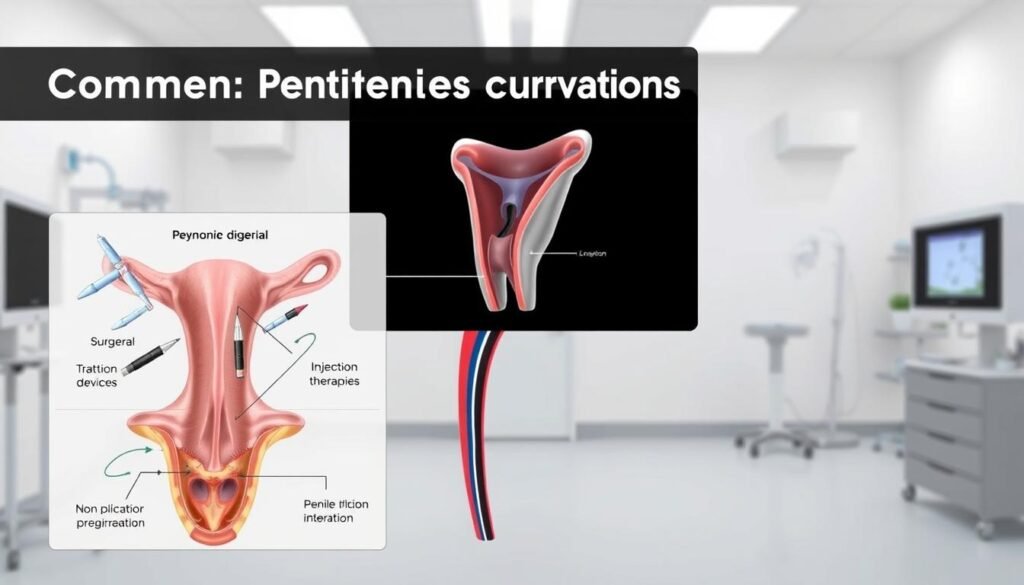
For mild cases, non-surgical treatments are often the first step. You might take pentoxifylline pills or get collagenase clostridium histolyticum injections. These can help reduce the curve in some men.
“The use of collagenase has been a big step forward in treating Peyronie’s disease,” a study in the Journal of Urology found.
Surgical Interventions: Types and Considerations
If non-surgical methods don’t work, or if the curve is too severe, surgery might be needed. There are different surgeries like plication, grafting, and penile implants. Each has its own benefits and risks.
Your doctor will talk about these options with you. This way, you can make a choice that’s right for you.
Emerging Treatments and Clinical Trials
New treatments are being researched, with some promising results in clinical trials. These include new drugs and other non-surgical methods. Joining a clinical trial could give you access to new treatments.
When looking at treatment options, it’s key to talk to a healthcare professional. They can help you decide the best path for your situation. Knowing your options helps you make a choice that’s right for you.
Living Confidently with Natural Penis Curvature
Embracing your natural penis curvature can boost your confidence in intimate moments. It’s important to know that penis shapes and curvatures vary. Many men have some degree of curvature. This understanding can reduce anxiety and foster a positive body image.
Sexual Techniques and Position Adaptations
Trying different sexual positions can help you and your partner find what works best. Some positions might feel more comfortable or enjoyable. Being open to trying new things can make sex better. Communication with your partner is crucial for finding positions that both of you like.
Partner Communication Strategies
Talking openly about your concerns or questions with your partner can strengthen your bond. It’s good to share what you’re comfortable with and what you enjoy. This way, you both can face any challenges together. Honest communication builds a deeper connection and can reduce anxiety about penis curvature.
Building Body Confidence and Self-Acceptance
Building confidence means accepting your body as it is. Focus on what you can control. Practicing self-care and self-compassion can improve your body image. Knowing you’re not alone in penis curvature can help you accept yourself more.
By using these strategies, you can live more confidently with your natural penis curvature. This can boost your self-esteem and make your sexual experiences better.
Preventing Acquired Penis Curvature
You can lower the chance of getting penis curvature by being safe during sex and keeping your penis healthy. Knowing why it happens and acting early are crucial steps.
Injury Prevention During Sexual Activity
Pay attention to how you’re positioned and how tense you are during sex. Communicate with your partner about any discomfort. This helps avoid injuries that could cause curvature.
General Penile Health Practices
Good penile health means regular hygiene and watching for any unusual changes. Eating well and exercising often helps your sexual health too.
Early Intervention for Minor Trauma
If you get minor trauma or pain, get medical help right away. Don’t ignore symptoms. Early treatment can greatly improve your outcome.
Conclusion: Embracing Anatomical Diversity
Knowing that penis curvature is natural can change how you see penile health. Accepting this diversity helps you worry less and focus on staying healthy overall.
Accepting your body and others is key to embracing anatomical diversity. Curvature can happen naturally, not always meaning there’s a health problem.
Creating a culture that values diversity helps us overcome stigmas around penile health. It encourages honest talks about what makes a penis healthy. This change can improve both mental and physical health for everyone.
FAQ
What is considered a normal degree of penis curvature?
A curvature of up to 30 degrees is usually okay. But, it’s not just about the degree. How it affects you and any symptoms matter too.
Can penis curvature change over time?
Yes, it can change due to injury, medical conditions, or aging. Sometimes, it stays the same, and sometimes it gets better or worse.
Does penis curvature affect fertility or sexual performance?
Usually, it doesn’t affect fertility or sex performance. But, big curvatures with pain or trouble getting an erection can be a problem. Always talk to a doctor if you’re worried.
How is Peyronie’s disease diagnosed?
Doctors use a physical exam, medical history, and sometimes ultrasound to diagnose Peyronie’s disease. They check the curvature and look for scars or plaques.
Are there any non-surgical treatments for penis curvature?
Yes, there are non-surgical options like collagenase injections, traction devices, and oral treatments. The best one depends on the cause and how bad the curvature is.
When should I seek medical advice for penis curvature?
See a doctor if your curvature changes a lot, you have pain during an erection, or trouble getting or keeping an erection. Early help can figure out what’s going on and how to fix it.
Can cultural or historical misconceptions about penis curvature affect my perception of it?
Yes, old beliefs and media can shape how we see penis curvature. Talking to a doctor and learning the facts can help you feel better.
How can I build confidence with natural penis curvature?
Understanding that different curvatures are normal is key. Accept yourself, try new things with your partner, and focus on your overall health. This can help you feel more confident.