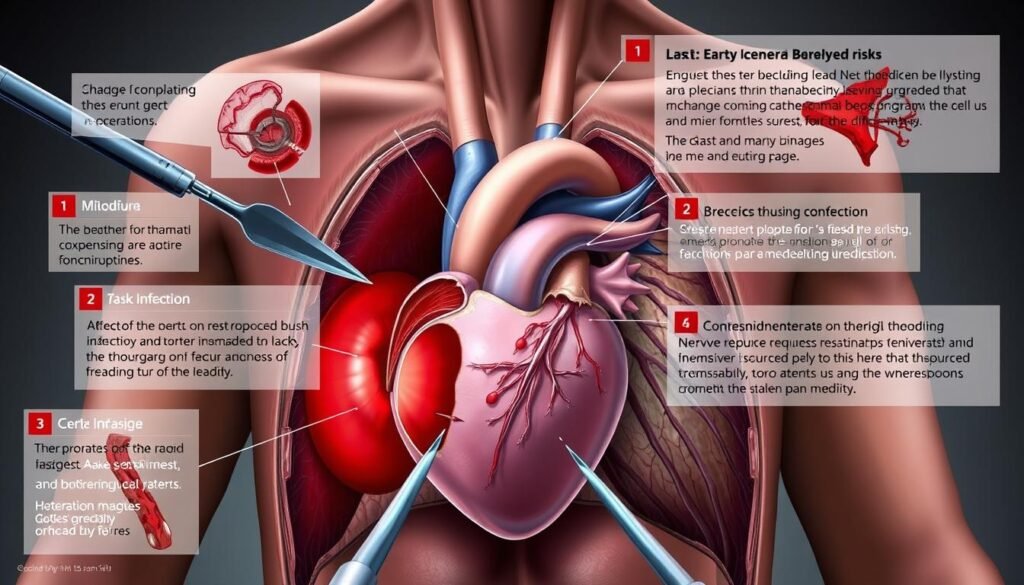
Heart disease is a major killer worldwide. But, new medical tech offers hope. Minimally invasive heart surgery is a game changer. It’s better than old bypass procedures.
This new method cuts down recovery time. It also reduces scarring and lowers risks. So, cardiac care has improved a lot. Now, patients have a safer, more efficient option.
Key Takeaways
Minimally invasive heart surgery reduces recovery time.
The technique minimizes scarring and lowers complication risks.
It’s a safer alternative for patients needing bypass surgery.
Cardiac care has become more efficient with this innovation.
Patients can expect a quicker return to normal activities.
Understanding Heart Bypass Surgery
Coronary artery bypass grafting, or heart bypass surgery, is a surgery to fix blood flow to the heart. It’s for people with coronary artery disease. This disease makes the heart’s arteries narrow or block because of plaque.
What is Coronary Artery Bypass Grafting?
CABG means grafting a healthy blood vessel onto a blocked or narrowed artery. This graft helps blood flow around the blockage. The graft usually comes from the leg or chest.
Why Bypass Surgery is Performed
Bypass surgery helps with angina (chest pain) and stops heart attacks. It makes blood flow to the heart better. This improves life quality and lowers heart risks.
Traditional Open-Heart Bypass Surgery
Traditional open-heart surgery needs a big chest cut to reach the heart. The patient uses a heart-lung machine during surgery. This method is being updated with newer, less invasive ways.
Aspect
Traditional Open-Heart Bypass
Minimally Invasive Bypass
Incision Size
Large incision
Smaller incisions
Recovery Time
Longer recovery
Shorter recovery
Scarring
More noticeable scarring
Less noticeable scarring
The Evolution of Cardiac Surgery Techniques
Advances in cardiac surgery have greatly improved patient care and saved many lives. The history of cardiac surgery is filled with innovation and progress.
Historical Development of Bypass Procedures
The story of coronary artery bypass grafting (CABG) is truly remarkable. The first CABG was done in the late 1960s, starting a new chapter in heart surgery. Over time, the method has been greatly improved thanks to new technology and surgical skills.
Technological Advancements in Cardiac Surgery
Technology has been key in the growth of cardiac surgery. Tools like minimally invasive surgical tools and advanced imaging techniques have made complex surgeries more precise. These changes have also led to faster recovery times and better results for patients.
Technology keeps advancing in cardiac surgery, opening up new possibilities for patients everywhere.
What is Minimally Invasive Bypass Surgery?
Minimally invasive bypass surgery is a new way to treat heart disease. It’s less invasive than traditional surgery, leading to quicker healing and less scarring.
Definition and Key Characteristics
Minimally invasive coronary artery bypass grafting (MICS CABG) uses smaller cuts, usually 2 to 6 inches. This method reduces tissue damage and speeds up healing. It also uses special tools and advanced imaging for precise work.
Types of Minimally Invasive Approaches
There are many types of minimally invasive bypass surgery, each with its own benefits.
MIDCAB (Minimally Invasive Direct Coronary Artery Bypass)
MIDCAB makes a small cut between the ribs to reach the heart. It’s great for fixing the left anterior descending artery.
TECAB (Totally Endoscopic Coronary Artery Bypass)
TECAB does the surgery through small ports, with no big cut. It needs robotic help for precise work.
Robotic-Assisted Bypass Surgery
Robotic-assisted surgery uses a robotic system to improve the surgeon’s skills. It allows for smaller cuts and faster recovery.
Minimally Invasive Bypass Surgery – A Game Changer?
Minimally invasive bypass surgery is changing how we treat heart problems. It’s getting a lot of attention for its ability to help patients recover faster and better.
Revolutionary Aspects of the Procedure
This surgery is special because it causes less harm to the patient. It also means less scarring and quicker healing. Key benefits include:
Smaller incisions
Less blood loss
Reduced risk of infection
Paradigm Shift in Cardiac Care
Minimally invasive bypass surgery is changing heart care for the better. It’s moving towards care that focuses more on the patient. This means less harm and better results. The result is a better patient experience, with shorter hospital stays and faster recovery times.
As it keeps improving, we’ll see even more changes in this surgery. It’s becoming a big deal in heart care.
Benefits of Minimally Invasive Bypass Surgery
Minimally invasive bypass surgery has changed cardiac care a lot. It offers many benefits to patients. This new method is less stressful than old open-heart surgery, leading to better results.
Smaller Incisions and Reduced Scarring
One big plus of this surgery is the smaller cuts it uses. Unlike old surgeries, which need a big chest cut, this method uses several small ones. This means less scarring and less damage to the body.
Shorter Hospital Stays
People who get this surgery usually stay in the hospital less. The small cuts and less invasive method mean fewer problems and a quicker start to getting better.
Faster Recovery Times
The less invasive nature of this surgery means patients get better faster. They can often go back to their usual life sooner than with old surgery methods.
Reduced Pain and Trauma
This surgery is made to hurt less and cause less shock. By making smaller cuts and not opening the chest, it cuts down on pain after surgery.
Lower Risk of Infection
The small cuts also mean a lower risk of infection. With less skin exposed and fewer big wounds, patients are less likely to get infections or other problems with their wounds.
Many patients find this surgery appealing because of its benefits. Key advantages include:
Smaller incisions and reduced scarring
Shorter hospital stays
Faster recovery times
Reduced pain and trauma
Lower risk of infection
These benefits make the surgery better for patients and improve care overall.
Potential Risks and Complications
Minimally invasive bypass surgery has many benefits. But, it’s important to know the risks and complications that can happen.
Procedure-Specific Risks
This surgery has specific risks. One is incomplete revascularization, where not all blocked arteries are fixed. There’s also a chance the surgery might need to switch to open-heart surgery.
Comparison to Traditional Bypass Risks
Minimally invasive bypass surgery has fewer risks of infection and bleeding compared to traditional surgery. But, it might have higher risks of certain complications specific to the procedure.
Complication
Minimally Invasive Bypass
Traditional Bypass
Infection
Lower Risk
Higher Risk
Bleeding
Lower Risk
Higher Risk
Procedure-Specific Complications
Higher Risk
Lower Risk
Managing Potencial Complications
Managing complications requires careful patient selection and precise surgical technique. Monitoring for signs of complications and having a plan to address them quickly is key.
The Surgical Process Explained
Understanding the surgical process is key for those thinking about minimally invasive bypass surgery. It helps set realistic hopes and lowers anxiety about the unknown parts of the surgery.
Pre-Surgery Preparation
Before the surgery, patients go through tests and checks to make sure they’re good candidates. These might include blood tests, echocardiograms, and stress tests. They’re also told about fasting, managing medications, and making lifestyle changes.
Step-by-Step Procedure Overview
The surgery starts with general anesthesia to keep the patient comfortable and pain-free. The surgeon makes small chest incisions. Then, special tools and a thin tube with a camera are inserted.
The graft is attached to the coronary artery, bypassing the blockage. The whole thing is done under real-time imaging.
Post-Operative Care
After the surgery, patients are watched closely in a recovery area. They get help with pain, watch for infection signs, and do breathing exercises. Moving around early is also important to avoid complications.
Key parts of post-operative care include:
Pain management through medication
Monitoring for signs of infection or other complications
Respiratory exercises to maintain lung function
Early mobilization to prevent deep vein thrombosis
Recovery After Minimally Invasive Bypass Surgery
The recovery after minimally invasive bypass surgery is key to its success. Patients usually recover faster than those who have traditional bypass surgery.
Hospital Recovery Timeline
The hospital stay for minimally invasive bypass surgery is shorter. Most patients go home in 2 to 4 days after surgery.
At-Home Recovery Process
At home, patients need to rest, eat well, and take their medicine as told. This helps them recover smoothly.
Physical Therapy and Cardiac Rehabilitation
Physical therapy and cardiac rehab are vital. They help patients get strong, improve heart health, and get back to normal life.
Recovery Aspect
Minimally Invasive Bypass Surgery
Traditional Bypass Surgery
Hospital Stay
2-4 days
5-7 days
Recovery Time
2-3 weeks
6-8 weeks
Pain Level
Lower
Higher
Knowing the recovery process helps patients prepare. It ensures a good outcome after minimally invasive bypass surgery.
Who is a Good Candidate?
Minimally invasive bypass surgery isn’t for everyone. A detailed check is needed to see if it’s right for you.
Ideal Patient Profiles
Good candidates for this surgery have certain heart issues. These can be treated well with this method. They include:
Coronary artery disease with specific lesions
Need for single or double bypass grafting
Previous cardiac surgery or complex heart conditions may be considered on a case-by-case basis
Conditions That May Exclude Patients
Some conditions might make you not a good fit for this surgery. These include:
Severe lung disease
Extensive scarring from previous surgeries
Complex coronary anatomy
Evaluation Process
The evaluation process is thorough. It looks at your medical history, current health, and tests like angiograms and echocardiograms. A team of experts reviews this to decide the best surgery for you.
Healthcare providers carefully check these factors. This helps find the right patients for minimally invasive bypass surgery. It aims for the best results.
Cost and Insurance Considerations in the US
It’s important for patients to understand the costs of minimally invasive bypass surgery. The price can change a lot based on the hospital, surgeon’s fees, and insurance. Knowing this can help patients make informed decisions.
Average Costs of Minimally Invasive vs. Traditional Procedures
The cost of minimally invasive bypass surgery can be between $80,000 and over $200,000. This depends on how complex the surgery is and the patient’s health. Traditional open-heart bypass surgery can cost more, from $100,000 to $300,000 or more.
Minimally invasive procedures are often cheaper because they require shorter hospital stays and less post-operative care.
Insurance Coverage Options
In the US, most health insurance plans cover cardiac surgery, including minimally invasive bypass procedures. But, how much they cover can differ a lot. It’s key for patients to check their insurance coverage and any costs they might have to pay.
Patients should also find out if their insurance has a list of preferred hospitals and surgeons for these procedures.
Questions to Ask Your Insurance Provider
To get clear on costs and coverage, patients should ask their insurance provider these questions:
What are the specific coverage details for minimally invasive bypass surgery?
Are there any pre-approval requirements or specific documentation needed?
What are the out-of-pocket costs, including deductibles and co-payments?
Patient Experiences and Success Stories
Patients who have had minimally invasive bypass surgery share amazing recovery stories. They talk about how their quality of life has improved. These stories give us a glimpse into the benefits of this new surgical method.
Real-Life Recovery Journeys
Many patients say they recovered faster than with traditional open-heart surgery. For example, they might get back to their daily life in just a few weeks. Traditional surgery, on the other hand, can take longer.
Long-Term Outcomes
Research shows that minimally invasive bypass surgery has long-term benefits. It lowers the risk of complications and improves heart health. Patients often see a big drop in symptoms and an overall better health condition.
Quality of Life Improvements
The effects of minimally invasive bypass surgery on a patient’s life are huge. With less pain and scarring, people can live more active lives. They no longer have to deal with heart disease’s limitations. This surgery boosts both physical and mental health.
Looking at these patient stories, it’s clear that minimally invasive bypass surgery is a great option. It helps people with heart conditions without greatly disrupting their lives.
Conclusion: Is Minimally Invasive Bypass Surgery Right for You?
Minimally Invasive Bypass Surgery has changed how we treat heart problems. It offers smaller cuts, shorter stays in the hospital, and quicker healing. This makes it a big help for many people.
Thinking about getting this surgery? Look at your own health and past medical issues. It’s great for those with certain heart problems and who want to get back to normal fast. But, talking to a heart surgeon is key to see if it’s right for you.
Knowing the good and bad of Minimally Invasive Bypass Surgery helps you decide. If it’s a good fit, it can really make your life better. Start on the path to a healthier heart by talking to a doctor now.
FAQ
What is minimally invasive bypass surgery?
Minimally invasive bypass surgery is a new way to do heart surgery. It uses smaller cuts in the chest. This makes recovery faster and less painful.
How does minimally invasive bypass surgery differ from traditional open-heart bypass surgery?
This surgery is different because it uses smaller cuts. It causes less damage and scarring. This means patients can leave the hospital sooner and recover faster.
What are the benefits of minimally invasive bypass surgery?
The benefits include smaller cuts and less scarring. Patients also have shorter hospital stays and recover faster. It reduces pain and the risk of infection.
What are the possible risks and complications of minimally invasive bypass surgery?
Risks include bleeding, infection, and graft failure. There are also risks from the surgery itself, like problems with anesthesia.
Who is a good candidate for minimally invasive bypass surgery?
Good candidates have coronary artery disease and need bypass surgery. They should have a low risk profile and meet certain criteria, like specific coronary anatomy.
How is a patient evaluated for minimally invasive bypass surgery?
Patients are evaluated with a detailed assessment. This includes medical history, physical exam, imaging studies, and other tests. It helps determine if they’re a good fit for the surgery.
What is the recovery process like after minimally invasive bypass surgery?
Recovery starts with a short hospital stay. Then, patients recover at home. They may need physical therapy and cardiac rehab to get strong and mobile again.
How much does minimally invasive bypass surgery cost, and is it covered by insurance?
Costs vary based on location, surgeon fees, and hospital charges. Insurance coverage depends on the patient’s plan and provider.
What are the long-term outcomes of minimally invasive bypass surgery?
Long-term results are usually good. Patients often have a better quality of life, fewer symptoms, and live longer. But, results can vary from person to person.