March 8, 2025
Are you tired of fad diets and conflicting nutrition advice? 🤔 It’s time to revolutionize your diet with healthy eating habits that actually work. In today’s fast-paced world, maintaining a balanced diet can feel like an uphill battle. But what if we told you that transforming your eating habits could be both simple and enjoyable?
Imagine waking up each day feeling energized, focused, and ready to take on the world. 💪 Picture yourself effortlessly maintaining a healthy weight, reducing your risk of chronic diseases, and even improving your mood. This isn’t just a dream – it’s the reality that awaits you when you embrace healthy eating habits. Whether you’re a busy professional, a parent juggling multiple responsibilities, or simply someone who wants to prioritize their well-being, this guide is your roadmap to a healthier, happier you.
In the following sections, we’ll dive deep into the world of healthy eating. You’ll learn how to assess your current diet, discover the essential components of a nutritious meal plan, and master the art of mindful eating. We’ll also tackle common challenges, introduce you to powerful superfoods, and show you how to make these changes sustainable for the long haul. Are you ready to transform your relationship with food and unlock your body’s full potential? Let’s embark on this exciting journey together!
Understanding Healthy Eating
Define healthy eating
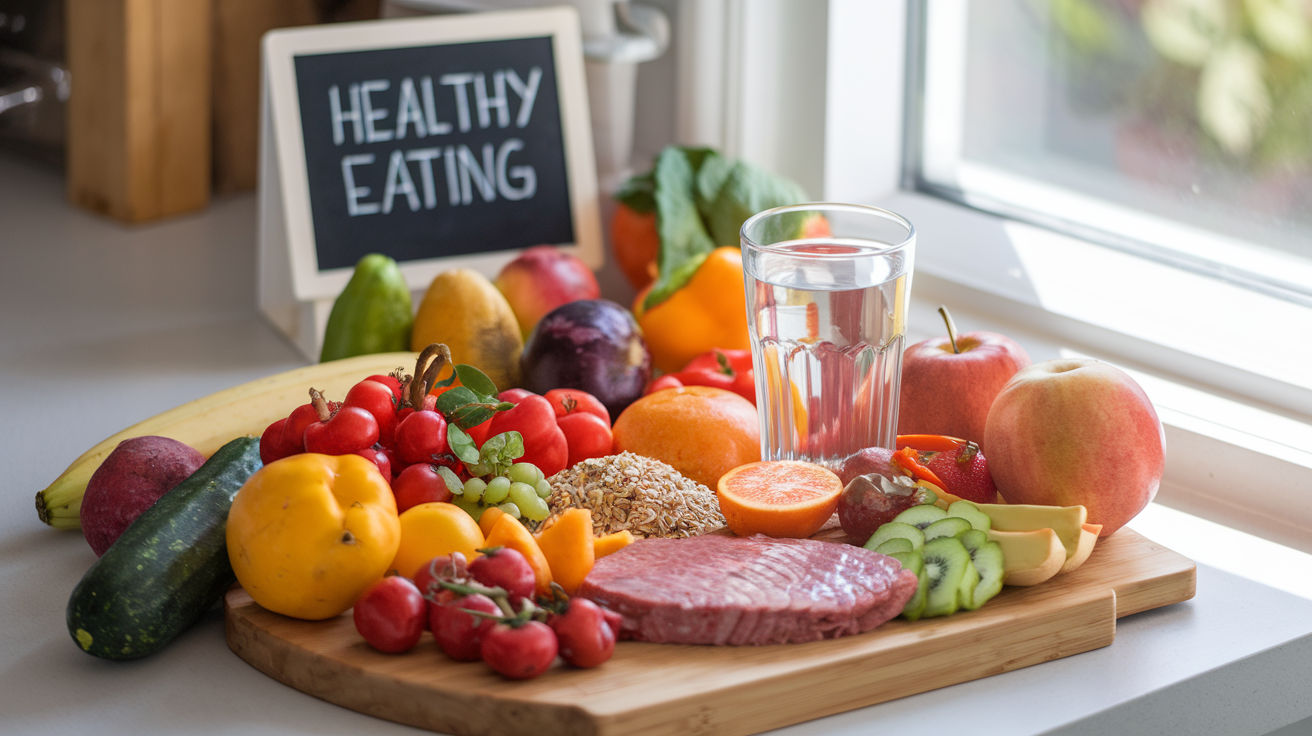
Healthy eating is more than just a trendy phrase; it’s a lifestyle choice that can significantly impact your overall well-being. At its core, healthy eating means consuming a variety of nutrient-dense foods that provide your body with the essential vitamins, minerals, and other compounds it needs to function optimally.
When you embrace healthy eating, you’re essentially fueling your body with the right balance of nutrients. This includes:
- Fruits and vegetables
- Whole grains
- Lean proteins
- Healthy fats
- Low-fat dairy or dairy alternatives
But healthy eating isn’t just about what you eat; it’s also about how you eat. It involves:
- Portion control
- Eating mindfully
- Listening to your body’s hunger and fullness cues
- Staying hydrated
Let’s break down these components to give you a clearer picture of what healthy eating truly entails.
Balanced Nutrition
A key aspect of healthy eating is achieving balanced nutrition. This means consuming foods from all major food groups in the right proportions. Here’s a simple breakdown:
| Food Group | Recommended Intake | Examples |
|---|---|---|
| Fruits and Vegetables | 5-9 servings per day | Apples, broccoli, spinach, berries |
| Whole Grains | 3-6 servings per day | Brown rice, quinoa, whole wheat bread |
| Lean Proteins | 2-3 servings per day | Chicken, fish, beans, tofu |
| Healthy Fats | 2-3 servings per day | Avocado, nuts, olive oil |
| Dairy or Alternatives | 2-3 servings per day | Low-fat milk, yogurt, fortified soy milk |
Remember, these are general guidelines. Your specific needs may vary based on factors like age, gender, activity level, and overall health.
Nutrient Density
When you focus on healthy eating, you’re prioritizing nutrient-dense foods. These are foods that pack a lot of nutritional value relative to their calorie content. For example, a cup of blueberries and a handful of potato chips might have similar calorie counts, but the blueberries offer significantly more vitamins, minerals, and antioxidants.
Moderation and Flexibility
Healthy eating doesn’t mean completely eliminating foods you enjoy. It’s about moderation and making informed choices most of the time. The 80/20 rule is a popular approach: aim for nutritious choices 80% of the time, allowing yourself some flexibility for treats or less nutritious options 20% of the time.
Hydration
Don’t forget about the importance of staying hydrated. Water plays a crucial role in nearly every bodily function. While individual needs vary, a general guideline is to aim for 8 glasses (64 ounces) of water per day.
Mindful Eating
Healthy eating also involves being mindful of how you eat. This means:
- Eating slowly and savoring your food
- Paying attention to hunger and fullness cues
- Avoiding distractions like TV or phones while eating
- Being aware of emotional eating triggers
By practicing mindful eating, you’re more likely to enjoy your food and less likely to overeat.
Benefits of a balanced diet
Now that you understand what healthy eating entails, let’s explore the numerous benefits you can expect when you adopt a balanced diet. The positive impacts of healthy eating extend far beyond just maintaining a healthy weight; they touch nearly every aspect of your physical and mental well-being.
Physical Health Benefits
-
Weight Management: One of the most obvious benefits of a balanced diet is its role in maintaining a healthy weight. When you consume nutrient-dense foods in appropriate portions, you’re more likely to achieve and maintain a weight that’s healthy for your body type.
-
Improved Cardiovascular Health: A diet rich in fruits, vegetables, whole grains, and lean proteins can help lower your risk of heart disease. It can reduce bad cholesterol levels, lower blood pressure, and improve overall heart function.
-
Better Digestive Health: A balanced diet that includes plenty of fiber from fruits, vegetables, and whole grains promotes regular bowel movements and can prevent digestive issues like constipation, diverticulitis, and even some forms of cancer.
-
Stronger Immune System: When you provide your body with a variety of nutrients, you’re equipping your immune system with the tools it needs to fight off infections and diseases more effectively.
-
Improved Bone and Tooth Health: A diet rich in calcium and vitamin D strengthens your bones and teeth, reducing the risk of osteoporosis and dental problems as you age.
-
Better Skin Health: Proper nutrition can lead to clearer, healthier skin. Antioxidants found in fruits and vegetables can help protect your skin from damage caused by free radicals.
Mental Health Benefits
The benefits of a balanced diet aren’t limited to your physical health. Your mental well-being can also significantly improve:
-
Enhanced Mood: Certain nutrients, like omega-3 fatty acids and B vitamins, have been linked to improved mood and reduced risk of depression.
-
Increased Energy Levels: When you fuel your body with the right nutrients, you’re likely to experience more consistent energy levels throughout the day, avoiding the crashes often associated with high-sugar or high-fat diets.
-
Better Cognitive Function: A balanced diet rich in antioxidants and healthy fats can support brain health, potentially improving memory and reducing the risk of cognitive decline as you age.
-
Reduced Stress and Anxiety: Some studies suggest that a healthy diet can help manage stress and anxiety levels. Foods rich in magnesium, for example, may help promote calmness.
Long-term Health Benefits
Adopting a balanced diet can have significant long-term health benefits:
-
Reduced Risk of Chronic Diseases: A healthy diet can lower your risk of developing chronic diseases such as type 2 diabetes, certain cancers, and heart disease.
-
Increased Longevity: By reducing your risk of chronic diseases and supporting overall health, a balanced diet can contribute to a longer, healthier life.
-
Better Aging: Proper nutrition can help you maintain muscle mass, bone density, and cognitive function as you age, leading to a higher quality of life in your later years.
-
Improved Sleep Quality: A balanced diet can contribute to better sleep patterns, which in turn can improve overall health and well-being.
Social and Environmental Benefits
The benefits of healthy eating extend beyond your personal health:
-
Positive Role Model: By adopting healthy eating habits, you can be a positive influence on your family and friends, potentially improving their health as well.
-
Environmental Impact: A diet rich in plant-based foods and lower in processed foods often has a smaller environmental footprint, contributing to sustainability efforts.
-
Economic Benefits: While healthy eating may seem more expensive initially, the long-term savings on healthcare costs can be significant.
Common misconceptions about healthy eating
As you embark on your journey towards healthier eating habits, it’s crucial to be aware of and dispel common misconceptions that might hinder your progress. Many of these myths are deeply ingrained in popular culture and can lead to confusion and frustration. Let’s address some of the most prevalent misconceptions about healthy eating:
Myth 1: “Eating healthy is too expensive”
One of the most common barriers people cite when it comes to healthy eating is cost. However, this doesn’t have to be the case.
Reality: While some health foods can be pricey, there are many affordable options for nutritious eating. Here are some strategies to eat healthily on a budget:
- Buy seasonal produce
- Opt for frozen fruits and vegetables (they’re just as nutritious and often cheaper)
- Purchase items in bulk
- Choose less expensive protein sources like beans and lentils
- Plan meals in advance to reduce waste
Remember, the long-term health benefits and potential reduction in healthcare costs can make healthy eating a wise financial investment.
Myth 2: “Low-fat or fat-free foods are always healthier”
The low-fat craze of the 1980s and 90s left a lasting impression, leading many to believe that all fats are bad.
Reality: Your body needs fats to function properly. What’s more, many low-fat products compensate for the loss of flavor by adding sugar or artificial ingredients, making them less healthy than their full-fat counterparts.
Focus on consuming healthy fats from sources like:
- Avocados
- Nuts and seeds
- Olive oil
- Fatty fish like salmon
These fats are essential for hormone production, nutrient absorption, and brain health.
Myth 3: “Carbs are the enemy”
With the popularity of low-carb diets, many people have come to view carbohydrates as detrimental to health and weight loss.
Reality: Carbohydrates are your body’s primary source of energy. The key is choosing the right types of carbs and consuming them in appropriate portions. Complex carbohydrates found in whole grains, fruits, and vegetables provide essential nutrients and fiber.
| Good Carb Sources | Less Healthy Carb Sources |
|---|---|
| Whole grain bread | White bread |
| Brown rice | White rice |
| Quinoa | Sugary cereals |
| Sweet potatoes | French fries |
| Fruits | Candy |
Myth 4: “Eating healthy means never indulging”
Many people believe that a healthy diet means completely eliminating treats or comfort foods.
Reality: Healthy eating is about balance, not deprivation. Completely restricting yourself can lead to cravings and eventual overindulgence. Instead, practice moderation. Allow yourself occasional treats while maintaining an overall nutritious diet.
The 80/20 rule mentioned earlier can be a helpful guideline: aim for nutritious choices 80% of the time, allowing yourself some flexibility for less healthy options 20% of the time.
Myth 5: “Supplements can replace a healthy diet”
With the wide availability of vitamin and mineral supplements, some people believe they can rely on these to meet their nutritional needs.
Reality: While supplements can be beneficial in certain cases (like addressing specific deficiencies), they’re not a substitute for a balanced diet. Your body absorbs nutrients more effectively from whole foods, which also provide additional benefits like fiber and phytochemicals that aren’t found in supplements.
Myth 6: “Skipping meals helps with weight loss”
Some people believe that skipping meals, especially breakfast, can help them lose weight.
Reality: Skipping meals can actually hinder weight loss efforts. When you skip meals:
- You’re more likely to overeat later in the day
- Your metabolism may slow down
- You might experience energy dips and difficulty concentrating
Instead of skipping meals, focus on eating balanced, portion-controlled meals throughout the day.
Myth 7: “Healthy food doesn’t taste good”
This misconception often stems from experiences with bland diet foods or overcooked vegetables.
Reality: Healthy food can be delicious when prepared properly. Experiment with herbs, spices, and cooking methods to enhance the natural flavors of whole foods. As you reduce your intake of processed foods high in sugar and salt, you may find that your taste buds become more sensitive to the subtle flavors of whole foods.
Myth 8: “You need to detox or cleanse regularly”
The idea that our bodies need help eliminating toxins through special diets or products is a popular misconception.
Reality: Your body has its own highly efficient detoxification system, primarily involving the liver and kidneys. The best way to support this natural process is by:
- Staying hydrated
- Eating a balanced diet rich in fruits and vegetables
- Getting enough sleep
- Exercising regularly
There’s no scientific evidence supporting the need for detox diets or cleanses.
Myth 9: “Eating healthy takes too much time”
Many people believe that preparing healthy meals is time-consuming and inconvenient.
Reality: While some healthy recipes can be complex, there are many quick and easy ways to eat nutritiously. Try these time-saving strategies:
- Meal prep in advance
- Use a slow cooker or instant pot
- Keep healthy snacks on hand
- Learn simple, nutritious recipes with few ingredients
With practice, preparing healthy meals can become just as convenient as relying on processed foods or takeout.
By dispelling these common misconceptions, you’re better equipped to make informed decisions about your diet. Remember, healthy eating is a journey, not a destination. It’s about making sustainable changes that work for your lifestyle and preferences. As you continue to learn and experiment, you’ll discover that healthy eating can be enjoyable, affordable, and achievable.
Now that you have a clear understanding of what healthy eating entails, its benefits, and common misconceptions, you’re ready to take the next step in your journey towards a healthier lifestyle. In the following section, we’ll guide you through assessing your current diet, which is crucial for identifying areas for improvement and setting realistic goals.
Assess Your Current Diet
Track your food intake
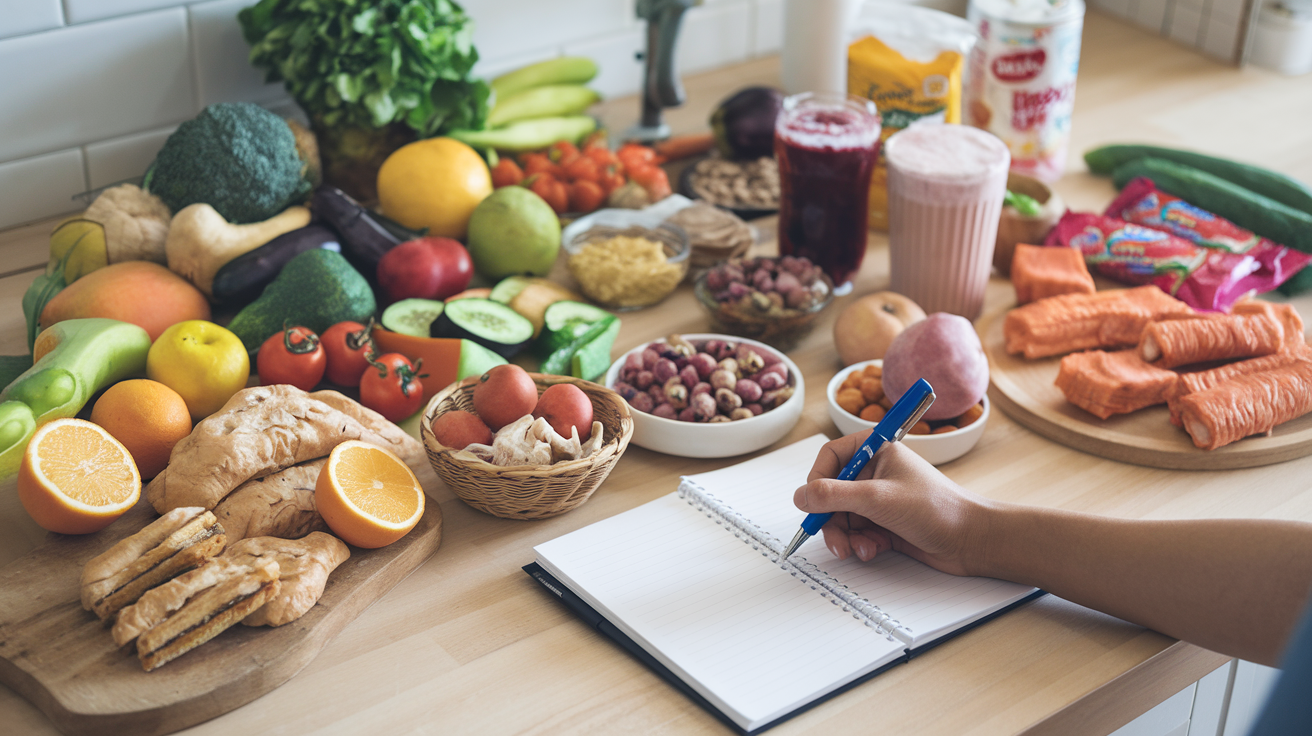
Tracking your food intake is a crucial first step in assessing your current diet. By keeping a detailed record of what you eat and drink, you’ll gain valuable insights into your eating habits and nutritional intake. This awareness can be eye-opening and serve as a powerful motivator for making positive changes to your diet.
To effectively track your food intake, consider the following methods:
-
Food diary: Keep a handwritten journal of everything you consume throughout the day. Include details such as portion sizes, cooking methods, and any snacks or beverages.
-
Smartphone apps: Utilize popular nutrition tracking apps like MyFitnessPal, LoseIt, or Cronometer. These apps often have extensive food databases and can automatically calculate your nutrient intake.
-
Photo journal: Take pictures of your meals and snacks. This visual method can help you remember what you’ve eaten and provide a quick reference for portion sizes.
-
Voice memos: Use your smartphone’s voice recording feature to quickly log your meals on the go.
When tracking your food intake, be sure to:
- Record everything you eat and drink, including small snacks and beverages
- Note the time of day you consume each item
- Estimate portion sizes as accurately as possible
- Include any condiments, dressings, or added fats used in cooking
- Document your hunger levels before and after eating
- Note any emotional triggers or circumstances surrounding your meals
To give you an idea of how to structure your food tracking, here’s a sample day using a simple table format:
| Time | Food/Drink | Portion Size | Hunger Level (1-10) | Notes |
|---|---|---|---|---|
| 8:00 AM | Oatmeal | 1 cup | 8 | Added 1 tbsp honey and 1/4 cup berries |
| 10:30 AM | Apple | 1 medium | 4 | Felt stressed about work deadline |
| 1:00 PM | Grilled chicken salad | 2 cups | 7 | Used 2 tbsp balsamic dressing |
| 3:30 PM | Greek yogurt | 6 oz | 5 | Added 1 tbsp almonds |
| 7:00 PM | Salmon | 4 oz | 8 | Cooked with 1 tbsp olive oil |
| 7:00 PM | Roasted vegetables | 1 cup | – | Broccoli, carrots, and bell peppers |
| 9:00 PM | Herbal tea | 1 cup | 2 | No additives |
By consistently tracking your food intake for at least a week, you’ll begin to see patterns emerge. This information will be invaluable as you move forward in assessing your diet and making healthier choices.
Identify unhealthy eating habits
Now that you’re tracking your food intake, it’s time to take a closer look at your eating habits. Identifying unhealthy patterns is crucial for making positive changes to your diet. Here are some common unhealthy eating habits to watch out for:
-
Skipping meals: Regularly missing meals, especially breakfast, can lead to overeating later in the day and poor nutritional intake.
-
Emotional eating: Using food as a coping mechanism for stress, boredom, or other emotions rather than genuine hunger.
-
Mindless snacking: Eating while distracted (e.g., watching TV or working) can lead to overconsumption.
-
Late-night eating: Consuming large portions of food close to bedtime can disrupt sleep and lead to weight gain.
-
Relying on processed foods: Frequently choosing convenience foods over whole, nutritious options can result in a diet high in unhealthy fats, added sugars, and sodium.
-
Oversized portions: Consistently eating more than your body needs can contribute to weight gain and other health issues.
-
Drinking calories: Consuming sugary beverages, alcohol, or high-calorie coffee drinks can add significant empty calories to your diet.
-
Eating too quickly: Rushing through meals can lead to overeating and poor digestion.
-
Restrictive dieting: Severely limiting certain food groups or calories can lead to nutrient deficiencies and an unhealthy relationship with food.
-
Lack of variety: Eating the same foods repeatedly can result in nutritional imbalances and boredom with your diet.
To help you identify these habits in your own eating patterns, consider the following questions:
- Do you find yourself eating when you’re not physically hungry?
- How often do you eat while doing other activities?
- Do you frequently skip meals or go long periods without eating?
- How many of your meals come from fast food or pre-packaged sources?
- Do you often feel guilty or ashamed after eating?
- How quickly do you typically finish your meals?
- Do you tend to eat more when you’re stressed or emotional?
- How often do you drink sugary beverages or alcohol?
Take some time to reflect on your food tracking data and answer these questions honestly. You may find it helpful to create a table to visualize your eating habits:
| Habit | Frequency (per week) | Potential Impact |
|---|---|---|
| Skipping breakfast | 4-5 times | Low energy, overeating later |
| Emotional snacking | 2-3 times | Extra calories, poor nutrition |
| Fast food meals | 3-4 times | High fat and sodium intake |
| Late-night eating | 2-3 times | Disrupted sleep, indigestion |
| Sugary beverages | Daily | Empty calories, blood sugar spikes |
By identifying these unhealthy habits, you’re taking an important step towards improving your overall diet and health. Remember, the goal isn’t to be perfect but to become aware of areas where you can make positive changes.
Recognize nutritional gaps
After tracking your food intake and identifying unhealthy eating habits, the next crucial step is to recognize any nutritional gaps in your diet. These gaps can occur when you’re not consuming enough of certain essential nutrients, which may lead to deficiencies and health issues over time.
To identify nutritional gaps, compare your average daily intake to the recommended dietary allowances (RDAs) for various nutrients. Here’s a list of key nutrients to focus on:
-
Macronutrients:
- Protein
- Carbohydrates
- Healthy fats
-
Vitamins:
- Vitamin A
- Vitamin C
- Vitamin D
- Vitamin E
- B-complex vitamins (B1, B2, B3, B6, B12, folate)
-
Minerals:
- Calcium
- Iron
- Magnesium
- Zinc
- Potassium
-
Fiber
-
Omega-3 fatty acids
To help you visualize potential nutritional gaps, create a table comparing your average daily intake to the recommended amounts:
| Nutrient | Your Average Intake | Recommended Daily Intake | Gap |
|---|---|---|---|
| Protein | 50g | 56g (male) / 46g (female) | -6g / +4g |
| Fiber | 15g | 25-30g | -10 to -15g |
| Vitamin D | 200 IU | 600-800 IU | -400 to -600 IU |
| Calcium | 800mg | 1000-1200mg | -200 to -400mg |
| Iron | 10mg | 18mg (female) / 8mg (male) | -8mg / +2mg |
Keep in mind that these recommendations can vary based on factors such as age, sex, activity level, and overall health status. Consult with a healthcare professional or registered dietitian for personalized recommendations.
To recognize nutritional gaps more effectively, consider the following strategies:
-
Use a nutrient tracking app: Many food tracking apps provide detailed nutrient breakdowns, making it easier to spot deficiencies.
-
Analyze your food choices: Look for patterns in the types of foods you regularly consume. Are you missing out on entire food groups?
-
Consider your dietary restrictions: If you follow a specific diet (e.g., vegetarian, vegan, gluten-free), be aware of common deficiencies associated with that eating pattern.
-
Pay attention to your energy levels and overall health: Sometimes, nutritional gaps can manifest as fatigue, weak immune system, or other health issues.
-
Look for signs of specific deficiencies: For example, brittle nails might indicate a lack of biotin, while frequent bruising could suggest a vitamin C deficiency.
Once you’ve identified potential nutritional gaps, consider ways to address them through dietary changes. Here are some examples:
- Low in fiber: Increase your intake of whole grains, fruits, vegetables, and legumes.
- Vitamin D deficiency: Spend more time in sunlight, consume fatty fish, egg yolks, and fortified foods, or consider a supplement.
- Calcium deficiency: Include more dairy products, leafy greens, and fortified plant-based milk alternatives in your diet.
- Iron deficiency: Consume more lean meats, beans, lentils, and dark leafy greens. Pair iron-rich foods with vitamin C sources to enhance absorption.
- Omega-3 fatty acid deficiency: Eat fatty fish like salmon, sardines, or mackerel twice a week, or consider plant-based sources like flaxseeds and chia seeds.
Remember, it’s always best to obtain nutrients from whole food sources when possible. However, in some cases, supplements may be necessary to address significant nutritional gaps. Always consult with a healthcare professional before starting any new supplement regimen.
By recognizing and addressing nutritional gaps in your diet, you’re taking a proactive approach to your health and ensuring that your body receives the essential nutrients it needs to function optimally.
Set realistic dietary goals
Now that you’ve tracked your food intake, identified unhealthy eating habits, and recognized nutritional gaps, it’s time to set realistic dietary goals. Setting achievable objectives is crucial for making lasting changes to your eating habits and improving your overall health.
When setting your dietary goals, follow the SMART criteria:
- Specific: Clearly define what you want to achieve.
- Measurable: Establish concrete criteria for measuring progress.
- Achievable: Set goals that are challenging but attainable.
- Relevant: Ensure your goals align with your overall health and lifestyle objectives.
- Time-bound: Set a timeframe for achieving your goals.
Here are some examples of SMART dietary goals:
- Increase daily vegetable intake to 5 servings within the next month.
- Reduce added sugar consumption to less than 25 grams per day over the next two weeks.
- Prepare and eat home-cooked meals at least 5 times per week for the next three months.
- Drink 8 glasses of water daily for the next 30 days.
- Limit fast food meals to no more than once per week for the next two months.
To help you set and track your own goals, use the following table:
| Goal | Current Status | Target | Timeframe | Action Steps |
|---|---|---|---|---|
| Increase fiber intake | 15g/day | 25g/day | 4 weeks | Add 1 serving of vegetables to lunch and dinner; switch to whole grain bread |
| Reduce soda consumption | 2 cans/day | 0 cans/day | 6 weeks | Replace with sparkling water; gradually decrease intake |
| Eat more lean protein | 40g/day | 60g/day | 2 months | Include a protein source in each meal; add Greek yogurt as a snack |
| Cook at home more often | 2 times/week | 5 times/week | 3 months | Meal prep on weekends; learn 3 new recipes per month |
When setting your dietary goals, consider the following tips:
-
Prioritize: Focus on 2-3 goals at a time to avoid feeling overwhelmed.
-
Start small: Begin with modest changes and gradually increase the challenge as you progress.
-
Be flexible: Allow for occasional indulgences and don’t be too rigid with your goals.
-
Consider your lifestyle: Choose goals that fit well with your daily routine and preferences.
-
Address nutritional gaps: Incorporate goals that specifically target the deficiencies you’ve identified.
-
Focus on adding, not just subtracting: Include goals that involve adding healthy foods to your diet, not just eliminating unhealthy ones.
-
Make it enjoyable: Set goals that allow you to explore new foods and cooking methods you’re excited about.
-
Plan for obstacles: Anticipate potential challenges and develop strategies to overcome them.
-
Seek support: Share your goals with friends or family members who can offer encouragement and accountability.
-
Reward progress: Celebrate small victories along the way to stay motivated.
Here are some additional goal ideas based on common dietary issues:
-
If you tend to skip breakfast: “Eat a balanced breakfast containing protein, complex carbohydrates, and healthy fats at least 5 days a week for the next month.”
-
If you’re prone to emotional eating: “Practice mindful eating techniques during at least one meal per day for the next two weeks.”
-
If you consume too many processed foods: “Replace one processed snack with a whole food alternative (e.g., fruit, nuts, or vegetables) daily for the next three weeks.”
-
If you often eat large portions: “Use a smaller plate for dinner and practice portion control 5 nights a week for the next month.”
-
If you frequently drink sugary beverages: “Replace all sugary drinks with water, unsweetened tea, or other calorie-free beverages for the next 30 days.”
Remember, the key to successful dietary changes is consistency and patience. It’s normal to face setbacks along the way, but don’t let them discourage you. Instead, use them as learning opportunities to refine your approach and stay committed to your goals.
As you work towards your dietary goals, continue to track your progress and reassess regularly. You may find that some goals are easier to achieve than others, or that your priorities shift as you make improvements. Be prepared to adjust your goals as needed and celebrate your successes, no matter how small they may seem.
By setting realistic dietary goals and working steadily towards them, you’re taking a significant step towards revolutionizing your diet and embracing healthier eating habits. These changes will not only improve your nutritional intake but can also lead to increased energy, better mood, and improved overall health.
Now that you’ve assessed your current diet and set realistic goals, you’re well-prepared to move forward with making positive changes to your eating habits. The next step in your journey towards healthier eating will be to explore the essential components of a balanced diet, which will help you make informed choices about the foods you consume and how to create nutritious, satisfying meals.
Essential Components of a Healthy Diet
Fruits and vegetables
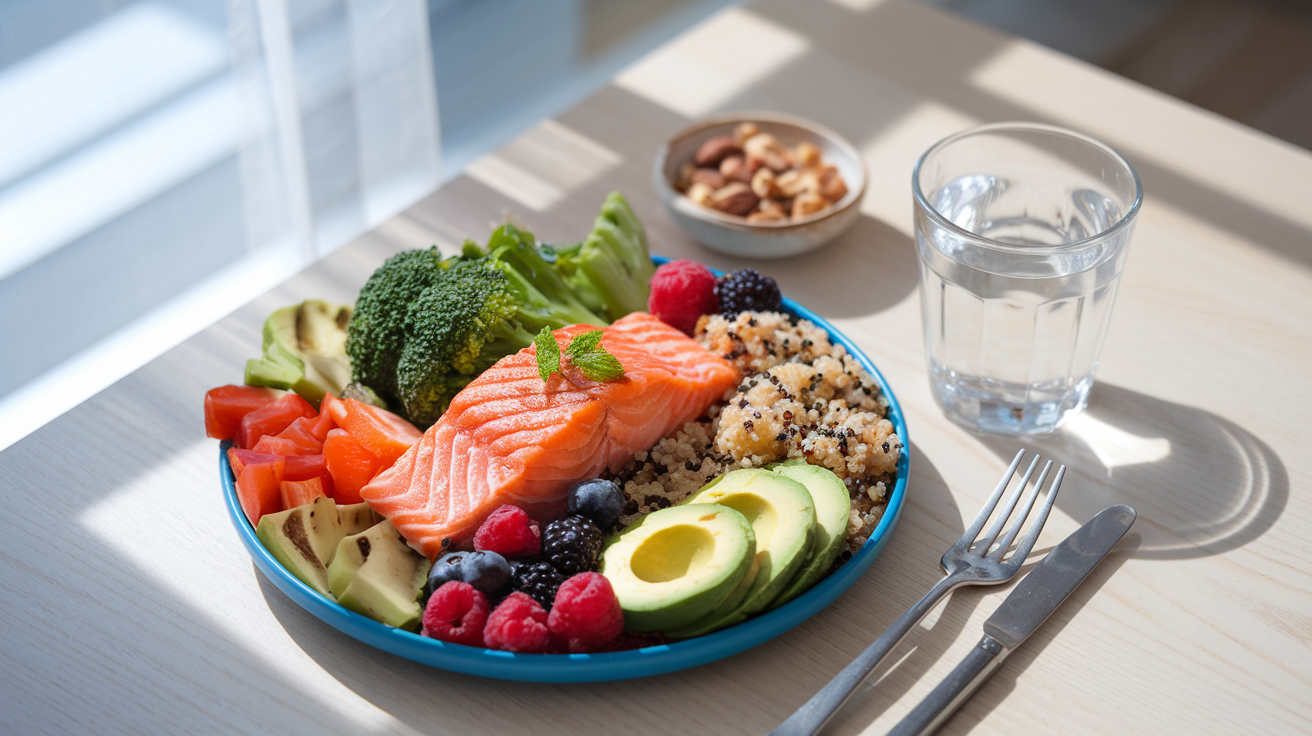
You’ve probably heard the phrase “eat your fruits and vegetables” countless times, and for good reason. These colorful, nutrient-dense foods are the cornerstone of a healthy diet. But why are they so important, and how can you incorporate more of them into your daily meals?
Fruits and vegetables are packed with essential vitamins, minerals, fiber, and antioxidants that your body needs to function optimally. They help protect against chronic diseases, boost your immune system, and promote overall well-being. The vibrant colors of fruits and vegetables aren’t just visually appealing; they’re indicators of the diverse nutrients they contain.
To maximize the benefits of fruits and vegetables, aim for a variety of colors on your plate. Here’s a quick guide to help you understand the benefits of different colored produce:
- Red: Tomatoes, strawberries, watermelon (rich in lycopene, which supports heart health)
- Orange/Yellow: Carrots, sweet potatoes, oranges (high in beta-carotene, good for eye health)
- Green: Spinach, broccoli, kiwi (packed with chlorophyll and folate, supporting cell growth)
- Blue/Purple: Blueberries, eggplant, grapes (contain anthocyanins, powerful antioxidants)
- White: Cauliflower, garlic, onions (offer allicin, which has anti-inflammatory properties)
Incorporating more fruits and vegetables into your diet doesn’t have to be a chore. Here are some creative ways to boost your intake:
- Start your day with a fruit smoothie
- Add vegetables to your omelets or scrambled eggs
- Snack on raw veggies with hummus or Greek yogurt dip
- Include a side salad with your lunch and dinner
- Use vegetable noodles as a pasta alternative
Remember, fresh, frozen, and even canned fruits and vegetables (without added sugars or salt) all count towards your daily intake. Aim for at least 5 servings per day, but more is always better when it comes to these nutritional powerhouses.
Whole grains
Now that you’ve got your fruits and vegetables covered, let’s talk about whole grains. These complex carbohydrates are an essential part of a healthy diet, providing your body with sustained energy, fiber, and a host of important nutrients.
Whole grains contain all parts of the grain kernel – the bran, germ, and endosperm. This is in contrast to refined grains, which have been stripped of the bran and germ, removing much of the fiber, vitamins, and minerals. By choosing whole grains over refined grains, you’re giving your body more nutritional bang for your buck.
Here’s a comparison of some common whole grains and their refined counterparts:
| Whole Grain | Refined Grain | Nutritional Difference |
|---|---|---|
| Brown rice | White rice | More fiber, vitamins, and minerals |
| Whole wheat bread | White bread | Higher in fiber and B vitamins |
| Oatmeal | Instant oatmeal | More fiber and less added sugar |
| Quinoa | White pasta | Higher protein content and more minerals |
The benefits of incorporating whole grains into your diet are numerous:
- Improved digestion: The fiber in whole grains helps keep your digestive system running smoothly.
- Better weight management: Whole grains are more filling, helping you feel satisfied with fewer calories.
- Reduced risk of chronic diseases: Regular consumption of whole grains is associated with lower risks of heart disease, type 2 diabetes, and certain cancers.
- Stable blood sugar: The complex carbohydrates in whole grains are digested more slowly, preventing rapid spikes in blood sugar.
To increase your whole grain intake, try these simple swaps:
- Replace white bread with whole grain bread
- Swap white rice for brown rice or quinoa
- Choose whole grain pasta instead of regular pasta
- Opt for oatmeal or whole grain cereals for breakfast
- Experiment with ancient grains like farro, barley, or millet in salads and soups
When shopping for whole grain products, be sure to read the labels carefully. Look for “whole grain” or “whole wheat” as the first ingredient, and be wary of terms like “multigrain” or “made with whole grains,” which don’t guarantee a truly whole grain product.
Lean proteins
With fruits, vegetables, and whole grains in your diet, it’s time to focus on another crucial component: lean proteins. Protein is essential for building and repairing tissues, making enzymes and hormones, and supporting a healthy immune system. However, not all protein sources are created equal, which is why focusing on lean proteins is key to a healthy diet.
Lean proteins are those that are low in saturated fat and calories but high in nutritional value. They provide your body with the necessary amino acids without the excess fat that can contribute to heart disease and other health issues. Here are some excellent sources of lean protein:
- Poultry: Chicken and turkey (without skin)
- Fish: Salmon, tuna, cod, and other fatty fish rich in omega-3s
- Lean cuts of beef: Sirloin, flank steak, and lean ground beef
- Plant-based proteins: Beans, lentils, tofu, and tempeh
- Low-fat dairy: Greek yogurt, cottage cheese, and milk
- Eggs: A versatile and nutrient-dense protein source
To help you make informed choices, here’s a comparison of different protein sources and their nutritional profiles:
| Protein Source | Protein (g) per 100g | Fat (g) per 100g | Calories per 100g |
|---|---|---|---|
| Chicken breast | 31 | 3.6 | 165 |
| Salmon | 20 | 13 | 208 |
| Lean beef sirloin | 29 | 6 | 177 |
| Tofu | 8 | 4 | 76 |
| Greek yogurt | 10 | 5 | 59 |
| Lentils (cooked) | 9 | 0.4 | 116 |
Incorporating lean proteins into your diet offers numerous benefits:
- Muscle maintenance and growth: Protein is crucial for building and repairing muscle tissue.
- Increased satiety: Protein helps you feel full and satisfied, which can aid in weight management.
- Improved bone health: Adequate protein intake is associated with better bone density and reduced risk of osteoporosis.
- Better metabolism: Your body burns more calories digesting protein compared to fats or carbohydrates.
To boost your lean protein intake, try these strategies:
- Include a protein source with every meal
- Use beans or lentils as a meat substitute in some meals
- Snack on Greek yogurt, hard-boiled eggs, or a small handful of nuts
- Add grilled chicken or tofu to your salads
- Experiment with fish recipes to increase your omega-3 intake
Remember, while protein is essential, it’s important not to overdo it. The recommended daily allowance for protein is about 0.8 grams per kilogram of body weight for adults. However, your individual needs may vary based on factors like age, activity level, and overall health.
Healthy fats
Now that you’ve got a handle on lean proteins, let’s delve into the often misunderstood world of fats. Contrary to popular belief, not all fats are bad for you. In fact, healthy fats are an essential component of a balanced diet and play crucial roles in your body’s functions.
Healthy fats, also known as unsaturated fats, come in two main types: monounsaturated and polyunsaturated fats. These fats can help reduce bad cholesterol levels, provide essential fatty acids, and support overall heart health. On the other hand, saturated and trans fats are considered less healthy and should be limited in your diet.
Here’s a breakdown of different types of fats and their sources:
-
Monounsaturated fats:
- Olive oil
- Avocados
- Nuts (almonds, cashews, pecans)
- Peanut butter
-
Polyunsaturated fats:
- Fatty fish (salmon, mackerel, sardines)
- Flaxseeds and flaxseed oil
- Walnuts
- Sunflower seeds
-
Saturated fats (limit these):
- Red meat
- Full-fat dairy products
- Coconut oil
- Palm oil
-
Trans fats (avoid these):
- Processed foods
- Some margarines
- Partially hydrogenated oils
Including healthy fats in your diet offers numerous benefits:
- Heart health: Unsaturated fats can help lower bad cholesterol (LDL) and increase good cholesterol (HDL).
- Brain function: Omega-3 fatty acids, found in fatty fish and some plant sources, are crucial for cognitive function.
- Nutrient absorption: Some vitamins (A, D, E, and K) are fat-soluble, meaning your body needs fat to absorb them properly.
- Hormone production: Fats play a role in producing and regulating various hormones in your body.
- Satiety: Including healthy fats in your meals can help you feel full and satisfied, potentially aiding in weight management.
To help you make informed choices, here’s a comparison of different fat sources and their nutritional profiles:
| Fat Source | Total Fat (g) per serving | Saturated Fat (g) per serving | Calories per serving |
|---|---|---|---|
| Olive oil (1 tbsp) | 14 | 2 | 119 |
| Avocado (1/2 medium) | 15 | 2 | 160 |
| Almonds (1 oz) | 14 | 1 | 164 |
| Salmon (3 oz) | 11 | 2 | 175 |
| Butter (1 tbsp) | 11 | 7 | 102 |
To incorporate more healthy fats into your diet, try these strategies:
- Use olive oil for cooking and in salad dressings
- Snack on a handful of nuts or seeds
- Include avocado in your sandwiches or salads
- Aim for two servings of fatty fish per week
- Replace butter with mashed avocado on your toast
While healthy fats are beneficial, it’s important to consume them in moderation. Fats are calorie-dense, providing 9 calories per gram compared to 4 calories per gram for proteins and carbohydrates. The American Heart Association recommends that 25-35% of your daily calories come from fats, with the majority being from unsaturated sources.
Hydration
As we round out our discussion on the essential components of a healthy diet, it’s crucial not to overlook the importance of proper hydration. While not technically a food group, water is absolutely vital for your health and well-being. In fact, your body is made up of about 60% water, and every system in your body depends on water to function properly.
Staying well-hydrated offers numerous benefits:
- Regulates body temperature
- Aids in digestion and prevents constipation
- Cushions joints and protects organs
- Helps transport nutrients and oxygen to cells
- Maintains blood volume
- Supports kidney function and helps flush out toxins
- Improves cognitive function and mood
The amount of water you need can vary based on factors like your age, sex, activity level, climate, and overall health. While the common advice is to drink eight 8-ounce glasses of water a day (about 2 liters), your individual needs may be different. A good rule of thumb is to drink enough so that you rarely feel thirsty and your urine is pale yellow or colorless.
It’s important to note that water isn’t the only way to stay hydrated. Your fluid intake can come from a variety of sources:
- Plain water (still or sparkling)
- Herbal teas
- Fruits and vegetables with high water content (e.g., watermelon, cucumber, zucchini)
- Broths and soups
- Milk and plant-based milk alternatives
While these all contribute to your hydration, be cautious with beverages that can have a diuretic effect, such as those containing caffeine or alcohol. These can increase fluid loss and may not hydrate as effectively as water.
To help you understand the hydration content of different beverages and foods, here’s a comparison:
| Source | Water Content (%) |
|---|---|
| Water | 100 |
| Cucumber | 96 |
| Lettuce | 95 |
| Watermelon | 92 |
| Milk | 87 |
| Orange | 87 |
| Coffee | 99.5 |
| Soda | 90-99 |
To ensure you’re staying properly hydrated throughout the day, try these strategies:
- Start your day with a glass of water
- Carry a reusable water bottle with you
- Set reminders on your phone to drink water regularly
- Eat water-rich fruits and vegetables
- Drink a glass of water before each meal
- Flavor your water with fresh fruits or herbs if you find plain water boring
- Choose water instead of sugary drinks when eating out
Remember, your hydration needs may increase in certain situations:
- During hot weather or in humid environments
- When you’re physically active or exercising
- If you’re at high altitudes
- When you’re ill, especially if you have a fever, diarrhea, or vomiting
- During pregnancy or breastfeeding
By focusing on proper hydration alongside a balanced intake of fruits, vegetables, whole grains, lean proteins, and healthy fats, you’re setting a solid foundation for a healthy diet. These essential components work together to provide your body with the nutrients it needs to function at its best.
As you continue on your journey towards healthier eating habits, remember that balance is key. No single food group can provide all the nutrients your body needs. It’s the combination of these essential components, in the right proportions, that creates a truly healthy diet. In the next section, we’ll explore how to put this knowledge into practice through effective meal planning and preparation.
Meal Planning and Preparation
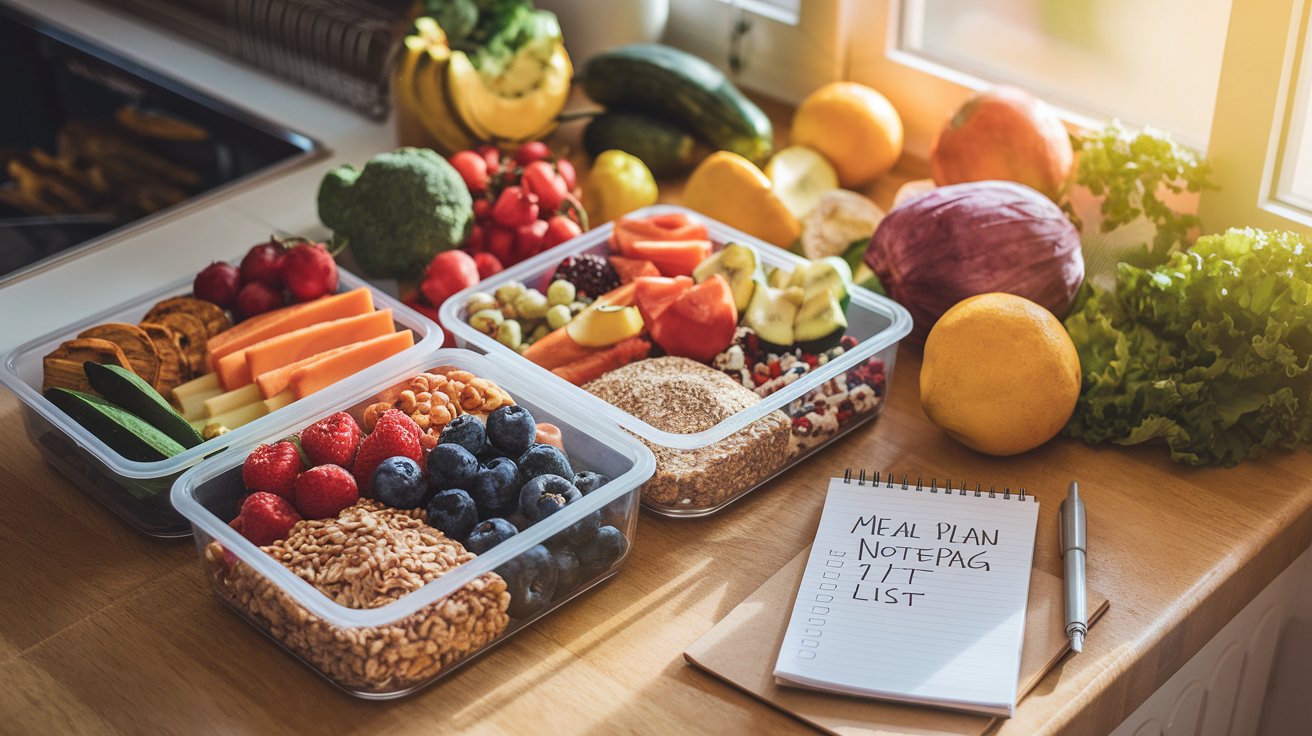
Create a weekly meal plan
Creating a weekly meal plan is a cornerstone of successful healthy eating. By taking the time to plan your meals in advance, you’ll set yourself up for nutritional success and reduce the stress of daily food decisions. Here’s how you can create an effective weekly meal plan:
-
Start with a template: Begin by creating a simple template for your week. You can use a spreadsheet, a meal planning app, or even a piece of paper divided into seven columns (one for each day of the week) and three rows (breakfast, lunch, and dinner).
-
Consider your schedule: Look at your upcoming week and note any special events, late nights at work, or other commitments that might affect your meal times. This will help you plan realistically and avoid setting yourself up for failure.
-
Balance your nutrients: Aim to include a variety of foods that cover all major food groups throughout the week. This ensures you’re getting a wide range of nutrients. Here’s a simple breakdown:
Food Group Examples Recommended Servings per Day Vegetables Leafy greens, carrots, broccoli 5-9 servings Fruits Apples, berries, citrus 2-4 servings Whole Grains Brown rice, quinoa, whole wheat bread 6-8 servings Lean Proteins Chicken, fish, beans, tofu 2-3 servings Healthy Fats Avocado, nuts, olive oil 2-3 servings -
Plan for leftovers: Cooking larger portions for dinner can provide you with ready-made lunches for the next day. This strategy saves time and ensures you always have a healthy option available.
-
Include variety: To prevent boredom and ensure you’re getting a wide range of nutrients, try to avoid repeating the same meals too often. Aim for at least 3-4 different breakfast options, 4-5 lunch options, and 5-7 dinner options throughout the week.
-
Be flexible: While it’s great to have a plan, life can be unpredictable. Allow for some flexibility in your meal plan. Maybe designate one night as a “leftover night” or have a few quick and easy meal ideas on hand for those unexpectedly busy days.
-
Get input from family members: If you’re planning for a family, involve them in the process. This can increase buy-in and make mealtime more enjoyable for everyone.
-
Use theme nights: To make planning easier, consider implementing theme nights. For example:
- Meatless Monday
- Taco Tuesday
- Stir-Fry Wednesday
- Soup and Salad Thursday
- Fish Friday
-
Plan for snacks: Don’t forget to include healthy snacks in your meal plan. This can help prevent unhealthy grazing and keep your energy levels stable throughout the day.
-
Review and adjust: At the end of each week, take a few minutes to review how your meal plan worked. Did you stick to it? Were there any challenges? Use this information to refine your plan for the following week.
By following these steps, you’ll create a weekly meal plan that not only supports your healthy eating goals but also simplifies your life. Remember, the key to successful meal planning is finding a system that works for you and your lifestyle. Don’t be afraid to experiment and adjust until you find your perfect planning method.
Smart grocery shopping
Once you’ve created your meal plan, the next step is to shop smartly for the ingredients you’ll need. Smart grocery shopping is not just about saving money; it’s about making choices that support your healthy eating goals. Here’s how you can become a savvy, health-conscious shopper:
-
Make a list: Based on your meal plan, create a detailed shopping list. Organize it by store sections (produce, dairy, meats, etc.) to make your shopping more efficient. Stick to this list to avoid impulse purchases of unhealthy items.
-
Shop the perimeter: Most grocery stores are laid out with fresh, whole foods around the perimeter and processed foods in the center aisles. Focus your shopping on the outer edges of the store where you’ll find fruits, vegetables, lean meats, and dairy products.
-
Read nutrition labels: When you do venture into the center aisles, become an expert at reading nutrition labels. Pay attention to:
- Serving sizes
- Calories per serving
- Nutrient content (especially sodium, added sugars, and saturated fats)
- Ingredient list (shorter is generally better)
-
Choose whole foods: Opt for whole, minimally processed foods whenever possible. These are typically more nutrient-dense and contain fewer additives than their processed counterparts.
-
Buy in season: Seasonal produce is often fresher, more flavorful, and less expensive. It’s also a great way to add variety to your diet throughout the year.
-
Consider frozen options: Don’t overlook the frozen food section for fruits and vegetables. These are often frozen at peak ripeness, retaining their nutritional value, and can be a convenient and cost-effective option.
-
Buy in bulk wisely: For non-perishable items or foods you use frequently, buying in bulk can save money. However, be cautious not to overbuy perishables that might go to waste.
-
Look for sales and coupons: Take advantage of sales on healthy items, but don’t let deals tempt you into buying unhealthy foods you wouldn’t normally purchase.
-
Shop when you’re not hungry: Shopping on an empty stomach can lead to impulse purchases, often of less healthy options. Try to shop after a meal or snack.
-
Choose lean proteins: When selecting meats, opt for lean cuts. Look for terms like “loin” or “round” for beef, and choose skinless poultry.
-
Go for whole grains: In the bread and cereal aisles, look for products that list whole grains as the first ingredient.
-
Limit processed snacks: If you do buy snacks, choose options with simple, recognizable ingredients. Better yet, plan to make your own healthy snacks at home.
-
Check unit prices: Sometimes, larger sizes aren’t always the best deal. Compare unit prices (price per ounce or per item) to ensure you’re getting the best value.
-
Consider generic brands: Store brands often offer the same quality as name brands at a lower price. Give them a try for staple items.
-
Use technology: Many grocery stores now offer apps that can help you find deals, create shopping lists, and even scan items as you shop to keep a running total.
Here’s a quick reference guide for smart choices in common grocery categories:
| Category | Smart Choices | Limit or Avoid |
|---|---|---|
| Fruits & Vegetables | Fresh, frozen, or canned without added sugars or salt | Canned with added sugars or salt, vegetables in cream sauces |
| Grains | Whole grain breads, pastas, and cereals | Refined grain products, sugary cereals |
| Proteins | Lean meats, fish, legumes, eggs | Processed meats, high-fat cuts |
| Dairy | Low-fat or fat-free milk, yogurt, and cheese | Full-fat dairy, flavored milk drinks |
| Beverages | Water, unsweetened tea, coffee | Sugary sodas, fruit juices, energy drinks |
| Snacks | Fresh fruits, vegetables, nuts, seeds | Chips, cookies, candy |
Remember, smart grocery shopping is a skill that improves with practice. Over time, you’ll become more adept at navigating the store, making healthy choices, and sticking to your budget. By mastering this skill, you’re setting yourself up for success in your healthy eating journey.
Batch cooking for convenience
Batch cooking is a game-changer when it comes to maintaining healthy eating habits, especially for those with busy lifestyles. This method involves preparing larger quantities of food at once, which can then be portioned out and used for multiple meals throughout the week. Here’s how you can make batch cooking work for you:
-
Choose your batch cooking day: Pick a day when you have a few hours to dedicate to meal prep. Many people choose Sunday, but select whatever day works best for your schedule.
-
Plan your menu: Decide what meals you want to prepare in advance. Focus on recipes that:
- Keep well in the refrigerator or freezer
- Can be easily reheated
- Are versatile and can be used in different ways
-
Prep ingredients in bulk: Wash and chop vegetables, cook grains, and prepare proteins in large quantities. This saves time and ensures you have ready-to-use ingredients throughout the week.
-
Cook multiple dishes simultaneously: Utilize your oven, stovetop, and slow cooker at the same time to maximize efficiency. For example, you could roast vegetables in the oven, simmer a soup on the stove, and cook a chili in the slow cooker all at once.
-
Invest in quality storage containers: Good storage containers are essential for batch cooking. Opt for glass containers when possible, as they’re microwave-safe and don’t absorb odors or stains.
-
Label everything: Use labels to mark the contents and date of preparation for each container. This helps you keep track of what needs to be used first and prevents food waste.
-
Utilize your freezer: Many batch-cooked meals freeze well. Portion them out into individual servings before freezing for easy grab-and-go meals.
-
Rotate your meals: To prevent boredom, don’t eat the same meal every day. Prepare a variety of dishes that you can rotate throughout the week.
-
Be strategic with your cooking methods: Some foods lend themselves better to batch cooking than others. Here are some ideas:
Cooking Method Best For Examples Roasting Vegetables, Meats Sheet pan roasted vegetables, whole chicken Slow Cooking Soups, Stews, Meats Chili, pulled pork, vegetable soup Grilling Meats, Vegetables Grilled chicken breasts, bell peppers Baking Casseroles, Grains Quinoa bake, lasagna Steaming Vegetables, Fish Broccoli, salmon -
Prep components, not just full meals: Sometimes, having pre-prepped components is more versatile than full meals. For example:
- Cooked grains (rice, quinoa)
- Roasted vegetables
- Cooked proteins (grilled chicken, hard-boiled eggs)
- Homemade dressings or sauces
-
Don’t forget breakfast and snacks: Batch cooking isn’t just for dinners. Prepare breakfast items like overnight oats or egg muffins, and snacks like energy balls or cut veggies with hummus.
-
Learn to repurpose leftovers: Get creative with your batch-cooked foods. For instance, leftover roast chicken can become chicken salad, soup, or tacos.
-
Consider food safety: Remember to cool foods properly before refrigerating or freezing, and always reheat to the correct temperature before eating.
-
Start small: If you’re new to batch cooking, start with just a few meals or components. As you get more comfortable, you can gradually increase the amount you prepare.
Here’s a sample batch cooking plan for a week:
- Roast a large pan of mixed vegetables (bell peppers, zucchini, onions, carrots)
- Cook a pot of quinoa
- Grill several chicken breasts
- Prepare a large batch of lentil soup
- Make a tray of baked oatmeal cups for breakfast
- Blend a big batch of homemade hummus
With these components, you could create various meals throughout the week:
- Quinoa bowl with roasted veggies and grilled chicken
- Lentil soup with a side of roasted vegetables
- Chicken and vegetable wrap
- Oatmeal cup with fruit for breakfast
- Hummus with raw veggies for snacks
Remember, batch cooking is meant to make your life easier, not add stress. It may take some trial and error to find the right system for you, but once you do, you’ll find that it saves time, reduces stress, and makes it much easier to stick to your healthy eating goals. By having nutritious meals readily available, you’re less likely to resort to unhealthy convenience foods when you’re tired or pressed for time.
Healthy snack options
Incorporating healthy snacks into your diet is crucial for maintaining stable energy levels, controlling hunger, and ensuring you’re getting a wide range of nutrients throughout the day. When chosen wisely, snacks can complement your meals and contribute significantly to your overall nutrition. Here’s how you can make smart snacking a part of your healthy eating routine:
-
Understand the role of snacks: Snacks should bridge the gap between meals, not replace them. They should provide energy and nutrients without excessive calories.
-
Plan your snacks: Just like your meals, plan your snacks in advance. This helps prevent impulsive choices and ensures you always have healthy options on hand.
-
Balance nutrients: Aim for snacks that combine at least two food groups. This helps provide a balance of nutrients and keeps you satisfied longer.
-
Control portions: Even healthy foods can contribute to weight gain if consumed in large quantities. Use measuring tools or pre-portion your snacks to avoid overeating.
-
Choose whole foods: Whenever possible, opt for whole, minimally processed foods as snacks. These are typically more nutrient-dense and satisfying than processed snack foods.
-
Stay hydrated: Sometimes thirst can be mistaken for hunger. Keep a water bottle handy and drink water regularly throughout the day.
-
Timing matters: Try to space your snacks evenly between meals. A good rule of thumb is to have a snack if there are more than 3-4 hours between your meals.
-
Be mindful: Pay attention to your hunger cues. Eat your snack slowly and without distractions to fully enjoy it and recognize when you’re satisfied.
Here’s a list of healthy snack ideas, organized by different nutritional needs:
| Nutritional Need | Snack Ideas |
|---|---|
| Protein-rich | Greek yogurt with berries, hard-boiled eggs, edamame, turkey and cheese roll-ups |
| Fiber-rich | Apple slices with almond butter, carrot sticks with hummus, air-popped popcorn, chia seed pudding |
| Heart-healthy | Handful of unsalted nuts, avocado toast on whole grain bread, olive tapenade with whole grain crackers |
| Energy-boosting | Banana with peanut butter, homemade trail mix (nuts, seeds, dried fruit), whole grain toast with nut butter and sliced banana |
| Low-calorie | Cucumber slices with tzatziki, cherry tomatoes with balsamic drizzle, celery sticks with low-fat cream cheese |
| Bone-strengthening | Low-fat cheese stick with whole grain crackers, kale chips, roasted chickpeas |
Let’s dive deeper into some specific healthy snack options:
-
Fruit and nut butter: This classic combination provides a balance of carbohydrates, healthy fats, and protein. Try apple slices with almond butter or banana with peanut butter.
-
Veggie sticks with dip: Raw vegetables like carrots, celery, bell peppers, and cucumber are low in calories and high in fiber and nutrients. Pair them with hummus, guacamole, or a yogurt-based dip for added protein and healthy fats.
-
Greek yogurt parfait: Layer Greek yogurt with fresh berries and a sprinkle of granola for a snack that’s high in protein, fiber, and antioxidants.
-
Hard-boiled eggs: These are a portable, protein-rich snack. Prepare a batch at the beginning of the week for easy grab-and-go options.
-
Homemade trail mix: Create your own mix with unsalted nuts, seeds, and a small amount of dried fruit. This provides healthy fats, protein, and energy-boosting carbohydrates.
-
Roasted chickpeas: Toss chickpeas with olive oil and your favorite spices, then roast until crispy. They’re high in fiber and protein and make a great alternative to chips.
-
Avocado toast: Spread mashed avocado on whole grain toast for a snack rich in healthy fats and fiber. Add a sprinkle of sea salt or red pepper flakes for extra flavor.
-
Smoothies: Blend together fruits, vegetables, and a source of protein (like Greek yogurt or protein powder) for a nutrient-packed snack.
-
Energy balls: Mix together oats, nut butter, honey, and add-ins like chia seeds or dark chocolate chips. Roll into balls for a convenient, energy-boosting snack.
-
Whole grain crackers with cheese: Choose whole grain crackers and pair with a serving of low-fat cheese for a satisfying combination of complex carbohydrates and protein.
Remember, the key to healthy snacking is preparation and moderation. Keep your kitchen stocked with nutritious options and pre-portion snacks when
Mindful Eating Techniques

Practice portion control
When it comes to healthy eating, portion control is a crucial aspect that you need to master. It’s not just about what you eat, but how much you eat that can make a significant difference in your overall health and weight management goals.
To effectively practice portion control, you need to understand what constitutes a proper portion size for different food groups. Here’s a handy guide to help you visualize appropriate portion sizes:
- Proteins (meat, fish, poultry): About the size of your palm
- Grains and starches: About the size of your clenched fist
- Vegetables: About the size of two open hands
- Fruits: About the size of your clenched fist
- Fats and oils: About the size of your thumb tip
Remember, these are general guidelines, and your specific needs may vary based on factors like age, gender, activity level, and health goals.
To make portion control easier in your daily life, try these practical tips:
-
Use smaller plates and bowls: This simple trick can help you naturally reduce your portion sizes without feeling deprived.
-
Measure your food: Initially, use measuring cups or a food scale to get a better sense of proper portion sizes. Over time, you’ll develop a more accurate visual estimate.
-
Pre-portion snacks: Instead of eating directly from a large bag or container, divide snacks into smaller, portion-controlled bags or containers.
-
Fill half your plate with vegetables: This strategy ensures you’re getting plenty of nutrients while naturally limiting portions of higher-calorie foods.
-
Use the ‘hand method’: Your hand can be a useful tool for estimating portion sizes on the go:
- Your palm = 1 serving of protein
- Your cupped hand = 1 serving of carbs
- Your thumb = 1 serving of fats
- Your fist = 1 serving of vegetables
-
Practice the 80/20 rule: Aim to eat until you’re about 80% full, then stop. This helps prevent overeating and allows your body to better digest the food.
By consistently practicing portion control, you’ll find it easier to maintain a healthy weight and improve your overall eating habits. Remember, it’s not about depriving yourself, but rather about finding the right balance that nourishes your body without excess.
Eat slowly and savor your food
In our fast-paced world, it’s all too easy to rush through meals without truly enjoying or even tasting your food. However, eating slowly and savoring each bite is a key component of mindful eating that can significantly improve your relationship with food and support your healthy eating goals.
Here are some compelling reasons why you should adopt this practice:
-
Better digestion: When you eat slowly, you give your digestive system more time to process food, potentially reducing issues like bloating and indigestion.
-
Improved satiety: It takes about 20 minutes for your brain to register that you’re full. Eating slowly allows this signal to reach your brain before you’ve overeaten.
-
Enhanced enjoyment: By savoring each bite, you’ll likely find more pleasure in your meals and feel more satisfied with smaller portions.
-
Increased nutrient absorption: Thorough chewing breaks down food more completely, potentially increasing the absorption of nutrients.
-
Stress reduction: Slowing down during meals can be a form of mindfulness practice, helping to reduce stress and promote relaxation.
To help you eat more slowly and savor your food, try implementing these strategies:
-
Chew thoroughly: Aim to chew each bite 20-30 times before swallowing. This not only slows you down but also aids digestion.
-
Put your utensils down between bites: This simple act can dramatically slow your eating pace.
-
Take smaller bites: Using smaller utensils or taking smaller portions with each bite can naturally slow your eating.
-
Engage your senses: Before eating, take a moment to appreciate the appearance, aroma, and texture of your food. As you eat, focus on the flavors and how they change as you chew.
-
Practice mindful pauses: Every few minutes, pause and assess your hunger level and enjoyment of the meal.
-
Use a timer: Set a timer for 20 minutes and try to make your meal last that long.
-
Eliminate distractions: Turn off the TV, put away your phone, and focus solely on your meal and the experience of eating.
-
Sip water between bites: This not only slows you down but also keeps you hydrated.
-
Use chopsticks: If you’re not used to them, chopsticks can naturally slow down your eating pace.
-
Practice gratitude: Before eating, take a moment to express gratitude for your meal. This can help you approach eating with more mindfulness and appreciation.
Remember, eating slowly is a skill that takes practice. Don’t get discouraged if you find it challenging at first. With consistent effort, it will become more natural over time, leading to a more enjoyable and healthier eating experience.
Listen to your body’s hunger cues
One of the most important aspects of mindful eating is learning to listen to your body’s hunger cues. In our modern society, we often eat for reasons other than genuine hunger – out of boredom, stress, or simply because food is available. By tuning into your body’s signals, you can develop a healthier relationship with food and better regulate your intake.
Here’s how you can start recognizing and responding to your body’s hunger cues:
-
Understand the hunger scale: Familiarize yourself with the hunger scale, which ranges from 1 (starving) to 10 (uncomfortably full). Aim to eat when you’re at about a 3 or 4 (hungry but not starving) and stop when you reach a 6 or 7 (satisfied but not stuffed).
-
Differentiate between physical and emotional hunger: Physical hunger develops gradually and can be satisfied with any food. Emotional hunger, on the other hand, comes on suddenly and often craves specific comfort foods.
-
Check in with your body regularly: Throughout the day, pause and ask yourself, “Am I truly hungry?” This simple practice can help you become more aware of your body’s signals.
-
Recognize true hunger signs: These can include:
- Growling stomach
- Low energy
- Difficulty concentrating
- Slight headache
- Irritability
-
Don’t wait until you’re starving: When you let yourself get too hungry, you’re more likely to overeat or make poor food choices. Eat when you start feeling hungry, not when you’re ravenous.
-
Eat mindfully: Pay attention to how your body feels as you eat. Notice how your hunger decreases and your fullness increases.
-
Stop eating when you’re satisfied, not stuffed: Learn to recognize the subtle signals of satisfaction and stop eating at that point, even if there’s still food on your plate.
-
Be patient with yourself: It takes time to relearn how to listen to your body, especially if you’ve been ignoring these signals for a long time.
To help you better understand and track your hunger cues, consider using a hunger journal. Here’s a simple template you can use:
| Time | Hunger Level (1-10) | What I Ate | How I Felt After |
|---|---|---|---|
| 8:00 AM | 7 | Oatmeal with berries | Satisfied, energized |
| 12:30 PM | 4 | Chicken salad | Comfortably full |
| 3:00 PM | 2 | Apple with almond butter | Hunger satisfied |
| 7:00 PM | 5 | Grilled fish, quinoa, vegetables | Pleasantly full |
By consistently tracking your hunger levels and meals, you’ll start to notice patterns in your eating habits and how different foods affect your satiety.
Remember, everyone’s hunger cues are different, and they can vary based on factors like sleep, stress, and activity levels. The key is to become more aware of your own body’s signals and respond to them appropriately.
Avoid distractions during meals
In our fast-paced, technology-driven world, it’s become increasingly common to eat meals while multitasking – whether that’s scrolling through social media, watching TV, or working at your desk. However, these distractions can significantly impact your eating habits and overall health. By avoiding distractions during meals, you can enhance your mindful eating practice and improve your relationship with food.
Here’s why avoiding distractions during meals is crucial:
-
Better portion control: When you’re distracted, it’s easy to overeat without realizing it. Focusing on your meal helps you recognize when you’re full.
-
Improved digestion: Eating without distractions allows your body to properly engage its digestive processes, potentially reducing issues like bloating and indigestion.
-
Enhanced enjoyment of food: By giving your full attention to your meal, you’re more likely to appreciate the flavors, textures, and aromas of your food.
-
Increased awareness of hunger and fullness cues: Without distractions, you’re better able to tune into your body’s signals of hunger and satiety.
-
Reduced mindless snacking: When you make meals a focused activity, you’re less likely to engage in unconscious snacking throughout the day.
-
Better food choices: When you’re mindful of what you’re eating, you’re more likely to choose nutritious foods that truly satisfy you.
To help you avoid distractions and eat more mindfully, try implementing these strategies:
-
Create a dedicated eating space: Designate a specific area for meals, preferably not in front of a TV or computer.
-
Turn off electronic devices: Put your phone on silent and turn off the TV during mealtimes.
-
Set a place at the table: Even if you’re eating alone, set a proper place with a placemat, utensils, and a napkin. This helps signal to your brain that it’s time to focus on eating.
-
Practice the “first bite” ritual: Before you start eating, take a moment to appreciate the appearance and aroma of your food. Take your first bite slowly and mindfully, savoring the flavors.
-
Eat with others when possible: Sharing meals with family or friends can help you focus on the social aspect of eating rather than external distractions.
-
Use meal times for reflection: If you usually eat alone, use this time for quiet reflection or gratitude practice instead of turning to your phone or TV for entertainment.
-
Try eating in silence: Occasionally, try eating a meal in complete silence. This can be a powerful mindfulness exercise that heightens your awareness of the eating experience.
-
Chew thoroughly: Focus on chewing each bite thoroughly. This not only aids digestion but also naturally slows down your eating pace.
-
Practice mindful cooking: Start the mindful eating process while preparing your meals. Pay attention to the colors, textures, and smells of the ingredients.
-
Use visual cues: If you find it challenging to eat without any stimulation, try using a nature scene or calming artwork as a visual focus during meals instead of electronic devices.
To help you track your progress in avoiding distractions during meals, consider using a simple meal mindfulness log:
| Date | Meal | Distractions Present | Mindfulness Level (1-10) | Notes |
|---|---|---|---|---|
| 6/1 | Breakfast | None | 8 | Felt more aware of flavors |
| 6/1 | Lunch | Phone notifications | 5 | Ate too quickly |
| 6/2 | Dinner | TV in background | 6 | Turned off TV halfway through |
By consistently logging your meals and mindfulness levels, you can identify patterns and areas for improvement in your eating habits.
Remember, transitioning to distraction-free meals might feel uncomfortable at first, especially if you’re used to always having some form of entertainment while eating. Be patient with yourself and start small – perhaps begin with one distraction-free meal per day and gradually increase from there.
As you continue to practice mindful eating techniques, including avoiding distractions during meals, you’ll likely find that you enjoy your food more, feel more satisfied with your meals, and have a better overall relationship with eating. This mindful approach to nutrition is a powerful tool in your journey towards healthier eating habits.
Now that you’ve learned about mindful eating techniques, including portion control, eating slowly, listening to your body’s hunger cues, and avoiding distractions during meals, you’re well-equipped to make significant improvements in your eating habits. These practices not only support your physical health but also foster a more positive and conscious relationship with food. In the next section, we’ll explore strategies for overcoming common challenges that you might face as you implement these healthy eating habits in your daily life.
Overcoming Challenges

Dealing with cravings
Cravings can be one of the biggest hurdles you’ll face when trying to maintain a healthy diet. But don’t worry, you’re not alone in this struggle. Understanding why cravings occur and having strategies to manage them can help you stay on track with your healthy eating goals.
Cravings often stem from a combination of physiological and psychological factors. Your body might be signaling a need for certain nutrients, or you might be experiencing emotional triggers. Here are some effective ways to deal with cravings:
-
Identify the trigger: Before you can effectively manage your cravings, you need to understand what’s causing them. Keep a food diary to track when cravings occur and what might be triggering them.
-
Practice mindful eating: When you feel a craving coming on, pause and ask yourself if you’re truly hungry or if it’s just a craving. This self-awareness can help you make better choices.
-
Distract yourself: Sometimes, cravings pass if you give them time. Try engaging in a different activity for 15-20 minutes when a craving hits.
-
Choose healthier alternatives: If you’re craving something sweet, opt for a piece of fruit instead of candy. If you’re craving something salty, try air-popped popcorn instead of chips.
-
Don’t deprive yourself completely: Allowing yourself small, controlled portions of the foods you crave can prevent binge eating later.
-
Stay hydrated: Sometimes thirst can be mistaken for hunger. Drink a glass of water when you feel a craving coming on.
-
Get enough sleep: Lack of sleep can increase cravings for high-calorie foods. Aim for 7-9 hours of quality sleep each night.
-
Manage stress: Stress can trigger emotional eating. Practice stress-management techniques like meditation, deep breathing, or yoga.
Here’s a table summarizing these strategies:
| Strategy | Description | Example |
|---|---|---|
| Identify trigger | Understand what’s causing the craving | Keep a food diary |
| Mindful eating | Be aware of your hunger and fullness cues | Ask yourself if you’re truly hungry |
| Distraction | Engage in another activity | Go for a walk or call a friend |
| Healthier alternatives | Choose nutritious options | Fruit instead of candy |
| Controlled portions | Allow small amounts of craved foods | One square of dark chocolate |
| Hydration | Drink water before giving in to a craving | 8 oz glass of water |
| Adequate sleep | Get enough rest to reduce cravings | 7-9 hours per night |
| Stress management | Practice relaxation techniques | 10 minutes of meditation |
Remember, dealing with cravings is a skill that improves with practice. Be patient with yourself as you develop these new habits.
Eating healthy on a budget
Contrary to popular belief, eating healthy doesn’t have to break the bank. With some strategic planning and smart shopping, you can maintain a nutritious diet while keeping your expenses in check. Here are some tips to help you eat healthy on a budget:
-
Plan your meals: Meal planning is crucial for both your health and your wallet. By planning your meals in advance, you can avoid impulse purchases and reduce food waste.
-
Make a grocery list: Once you’ve planned your meals, create a detailed grocery list and stick to it when shopping. This helps prevent unnecessary purchases.
-
Buy in bulk: Purchasing non-perishable items and freezer-friendly foods in bulk can lead to significant savings over time.
-
Choose frozen fruits and vegetables: Frozen produce is often cheaper than fresh and just as nutritious. Plus, it lasts longer, reducing waste.
-
Opt for seasonal produce: Fruits and vegetables that are in season are usually more affordable and at their peak nutritional value.
-
Consider cheaper protein sources: Beans, lentils, eggs, and canned fish are all excellent, budget-friendly protein options.
-
Cook at home: Preparing meals at home is almost always cheaper than eating out or buying pre-made meals.
-
Use leftovers creatively: Transform leftovers into new meals to stretch your food budget further.
-
Shop at farmers markets: You can often find fresh, local produce at competitive prices, especially near the end of the market day.
-
Grow your own herbs: A small herb garden can save you money and add fresh flavors to your meals.
-
Compare prices: Don’t assume that one store always has the best prices. Compare prices across different stores and consider using price comparison apps.
-
Buy generic or store brands: These are often significantly cheaper than name brands and usually of similar quality.
Here’s a comparison of some common foods and their budget-friendly alternatives:
| Standard Option | Budget-Friendly Alternative | Benefits |
|---|---|---|
| Fresh berries | Frozen berries | Cheaper, longer shelf life |
| Chicken breast | Whole chicken | More versatile, cheaper per pound |
| Pre-cut vegetables | Whole vegetables | Significantly cheaper, fresher |
| Name brand cereals | Store brand cereals | Similar quality, much lower price |
| Fresh fish | Canned fish | Cheaper, longer shelf life, still nutritious |
| Packaged salad | Whole lettuce | More cost-effective, stays fresh longer |
| Beef | Beans or lentils | Much cheaper, high in protein and fiber |
Remember, eating healthy on a budget is about making informed choices and being creative with your resources. It may take some practice, but the benefits to both your health and your wallet are well worth the effort.
Socializing while maintaining your diet
Maintaining a healthy diet doesn’t mean you have to become a social hermit. With the right strategies, you can enjoy social gatherings without compromising your health goals. Here are some tips to help you navigate social situations while sticking to your healthy eating plan:
-
Plan ahead: If you know you’re going out, check the menu in advance. Most restaurants now have their menus online, allowing you to plan your meal before you arrive.
-
Eat a small, healthy snack before going out: This can help curb your appetite and make you less likely to overindulge.
-
Choose restaurants that align with your diet: Look for places that offer healthy options or are willing to accommodate dietary requests.
-
Don’t be afraid to make special requests: Most restaurants are happy to make modifications to dishes. Ask for dressings on the side, grilled instead of fried options, or extra vegetables instead of fries.
-
Practice portion control: Restaurant portions are often much larger than what you need. Consider sharing a meal or boxing up half to take home.
-
Be mindful of liquid calories: Alcoholic beverages and sugary drinks can add a lot of empty calories to your meal. Opt for water, unsweetened tea, or limit yourself to one drink.
-
Focus on the company, not just the food: Remember, social gatherings are about spending time with friends and family. Engage in conversation and enjoy the experience beyond just the meal.
-
Offer to bring a dish: If you’re going to a potluck or dinner party, bring a healthy dish that you know fits your diet.
-
Don’t arrive hungry: If you’re going to a party or event where you’re unsure of the food options, have a small, healthy meal beforehand.
-
Practice saying “no” politely: It’s okay to decline food offers. A simple “No, thank you” is usually sufficient.
-
Be open with friends and family: Let your loved ones know about your healthy eating goals. Most people will be supportive and may even join you in making healthier choices.
-
Choose your indulgences wisely: If you do decide to indulge, make it count. Choose something you really enjoy and savor it mindfully.
Here’s a table with some common social eating scenarios and strategies to handle them:
| Social Scenario | Healthy Eating Strategy |
|---|---|
| Dinner party | Offer to bring a healthy dish |
| Restaurant outing | Check menu in advance, make special requests |
| Happy hour | Choose low-calorie drinks, limit alcohol intake |
| Potluck | Bring a nutritious dish, focus on filling your plate with healthier options |
| Wedding or formal event | Eat a small meal before, practice portion control at the event |
| Movie night | Bring your own healthy snacks |
| Sports game | Pack nutritious snacks, stay hydrated with water |
| Holiday gathering | Focus on lean proteins and vegetables, limit high-calorie treats |
Remember, socializing while maintaining your diet is about balance. It’s okay to indulge occasionally, but try to make healthy choices most of the time. Your social life and your health goals can coexist harmoniously with a little planning and mindfulness.
Staying motivated long-term
Maintaining motivation for healthy eating over the long term can be challenging, but it’s crucial for sustainable lifestyle changes. Here are some strategies to help you stay motivated and committed to your healthy eating goals:
-
Set realistic goals: Break your larger health goals into smaller, achievable milestones. This makes the journey less overwhelming and gives you frequent wins to celebrate.
-
Track your progress: Keep a food diary or use a fitness app to monitor your eating habits and progress. Seeing your improvements can be a powerful motivator.
-
Celebrate non-scale victories: While weight loss might be a goal, focus on other benefits of healthy eating too, such as increased energy, better sleep, or improved mood.
-
Find a support system: Surround yourself with people who encourage your healthy lifestyle. This could be friends, family, or even online communities with similar goals.
-
Educate yourself: The more you learn about nutrition and its impact on your health, the more motivated you’ll be to make good choices. Read books, attend workshops, or consult with a nutritionist.
-
Make it enjoyable: Experiment with new healthy recipes and cooking methods. The more you enjoy your meals, the easier it will be to stick to your plan.
-
Visualize your success: Regularly imagine yourself achieving your health goals. This mental practice can boost your motivation and confidence.
-
Create a reward system: Set up non-food rewards for reaching your milestones. This could be a new workout outfit, a spa day, or anything else that motivates you.
-
Practice self-compassion: Don’t beat yourself up over slip-ups. Treat yourself with kindness and view setbacks as learning opportunities.
-
Mix it up: Variety is key to preventing boredom. Try new foods, recipes, and cuisines to keep your healthy eating plan interesting.
-
Focus on how you feel: Pay attention to how your body feels when you eat healthily versus when you don’t. This awareness can be a powerful motivator.
-
Use visual reminders: Put motivational quotes or pictures of your goals in places you’ll see them often, like your fridge or bathroom mirror.
-
Plan for challenges: Anticipate situations that might derail your healthy eating and plan strategies to overcome them.
-
Share your journey: Blog about your experience or share your progress on social media. The accountability and support can be motivating.
-
Remember your ‘why’: Regularly remind yourself why you started this journey. Whether it’s for better health, more energy, or to set a good example for your kids, keeping your motivation in mind can help you stay on track.
Here’s a table summarizing these motivation strategies:
| Strategy | Description | Example |
|---|---|---|
| Set realistic goals | Break larger goals into smaller milestones | Aim to eat 5 servings of vegetables daily |
| Track progress | Monitor your eating habits and improvements | Use a food tracking app |
| Celebrate non-scale victories | Recognize benefits beyond weight loss | Notice improved energy levels |
| Find support | Surround yourself with encouraging people | Join a healthy eating support group |
| Educate yourself | Learn more about nutrition | Read a book on plant-based eating |
| Make it enjoyable | Experiment with new healthy recipes | Try a new vegetable each week |
| Visualize success | Imagine achieving your health goals | Picture yourself full of energy and vitality |
| Create rewards | Set up non-food rewards for milestones | Treat yourself to a massage after a month of consistent healthy eating |
| Practice self-compassion | Be kind to yourself, even when you slip up | View setbacks as learning opportunities |
| Mix it up | Add variety to prevent boredom | Explore different cuisines |
| Focus on feelings | Pay attention to how healthy eating makes you feel | Notice improved digestion or clearer skin |
| Use visual reminders | Keep motivational cues visible | Put a motivational quote on your fridge |
| Plan for challenges | Anticipate and prepare for difficult situations | Have healthy snacks ready for late-night cravings |
| Share your journey | Document and share your progress | Post healthy meal ideas on social media |
| Remember your ‘why’ | Keep your core motivation in mind | Write down your health goals and review them regularly |
Remember, staying motivated is a skill that improves with practice. Be patient with yourself and celebrate every step forward, no matter how small. Your commitment to healthy eating is a lifelong journey, not a short-term fix. By implementing these strategies, you’ll be well-equipped to maintain your motivation and continue making progress towards your health goals.
Now that you’ve learned strategies for overcoming common challenges in healthy eating, you’re better prepared to navigate potential obstacles on your journey. In the next section, we’ll explore how to incorporate superfoods into your diet, further enhancing your nutritional intake and boosting your overall health.
Incorporating Superfoods
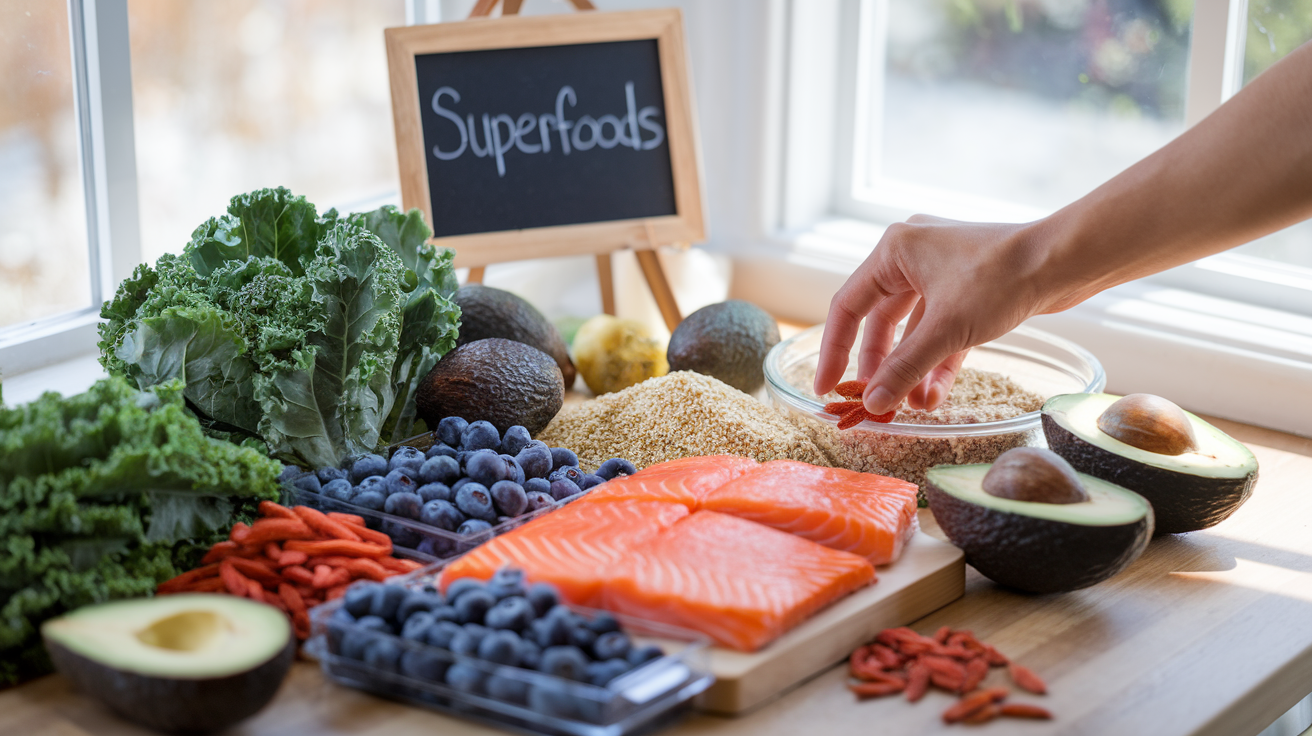
Nutrient-dense foods to boost your diet
Now that you’ve learned about overcoming challenges in your healthy eating journey, it’s time to explore how you can take your nutrition to the next level by incorporating superfoods into your diet. Superfoods are nutrient-dense powerhouses that can significantly boost your overall health and well-being. Let’s dive into some of the most beneficial superfoods you can add to your meals.
Leafy Greens
Leafy greens are among the most nutrient-dense foods on the planet. They’re packed with vitamins, minerals, and antioxidants that support your body’s functions. Some of the best leafy greens to include in your diet are:
- Kale: Rich in vitamins A, C, and K, as well as antioxidants
- Spinach: High in iron, folate, and magnesium
- Swiss chard: Excellent source of vitamins A and C, potassium, and fiber
- Collard greens: Packed with calcium and vitamin K for bone health
Try incorporating these greens into your salads, smoothies, or as a side dish to boost your nutrient intake.
Berries
Berries are not only delicious but also incredibly nutritious. They’re loaded with antioxidants, fiber, and various vitamins. Some of the most nutrient-dense berries include:
- Blueberries: High in antioxidants and known for their brain-boosting properties
- Strawberries: Rich in vitamin C and beneficial for heart health
- Goji berries: Packed with vitamin C, iron, and beta-carotene
- Acai berries: High in antioxidants and healthy fats
Add these colorful fruits to your breakfast, snacks, or desserts for a nutritional boost.
Nuts and Seeds
Nuts and seeds are excellent sources of healthy fats, protein, and various micronutrients. Some of the most nutrient-dense options include:
- Almonds: Rich in vitamin E, magnesium, and fiber
- Walnuts: High in omega-3 fatty acids and antioxidants
- Chia seeds: Packed with fiber, protein, and omega-3s
- Flaxseeds: Excellent source of lignans and omega-3 fatty acids
Incorporate these into your diet as snacks, toppings for salads or yogurt, or in baked goods for added nutrition.
Whole Grains
Whole grains are essential for a balanced diet, providing fiber, B vitamins, and various minerals. Some nutrient-dense whole grains to consider are:
- Quinoa: Complete protein source with all nine essential amino acids
- Oats: Rich in beta-glucan, a type of soluble fiber that helps lower cholesterol
- Brown rice: Good source of manganese, selenium, and magnesium
- Buckwheat: Gluten-free and high in rutin, a antioxidant that supports heart health
Use these grains as a base for meals, in salads, or as a side dish to boost your nutrient intake.
Legumes
Legumes are an excellent source of plant-based protein, fiber, and various vitamins and minerals. Some nutrient-dense legumes to include in your diet are:
- Lentils: High in fiber, protein, and iron
- Chickpeas: Rich in folate, manganese, and copper
- Black beans: Excellent source of anthocyanins, powerful antioxidants
- Edamame: Complete protein source and high in folate
Incorporate these into soups, stews, salads, or as a side dish to increase your protein and fiber intake.
Fatty Fish
Fatty fish are rich in omega-3 fatty acids, which are essential for brain and heart health. Some of the most nutrient-dense options include:
- Salmon: High in omega-3s, vitamin D, and selenium
- Sardines: Rich in calcium, vitamin B12, and omega-3s
- Mackerel: Excellent source of vitamin B12, selenium, and omega-3s
- Trout: Good source of protein, potassium, and vitamin D
Try to include fatty fish in your diet at least twice a week for optimal health benefits.
Fermented Foods
Fermented foods are rich in probiotics, which support gut health and boost your immune system. Some nutrient-dense fermented foods include:
- Yogurt: High in calcium, protein, and probiotics
- Kefir: Rich in probiotics and beneficial yeast
- Sauerkraut: Excellent source of vitamin C, K, and probiotics
- Kombucha: Contains antioxidants and beneficial bacteria
Incorporate these foods into your diet to support your digestive health and overall well-being.
Comparison of Nutrient Density in Superfoods
| Superfood | Calories per 100g | Protein (g) | Fiber (g) | Key Nutrients |
|---|---|---|---|---|
| Kale | 49 | 4.3 | 3.6 | Vitamins A, C, K |
| Blueberries | 57 | 0.7 | 2.4 | Antioxidants |
| Almonds | 579 | 21.2 | 12.5 | Vitamin E, Magnesium |
| Quinoa | 120 | 4.4 | 2.8 | Complete protein |
| Lentils | 116 | 9.0 | 7.9 | Iron, Folate |
| Salmon | 208 | 20.4 | 0 | Omega-3s, Vitamin D |
| Greek Yogurt | 59 | 10.2 | 0 | Calcium, Probiotics |
By incorporating these nutrient-dense superfoods into your diet, you can significantly boost your overall nutrient intake and support your health goals. Remember, variety is key, so try to include a diverse range of these superfoods in your meals throughout the week.
Easy ways to add superfoods to meals
Now that you’re familiar with various nutrient-dense superfoods, let’s explore some simple and delicious ways to incorporate them into your daily meals. By making small additions to your existing recipes, you can significantly boost the nutritional value of your diet without drastically changing your eating habits.
Breakfast Boosters
Start your day right by adding superfoods to your breakfast. Here are some easy ways to do it:
-
Smoothie Bowls: Blend your favorite fruits with leafy greens like spinach or kale, and top with chia seeds, goji berries, and sliced almonds.
-
Overnight Oats: Mix oats with Greek yogurt, milk (dairy or plant-based), and add chia seeds, berries, and a drizzle of honey.
-
Avocado Toast: Top whole-grain toast with mashed avocado, sprinkle with hemp seeds, and add sliced tomatoes or smoked salmon.
-
Greek Yogurt Parfait: Layer Greek yogurt with mixed berries, chopped nuts, and a sprinkle of cinnamon for added flavor and antioxidants.
-
Superfood Pancakes: Add mashed banana and chia seeds to your pancake batter, and top with fresh berries and a dollop of Greek yogurt.
Lunch and Dinner Additions
Enhance your main meals with these superfood additions:
-
Power-packed Salads: Start with a base of mixed leafy greens, add quinoa or lentils for protein, toss in some berries or pomegranate seeds, and sprinkle with nuts or seeds.
-
Superfood Soups: Add kale, spinach, or Swiss chard to your favorite soup recipes. Include lentils or beans for extra protein and fiber.
-
Grain Bowls: Use quinoa or brown rice as a base, top with roasted vegetables, add some lean protein like grilled chicken or tofu, and sprinkle with nuts or seeds.
-
Stir-fries with a Twist: Include edamame, broccoli, and bell peppers in your stir-fries. Serve over brown rice or quinoa for added nutrition.
-
Superfood Pasta: Toss whole-grain pasta with sautéed kale, cherry tomatoes, and grilled salmon. Sprinkle with crushed walnuts for extra crunch and omega-3s.
Snack Ideas
Incorporate superfoods into your snacks for sustained energy throughout the day:
-
Trail Mix: Create your own by mixing various nuts (almonds, walnuts, pistachios), seeds (pumpkin, sunflower), and dried berries (goji, cranberries).
-
Hummus and Veggies: Pair homemade or store-bought hummus with carrot sticks, bell pepper slices, and cucumber rounds for a nutrient-rich snack.
-
Energy Balls: Blend dates, nuts, cocoa powder, and chia seeds in a food processor, then roll into bite-sized balls for a quick energy boost.
-
Avocado Boats: Fill half an avocado with a mixture of diced tomatoes, onions, and a sprinkle of hemp seeds for a satisfying and nutritious snack.
-
Greek Yogurt Dip: Mix Greek yogurt with herbs and spices, and use it as a dip for sliced vegetables or whole-grain crackers.
Superfood Smoothies
Smoothies are an excellent way to pack multiple superfoods into one delicious drink:
-
Green Goddess Smoothie: Blend spinach, kale, banana, pineapple, chia seeds, and coconut water for a nutrient-packed green smoothie.
-
Berry Blast Smoothie: Mix mixed berries, Greek yogurt, oats, and a handful of spinach for a antioxidant-rich drink.
-
Tropical Turmeric Smoothie: Combine mango, pineapple, coconut milk, turmeric, and ginger for an anti-inflammatory boost.
-
Chocolate Superfood Smoothie: Blend almond milk, banana, cocoa powder, spinach, and almond butter for a healthy chocolate fix.
-
Protein Power Smoothie: Mix Greek yogurt, berries, spinach, protein powder, and flaxseeds for a post-workout recovery drink.
Superfood Toppers and Garnishes
Small additions can make a big difference. Try these superfood toppers:
- Sprinkle chia seeds or ground flaxseeds on yogurt, oatmeal, or salads.
- Add a handful of goji berries or mulberries to your morning cereal or afternoon snack.
- Top soups or salads with pumpkin seeds or sunflower seeds for extra crunch and nutrients.
- Garnish dishes with chopped fresh herbs like parsley, cilantro, or basil for added flavor and antioxidants.
- Drizzle cold-pressed flaxseed oil or hemp seed oil over salads or cooked vegetables.
Superfood Swaps
Consider these easy superfood swaps to boost the nutritional value of your meals:
| Instead of | Try This Superfood Alternative |
|---|---|
| White rice | Quinoa or brown rice |
| Iceberg lettuce | Kale or spinach |
| Regular yogurt | Greek yogurt or kefir |
| Potato chips | Kale chips or roasted chickpeas |
| Croutons | Pumpkin seeds or chopped nuts |
| Sour cream | Mashed avocado |
| Regular pasta | Whole grain or legume-based pasta |
| Sugar | Mashed banana or applesauce in baking |
By implementing these easy additions and swaps, you can significantly increase your intake of superfoods without drastically changing your diet. Remember, the key is to start small and gradually incorporate more superfoods into your meals. Over time, you’ll develop a taste for these nutrient-dense foods and naturally gravitate towards healthier choices.
Balancing superfoods with other foods
While superfoods are incredibly beneficial for your health, it’s important to remember that they should be part of a balanced diet, not the entire diet itself. The key to optimal nutrition is variety and moderation. Let’s explore how you can effectively balance superfoods with other foods to create a well-rounded and sustainable eating plan.
The Importance of Balance
Incorporating superfoods into your diet is an excellent way to boost your nutrient intake, but it’s crucial to maintain a balance with other food groups. Here’s why:
-
Diverse Nutrient Profile: Different foods provide different nutrients. By eating a variety of foods, you ensure that you’re getting a wide range of essential vitamins, minerals, and other beneficial compounds.
-
Calorie Management: Some superfoods, like nuts and seeds, are calorie-dense. Balancing them with lower-calorie foods helps maintain a healthy weight.
-
Sustainable Habits: A diet that includes a variety of foods is more enjoyable and easier to maintain long-term than one that focuses too heavily on a limited number of superfoods.
-
Avoiding Nutrient Excesses: While it’s rare, consuming too much of certain nutrients can have negative effects. Balancing superfoods with other foods helps prevent this.
Creating Balanced Meals with Superfoods
To create balanced meals that incorporate superfoods, consider using the plate method:
- Fill half your plate with non-starchy vegetables and fruits (including superfood options).
- Fill a quarter of your plate with lean proteins (including superfood options like salmon or lentils).
- Fill the remaining quarter with whole grains or starchy vegetables (including superfood options like quinoa or sweet potatoes).
- Add a small amount of healthy fats (which can include superfood options like avocado or nuts).
Here’s an example of how you can create balanced meals incorporating superfoods:
| Meal | Superfood Components | Other Components |
|---|---|---|
| Breakfast | Greek yogurt, berries, chia seeds | Whole grain toast, eggs |
| Lunch | Kale, quinoa, almonds | Grilled chicken, olive oil dressing |
| Dinner | Salmon, sweet potato, broccoli | Brown rice, lemon sauce |
| Snack | Apple slices, almond butter | Whole grain crackers |
Balancing Macronutrients
When incorporating superfoods, it’s important to maintain a balance of macronutrients – proteins, carbohydrates, and fats. Here’s how you can achieve this:
-
Proteins: Include a mix of animal-based (if you’re not vegetarian/vegan) and plant-based proteins. Superfood options like salmon, Greek yogurt, quinoa, and lentils can be balanced with other protein sources like chicken, eggs, or tofu.
-
Carbohydrates: Focus on complex carbohydrates. Balance superfood options like quinoa, sweet potatoes, and berries with other whole grains and fruits.
-
Fats: Incorporate a variety of healthy fats. Superfoods like avocados, nuts, and seeds can be balanced with olive oil, fatty fish, and other sources of healthy fats.
Avoiding Superfood Overload
While superfoods are nutritious, it’s possible to have too much of a good thing. Here are some tips to avoid overdoing it:
-
Portion Control: Even with superfoods, stick to appropriate portion sizes. For example, a serving of nuts is about a handful, not the entire bag.
-
Rotate Your Superfoods: Instead of eating the same superfoods every day, rotate them throughout the week. This ensures a variety of nutrients and prevents potential boredom.
-
Don’t Neglect Other Healthy Foods: Remember that many “regular” foods are also nutritious. Don’t skip other healthy foods in favor of only eating superfoods.
-
Listen to Your Body: Pay attention to how different foods make you feel. If you notice any negative reactions, even to superfoods, adjust your intake accordingly.
Balancing Superfoods in Different Diets
Different dietary patterns can all incorporate superfoods effectively:
-
Mediterranean Diet: This diet naturally includes many superfoods like olive oil, nuts, fish, and leafy greens. Balance these with whole grains, legumes, and other vegetables and fruits.
-
Vegetarian/Vegan Diets: Focus on plant-based superfoods like quinoa, lentils, and leafy greens. Balance these with other plant proteins, whole grains, and a variety of fruits and vegetables.
-
Low-Carb Diets: Emphasize low-carb superfoods like leafy greens, berries, nuts, and fatty fish. Balance these with other low-carb vegetables and proteins.
-
Gluten-Free Diets: Many superfoods are naturally gluten-free. Balance gluten-free grains like quinoa with a variety of fruits, vegetables, and proteins.
Superfoods and Treat Foods
Remember, a healthy diet can include occasional treats. Here’s how to balance superfoods with less nutritious foods:
-
80/20 Rule: Aim for 80% of your diet to be nutritious foods (including superfoods) and allow 20% for less nutritious choices.
-
Add Superfoods to
Sustainable Healthy Eating Habits
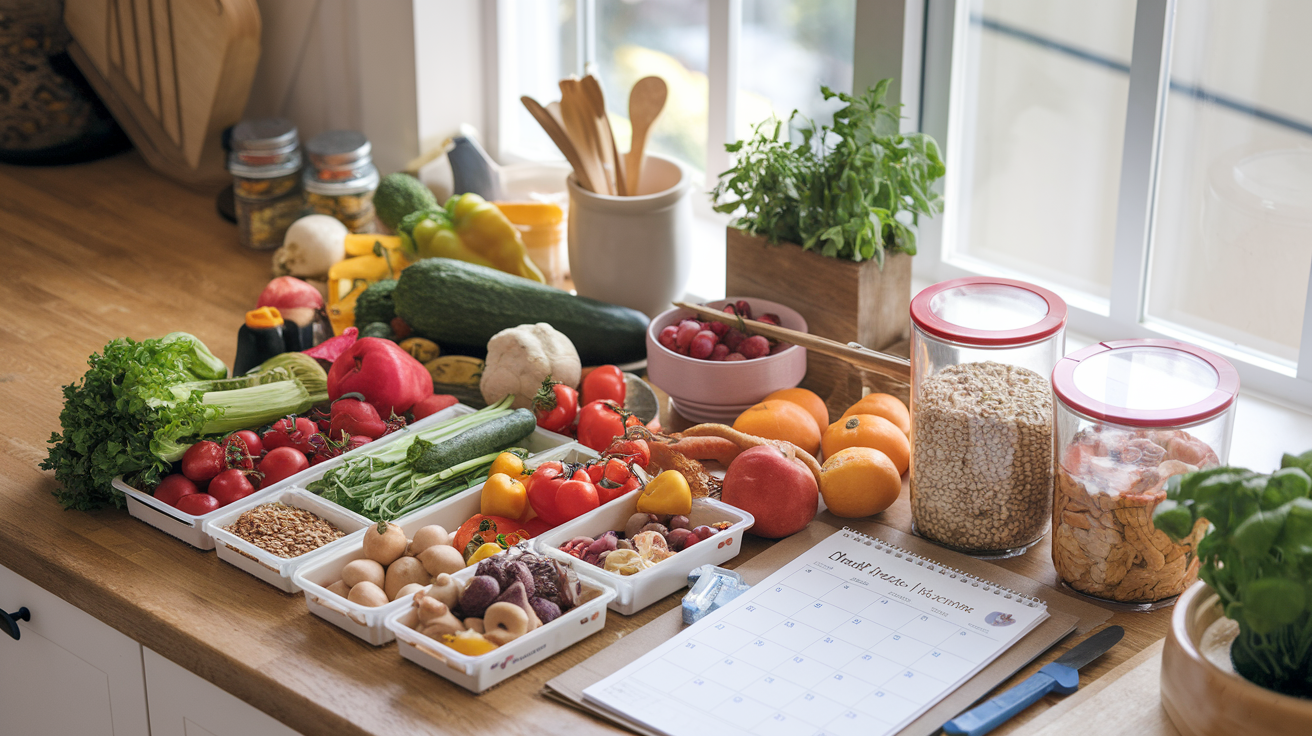
Gradual lifestyle changes
Embracing sustainable healthy eating habits is not about making drastic changes overnight. Instead, it’s about implementing gradual lifestyle changes that you can maintain in the long run. By taking small steps, you’re more likely to stick to your new habits and make lasting improvements to your diet and overall health.
Start by identifying one or two areas of your diet that you’d like to improve. Perhaps you want to increase your vegetable intake or reduce your consumption of processed foods. Once you’ve pinpointed these areas, set realistic goals for yourself. For example, aim to add one extra serving of vegetables to your meals each day or replace one processed snack with a whole food alternative.
Here are some gradual changes you can implement to revolutionize your diet:
- Swap refined grains for whole grains
- Replace sugary drinks with water or unsweetened beverages
- Incorporate more plant-based protein sources into your meals
- Experiment with new fruits and vegetables each week
- Reduce portion sizes gradually over time
Remember, the key is to make these changes slowly and consistently. As you become comfortable with one change, introduce another. This approach allows your taste buds and habits to adjust naturally, making it easier to stick to your new healthy eating plan.
Building a support system
Creating a strong support system is crucial for maintaining healthy eating habits in the long term. When you surround yourself with people who encourage and motivate you, you’re more likely to stay on track with your goals. Here are some ways you can build a robust support system for your healthy eating journey:
-
Family and friends: Share your goals with your loved ones and ask for their support. Encourage them to join you in adopting healthier eating habits, making it a family or group effort.
-
Online communities: Join social media groups or forums dedicated to healthy eating. These platforms can provide valuable tips, recipes, and motivation from like-minded individuals.
-
Professional support: Consider working with a registered dietitian or nutritionist who can provide personalized guidance and accountability.
-
Cooking classes: Attend healthy cooking classes to learn new skills and connect with others who share your interest in nutritious eating.
-
Fitness groups: Join a local fitness group or class. Often, people who prioritize exercise also focus on healthy eating, creating a supportive environment for both activities.
Creating a support system not only provides encouragement but also helps you stay accountable to your goals. Share your progress, challenges, and victories with your support network. This interaction can help you stay motivated and provide valuable insights and advice when you face obstacles.
Monitoring progress and adjusting goals
To maintain sustainable healthy eating habits, it’s essential to regularly monitor your progress and adjust your goals as needed. This process allows you to celebrate your achievements, identify areas for improvement, and ensure that your goals remain challenging yet attainable.
Here are some effective ways to monitor your progress:
-
Food diary: Keep a detailed record of what you eat and drink each day. This can help you identify patterns, track your nutrient intake, and spot areas where you might be veering off course.
-
Regular weigh-ins: If weight management is part of your goal, consider weighing yourself weekly. Remember that weight can fluctuate due to various factors, so focus on long-term trends rather than daily changes.
-
Body measurements: Take measurements of your waist, hips, arms, and thighs monthly. These can sometimes be more indicative of progress than weight alone, especially if you’re also incorporating exercise into your routine.
-
Progress photos: Take photos of yourself at regular intervals (e.g., monthly) to visually track changes in your body composition.
-
Energy levels and mood: Pay attention to how you feel throughout the day. Improved energy levels and mood can be significant indicators of progress in your healthy eating journey.
When it comes to adjusting your goals, consider the following approach:
-
Review your initial goals: Assess whether your original goals are still relevant and achievable.
-
Celebrate achievements: Acknowledge the progress you’ve made, no matter how small.
-
Identify challenges: Pinpoint areas where you’re struggling and brainstorm solutions.
-
Set new milestones: Based on your progress and challenges, establish new short-term and long-term goals.
-
Be flexible: Remember that life circumstances can change. Be prepared to adjust your goals accordingly without feeling discouraged.
Here’s a sample table to help you track your progress and adjust your goals:
| Metric | Initial Goal | Current Status | Adjusted Goal |
|---|---|---|---|
| Daily vegetable servings | 3 servings | 4 servings | 5 servings |
| Weekly meal prep | 1 day/week | 2 days/week | Maintain 2 days/week |
| Water intake | 6 cups/day | 7 cups/day | 8 cups/day |
| Processed food consumption | Reduce by 50% | Reduced by 40% | Reduce by 60% |
| Homemade meals | 4 days/week | 5 days/week | 6 days/week |
By regularly monitoring your progress and adjusting your goals, you’ll be able to maintain motivation and continue making strides towards a healthier lifestyle.
Celebrating small victories
In your journey towards sustainable healthy eating habits, it’s crucial to acknowledge and celebrate your small victories along the way. These celebrations not only boost your morale but also reinforce positive behaviors, making it easier to stick to your healthy eating plan in the long run.
Here are some small victories you should celebrate:
- Trying a new healthy recipe
- Choosing a nutritious snack over a processed one
- Drinking water instead of a sugary beverage
- Meal prepping for the week
- Eating mindfully for an entire meal
- Incorporating a new vegetable into your diet
- Resisting temptation during a social event
- Consistently meeting your daily water intake goal
- Reading and understanding nutrition labels
- Sharing a healthy meal with friends or family
Remember, these victories, no matter how small they may seem, represent progress towards your larger goals. Each one is a step in the right direction and deserves recognition.
Here are some ways you can celebrate your small victories:
-
Share your success: Post about your achievement on social media or share it with your support group. This not only allows others to celebrate with you but also holds you accountable.
-
Treat yourself: Reward yourself with something that aligns with your healthy lifestyle goals. This could be a new cookbook, a fun kitchen gadget, or a relaxing massage.
-
Start a victory journal: Keep a record of all your small wins. On tough days, you can look back at this journal for motivation and to remind yourself of how far you’ve come.
-
Plan a healthy outing: Celebrate by planning a fun, health-focused activity like a hike, a visit to a farmers market, or trying out a new healthy restaurant.
-
Learn something new: Reward yourself by learning a new healthy cooking technique or attending a nutrition workshop.
Remember, the key is to choose celebrations that don’t contradict your healthy eating goals. Avoid using food as a reward, especially unhealthy foods, as this can create a negative association and hinder your progress.
By celebrating these small victories, you’re reinforcing positive behaviors and making your healthy eating journey more enjoyable. This positive reinforcement can significantly increase your chances of maintaining these habits in the long term.
As you continue on your path to revolutionize your diet with healthy eating habits, remember that sustainable change is a journey, not a destination. Each small step you take, each gradual change you implement, and each victory you celebrate brings you closer to your ultimate goal of a healthier lifestyle.
With your support system cheering you on, regular progress monitoring, and a positive mindset that celebrates achievements, you’re well-equipped to make lasting changes to your eating habits. Keep in mind that setbacks are normal and part of the process. What matters most is your ability to learn from these experiences and continue moving forward.
Now that you’ve learned about sustainable healthy eating habits, you’re ready to put these strategies into practice. Remember to be patient with yourself, stay consistent, and enjoy the journey towards a healthier you. Your future self will thank you for the positive changes you’re making today.

Revolutionizing your diet with healthy eating habits is a journey that can transform your life. By understanding the principles of healthy eating, assessing your current diet, and incorporating essential components like balanced nutrients and superfoods, you’re taking significant steps towards better health. Remember, the key to success lies in effective meal planning, practicing mindful eating techniques, and overcoming challenges that may arise along the way.
As you embark on this path to healthier living, focus on developing sustainable habits that work for you in the long term. Your diet is not just about what you eat, but how you eat and why you eat. By making conscious choices and staying committed to your goals, you’ll not only improve your physical health but also enhance your overall well-being. Start small, be consistent, and watch as these positive changes revolutionize your relationship with food and your body.