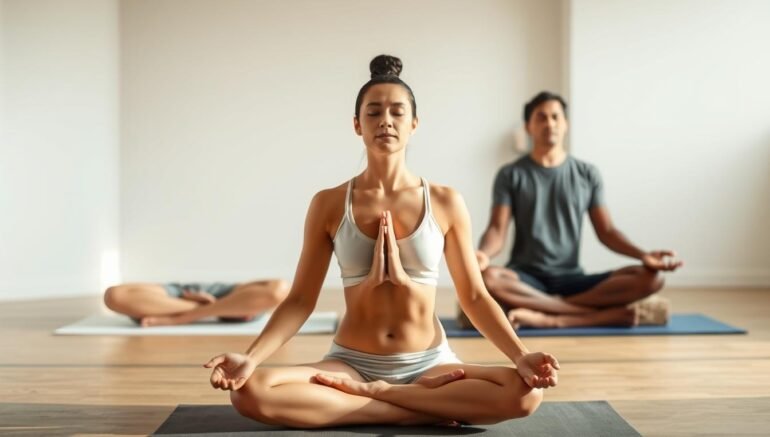
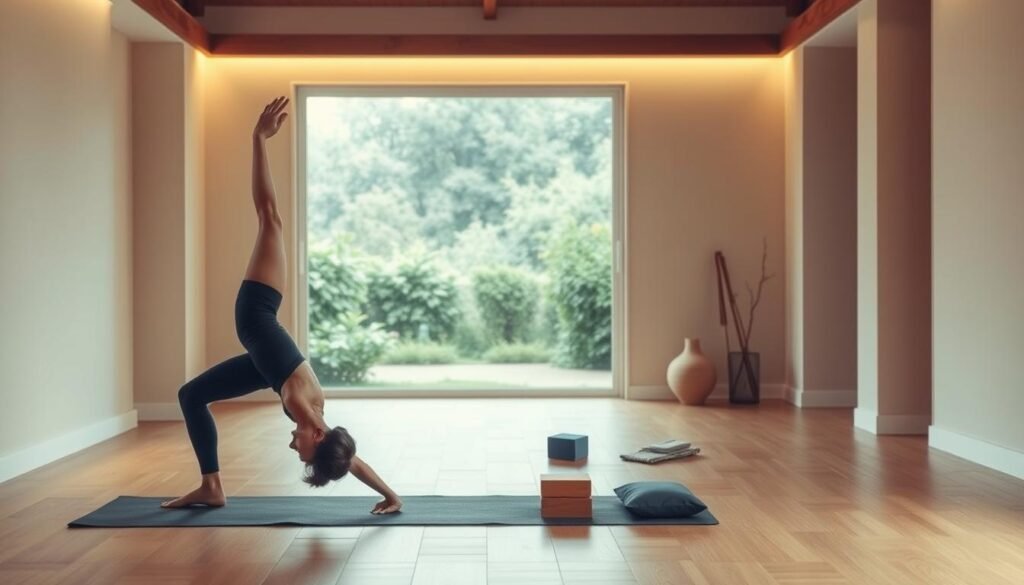
Modern life can be stressful, making it hard to find balance every day. Integrating practices that promote total wellness can greatly improve your life quality.
A holistic approach to well-being means taking care of both your body and mind. By preparing your body through physical practices and calming your mind through meditation, you can reach a deeper state of relaxation and mental clarity.
As you work on finding this balance, you might notice your emotional strength growing. Your overall sense of well-being could also get better.
Key Takeaways
Integrating physical and mental practices promotes total wellness.
A holistic approach nurtures both body and mind.
Physical practices prepare the body for deeper relaxation.
Meditation calms the mind and enhances mental clarity.
Emotional resilience and overall well-being are improved.
The Synergy of Yoga, Pranayama, and Meditation
Yoga, pranayama, and meditation work together for total wellness. They have a big impact on your body and mind.
Knowing these practices is key to seeing their benefits. Yoga gets your body ready for meditation by loosening muscles and improving flexibility. Pranayama, or breath control, calms your mind and balances your body’s energy. Meditation sharpens your focus and mental clarity, boosting what you get from yoga and pranayama.
Understanding the Three Pillars of Holistic Practice
Each practice adds something special to a holistic wellness approach. Yoga postures (asanas) boost physical health. Pranayama techniques improve breathing and calm the mind. Meditation brings mindfulness and lowers stress, adding to yoga’s physical benefits.
How These Practices Complement Each Other
Yoga, pranayama, and meditation go hand in hand. Yoga makes you more aware of your breath, leading to pranayama. Meditation’s calm helps you focus better in yoga.
Practice
Primary Benefits
Secondary Benefits
Yoga
Physical flexibility, strength
Mental clarity, reduced stress
Pranayama
Breath control, calmness
Improved respiratory health, mental focus
Meditation
Mental clarity, mindfulness
Emotional balance, reduced anxiety
The Science Behind Their Combined Benefits
Studies show yoga, pranayama, and meditation together are good for your health. This holistic wellness approach lowers stress, improves heart health, and boosts mental well-being.
Adding these practices to your day can lead to a more balanced life. You’ll enjoy a more fulfilling existence.
Getting Started with Yoga for Physical Wellness
Starting your yoga journey can change your life. It builds strength, flexibility, and awareness of your body. These are key for good health. Knowing the basics is important for a strong practice.
Essential Yoga Poses for Beginners
Begin with simple poses to build a solid base. Mountain Pose (Tadasana), Downward-Facing Dog (Adho Mukha Svanasana), and Child’s Pose (Balasana) are great for newbies. They boost flexibility, balance, and strength.
Mountain Pose: Helps maintain good posture and balance.
Downward-Facing Dog: Stretches the hamstrings and calves.
Child’s Pose: Offers a rest, stretching the back.
Building a Progressive Yoga Routine
Once you get the hang of basic poses, add more complex ones. Use mindful breathing techniques to deepen your practice. This brings relaxation and focus.
Here’s a step-by-step routine:
Start with simple stretches.
Move to more challenging poses.
Finish with relaxation or meditation.
Adapting Yoga to Your Fitness Level
Yoga fits all fitness levels, making it for everyone. Whether you’re flexible or not, you can adjust poses to fit your needs.
Modifications for Limited Mobility
If you have limited mobility, use props like blocks or chairs. This makes poses safe and beneficial for you.
Advancing Your Practice Safely
As you get better, listen to your body. Don’t push too hard. Add yoga lifestyle benefits like healthy eating and rest to support your journey.
Pose
Benefit
Modification
Downward-Facing Dog
Stretches hamstrings and calves
Bend knees if hamstrings are tight
Warrior Pose
Strengthens legs and hips
Shorten stance if balance is an issue
Tree Pose
Improves balance
Use a block or wall for support
Mastering Pranayama for Energy and Vitality
Pranayama, the ancient yogic art of breath control, unlocks your full energy. By mastering pranayama, you can boost your energy and vitality.
Fundamental Breathing Techniques
To start your pranayama journey, learn the basic breathing techniques. These techniques are the foundation of your practice. They help you understand breath control.
Diaphragmatic Breathing
Diaphragmatic breathing, or belly breathing, uses your diaphragm to fill your lungs. This improves respiratory efficiency and calms your mind. Sit comfortably with your back straight. Place one hand on your belly and the other on your chest. Inhale deeply through your nose, letting your belly rise while your chest stays steady.
Alternate Nostril Breathing
Alternate Nostril Breathing, or Nadi Shodhana, balances your brain’s hemispheres. It involves closing one nostril and inhaling through the other. Then, switch to exhale through the other nostril. This technique promotes balance and clarity.
Cooling Breath (Sitali)
The Cooling Breath, or Sitali, involves curling your tongue and inhaling through it. This refreshing breath lowers your body temperature and calms your mind.
Incorporating Pranayama into Daily Life
Adding pranayama to your daily routine is simple and rewarding. Start with short sessions in the morning. Gradually increase the time as you get more comfortable. Practice pranayama at any time, but it’s best on an empty stomach or two hours after eating.
Begin with 5-10 minutes a day and gradually increase to 20-30 minutes.
Practice pranayama in a quiet, comfortable space.
Be consistent; regularity is key to experiencing the benefits.
Common Mistakes to Avoid in Breath Work
While practicing pranayama, avoid common mistakes. These include:
Forcing your breath beyond your natural capacity.
Not being consistent with your practice.
Ignoring your body’s signals; if you feel dizzy or uncomfortable, stop and rest.
By mastering pranayama and adding it to your daily life, you can boost your energy and vitality. Regular practice leads to balance and harmony.
Cultivating Mindfulness Through Meditation
Mindfulness meditation helps you stay in the present moment without judgment. It can lower stress and improve your mental clarity. Adding meditation to your daily life can increase awareness and calm.
Simple Meditation Techniques for Beginners
Beginners should start with simple meditation methods. Focusing on your breath is a good place to start. You can also try body scan meditation, focusing on each body part from toes to head.
Focus on your breath
Practice body scan meditation
Use guided meditation recordings
Creating Your Meditation Space
A dedicated meditation space can improve your practice. Find a quiet, comfy spot for sitting. Add candles, plants, or a meditation bench to make it more inviting.
Overcoming Common Meditation Challenges
Meditation needs patience and regular practice. Two big challenges are a wandering mind and finding time.
Dealing with a Wandering Mind
When your mind wanders, just acknowledge it and refocus on your breath. Don’t force your mind to stay focused, as it can get frustrating.
Finding Time in a Busy Schedule
Even with a packed schedule, you can meditate. Try short sessions during your lunch break or before bed.
Here’s a comparison of meditation techniques:
Meditation Technique
Primary Benefit
Best For
Focused Breathing
Reduces stress
Beginners
Body Scan
Relaxes the body
Those with physical tension
Guided Meditation
Improves mental clarity
Individuals seeking mental focus
By using these meditation techniques, you can improve your wellness journey.
Combining Yoga, Pranayama, and Meditation for Total Wellness
Yoga, pranayama, and meditation together offer a complete wellness approach. They improve your life quality by boosting physical health, calming the mind, and lifting the spirit.
Creating an Integrated Daily Practice
To start a daily routine, pick a time and place for it. Begin with a short routine and grow it as you get used to it.
Tips for Integration:
Begin with gentle yoga to warm up.
Then, do pranayama to calm and energize your mind.
End with meditation to deepen inner peace.
Sample 30-Minute Wellness Routines
Here are two routines to help you:
Morning Energizing Sequence
Do 10 minutes of dynamic yoga to wake up.
Do 5 minutes of Kapalabhati breathing to energize.
Then, spend 15 minutes meditating to set your day’s intentions.
Evening Relaxation Practice
Start with 10 minutes of restorative yoga to relax.
Do 5 minutes of Alternate Nostril Breathing to balance.
End with 15 minutes of guided meditation to get ready for sleep.
Progressing Your Practice Over Time
As you get more comfortable, increase your routine’s length or intensity.
Weekly Schedule for Beginners
Practice 3 times a week, starting with 15 minutes and growing to 30.
Focus on one technique each session to build a solid base.
Monthly Goals for Intermediate Practitioners
Every week, aim to add 10 minutes to your practice.
Try new yoga poses, pranayama, or meditation to keep it interesting.
Yoga, pranayama, and meditation together lead to total wellness. Start this journey with patience and keep at it. Soon, you’ll see the great benefits of a holistic wellness approach.
Conclusion: Embracing a Holistic Wellness Journey
Exploring yoga, pranayama, and meditation is your first step towards a holistic wellness practice. This practice nurtures your body, mind, and spirit. By adding these to your daily routine, you’ll see the positive effects on your mental health and overall well-being.
Your wellness journey is personal, and it’s okay to take your time. Be kind to yourself as you grow. With regular practice, you’ll notice improvements in your physical, emotional, and mental health. This will lead to a more balanced and fulfilling life.
Choosing total wellness practices means you’re investing in your health. Keep exploring and deepening your practice. You’ll find the amazing benefits waiting for you on this journey.
FAQ
What are the benefits of combining yoga, pranayama, and meditation for total wellness?
Combining yoga, pranayama, and meditation offers a holistic approach to well-being. It enhances physical, mental, and emotional health. This practice reduces stress, improves flexibility, and boosts energy, leading to overall wellness.
How do I get started with yoga for physical wellness if I’m a beginner?
To start with yoga, learn essential poses for beginners. Gradually build a routine that suits you. Adapt yoga to your fitness level and use modifications for safety and enjoyment.
What are some fundamental pranayama techniques for energy and vitality?
Key pranayama techniques include diaphragmatic breathing, alternate nostril breathing, and cooling breath (Sitali). These help balance energy, calm the mind, and prepare for meditation.
How can I cultivate mindfulness through meditation?
To cultivate mindfulness, start with simple meditation techniques. Create a conducive space and practice regularly. Overcoming a wandering mind takes patience and persistence.
How do I combine yoga, pranayama, and meditation into a daily practice?
To combine these practices, create a daily routine that fits your schedule and goals. Start with 30-minute routines and adapt as you progress, considering your needs and fitness level.
What are some common mistakes to avoid in pranayama and breath work?
Avoid common mistakes in pranayama like practicing with tension and not breathing naturally. Consistency is key for a safe and beneficial practice.
How can I progress my yoga, pranayama, and meditation practice over time?
To progress, set realistic goals and gradually increase practice duration and intensity. Explore new techniques to challenge yourself and promote growth.
Can I practice yoga, pranayama, and meditation if I have limited mobility or health concerns?
Yes, you can adapt these practices to fit your needs. Modify poses, use props, or practice seated or lying down for safety and comfort.