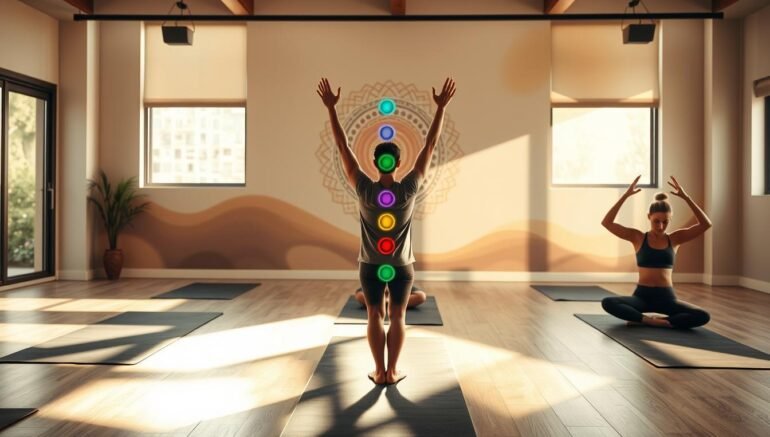
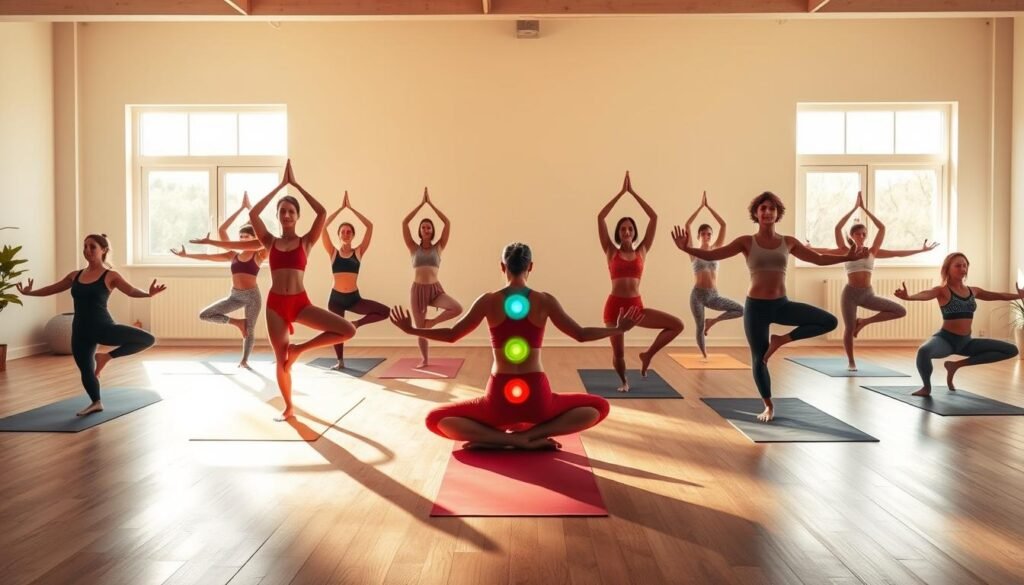
Imagine a practice that harmonizes your body, mind, and spirit. Chakra balancing yoga combines physical postures, breathing, and meditation. It aligns the body’s energy centers.
This practice is designed to promote energy healing practices and well-being. By adding yoga for chakras to your routine, you can feel more calm and clear.
Key Takeaways
Understand the basics of chakra balancing yoga and its benefits.
Learn how to incorporate chakra meditation into your daily routine.
Discover the importance of energy healing practices in achieving balance.
Explore the connection between yoga for chakras and overall well-being.
Start your journey towards a more balanced and harmonious life.
Understanding the Chakra System
Learning about the chakra system is key for those into chakra balancing yoga. It’s a network of energy centers in our body that affects our health and happiness.
The Seven Major Chakras and Their Significance
Our body has seven main chakras, each linked to different parts of us. These are the Root, Sacral, Solar Plexus, Heart, Throat, Third Eye, and Crown. They control our physical, emotional, and spiritual sides, from feeling safe to connecting spiritually.
Chakra
Location
Associated Aspect
Root
Base of Spine
Safety, Security
Sacral
Lower Abdomen
Creativity, Emotions
Solar Plexus
Upper Abdomen
Personal Power, Intuition
How Energy Flows Through Chakras
Energy moves through our chakras, affecting our health and spiritual growth. When energy flows well, we feel good. But blockages can cause problems. Yoga helps keep energy flowing smoothly.
What Is Chakra Balancing Yoga?
Chakra balancing yoga comes from ancient yoga traditions. It aims to improve physical, mental, and spiritual health. This practice balances the body’s energy centers, or chakras, which affect our lives.
Origins and Philosophy
Chakra balancing yoga started in ancient India. It’s based on the idea that our bodies have seven energy centers, or chakras. These centers control our health and spiritual awareness.
The goal is to balance and align these energy centers. This helps us feel more balanced and full of life. Yoga philosopher B.K.S. Iyengar said, “The art of yoga is a holistic practice that unites body, mind, and spirit.”
How It Differs from Regular Yoga Practice
Regular yoga focuses on physical poses and breathing. But chakra balancing yoga also targets the body’s subtle energies. It uses meditation, visualization, and sound to balance the chakras.
This holistic approach makes chakra balancing yoga different. It offers a deeper path to wellness.
By using chakra balancing yoga, people can heal and become more aware. This practice keeps its ancient roots, helping us find balance in today’s world.
Benefits of Chakra Balancing Yoga
Chakra Balancing Yoga is a practice that helps your body, mind, and spirit. It balances the body’s energy centers, or chakras. This approach to health is holistic.
Physical Benefits
Chakra Balancing Yoga improves your flexibility and reduces stress. It can make your posture better, improve blood flow, and boost your immune system. Yoga fans say it can lower blood pressure and improve heart health.
“Yoga is not just a physical practice; it’s a journey towards holistic well-being.”
Mental and Emotional Benefits
This yoga also benefits your mind and emotions. It helps reduce anxiety and depression, bringing calm and well-being. It teaches mindfulness and self-awareness, helping you manage your emotions better.
Benefit
Description
Reduced Stress
Lower levels of cortisol and improved stress management
Improved Mood
Enhanced release of endorphins, leading to better mood
Increased Self-Awareness
Better understanding of oneself and one’s emotions
Spiritual Benefits
On a spiritual level, Chakra Balancing Yoga connects you to your inner self and the universe. It supports spiritual growth and increased intuition. People often feel more purposeful and fulfilled.
Preparing for Your First Chakra Balancing Session
Starting your chakra balancing journey is more than knowing the poses. You need a good environment and the right mindset. A well-prepared space can make your practice more effective, helping you connect with your inner self.
Creating a Sacred Space
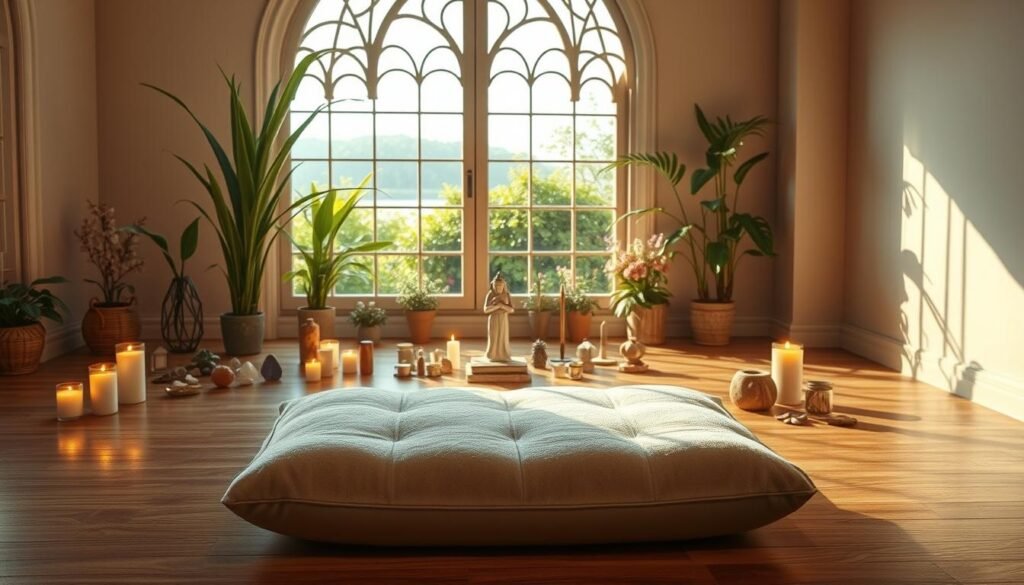
To set up a sacred space, find a quiet, comfy area for your practice. Keep it clutter-free and quiet to help you relax. Use candles, incense, or soft music to make it peaceful. This will help you feel more connected and calm.
Essential Props and Tools
Some props and tools can make your chakra balancing better. Crystals, essential oils, and yoga mats are popular choices. For example, a crystal for the chakra you’re focusing on can boost your practice’s energy.
Setting Intentions for Your Practice
Setting clear intentions is key to a focused practice. Think about what you want to get from your practice. Maybe it’s reducing stress, growing spiritually, or balancing emotions. Positive intentions can make your session more meaningful and powerful.
Chakra Balancing Yoga – What It Is & How to Start: A Step-by-Step Guide
Starting a chakra balancing yoga journey means learning its basics and following a clear plan. This practice uses breath work, meditation, visualization, and asanas to balance the body’s energy. It aims to improve overall well-being.
Step1: Beginning with Breath Work (Pranayama)
The first step is breath work, or pranayama. It includes breathing techniques to calm the mind and balance energy. Techniques like alternate nostril breathing and 4-4-4 breathing are common.
Alternate Nostril Breathing: Balances the left and right hemispheres of the brain
Bellows Breath: Stimulates the nervous system and increases oxygenation
4-4-4 Breathing: Promotes relaxation and reduces stress
Step2: Incorporating Meditation and Visualization
After mastering breath, add meditation and visualization. Focus on a chakra or a color to balance energy. Guided meditations or simple breath focus work well.
Meditation and visualization quiet the mind, increase focus, and bring inner peace.
Step3: Transitioning to Asanas (Physical Poses)
Next, move to asanas, or physical postures. These poses target specific chakras for balance. Mountain Pose and Cobra Pose are good examples.
Mountain Pose (Root Chakra)
Cobra Pose (Heart Chakra)
Shoulder Stand (Throat Chakra)
Step4: Closing Your Practice with Integration
End your practice with integration. Acknowledge body sensations and reflect on your experience. Take deep breaths and set a positive intention for the day.
Specific Yoga Poses for Each Chakra
Yoga helps balance the chakras by focusing on specific poses for each energy center. These poses aim to restore balance and improve overall well-being.
Root Chakra (Muladhara) Balancing
The Root Chakra deals with feelings of safety and grounding. To balance it, try Mountain Pose and Chair Pose.
Mountain Pose and Chair Pose
Mountain Pose helps you feel grounded. Chair Pose strengthens your legs and boosts confidence.
Sacral Chakra (Svadhisthana) Balancing
The Sacral Chakra is about creativity and emotional flow. Goddess Pose and Butterfly Pose are great for balancing this chakra.
Goddess Pose and Butterfly Pose
Goddess Pose opens your hips and boosts creativity. Butterfly Pose helps energy flow in the lower abdomen.
Solar Plexus Chakra (Manipura) Balancing
The Solar Plexus Chakra is about personal power and self-esteem. Boat Pose and Warrior III are good for balancing this energy center.
Boat Pose and Warrior III
Boat Pose strengthens your core and boosts confidence. Warrior III improves balance and determination.
Heart Chakra (Anahata) Balancing
The Heart Chakra is about love and compassion. Try Camel Pose and Cobra Pose to balance it.
Camel Pose and Cobra Pose
Camel Pose opens your heart, promoting love. Cobra Pose strengthens your back and improves emotional well-being.
Throat Chakra (Vishuddha) Balancing
The Throat Chakra is about communication and self-expression. Fish Pose and Shoulder Stand are good for balancing this energy center.
Fish Pose and Shoulder Stand
Fish Pose opens your throat, improving communication. Shoulder Stand brings calm and clarity.
Third Eye Chakra (Ajna) Balancing
The Third Eye Chakra is about intuition and insight. Child’s Pose and Eagle Pose help balance this chakra.
Child's Pose and Eagle Pose
Child’s Pose relaxes and promotes reflection. Eagle Pose enhances focus and intuition.
Crown Chakra (Sahasrara) Balancing
The Crown Chakra is about spiritual connection and enlightenment. Headstand and Lotus Pose are effective for balancing this energy center.
Headstand and Lotus Pose
Headstand connects you spiritually. Lotus Pose improves meditation and inner peace.
Overcoming Common Challenges in Chakra Yoga
Chakra yoga comes with its own set of challenges. These can include physical limits and emotional releases. It’s important to know how to tackle these hurdles for a rewarding practice.
Dealing with Physical Limitations
Physical barriers can stop some from practicing. But, there are ways to overcome this. Modifying poses or using props can make yoga more accessible.
For example, blocks or straps can help you reach the right pose without straining. This makes yoga more doable for everyone.
Maintaining Consistency in Your Practice
Sticking to a routine is vital in chakra yoga. Having a set schedule and a special yoga space helps keep you going. Start small and gradually increase your practice’s length and intensity.
Addressing Emotional Releases During Practice
Chakra yoga can stir up strong emotions. These feelings are a natural part of healing. It’s important to face and deal with these emotions.
Having a qualified teacher or therapist nearby can be helpful. Deep breathing and meditation are also great tools for managing these emotional releases.
Conclusion
Chakra balancing yoga helps you feel better by aligning your body’s energy centers. It impacts your physical, mental, and spiritual health deeply.
Learning about the chakra system and using yoga poses, breathwork, and meditation can balance your energy. This leads to more vitality, emotional stability, and a spiritual connection.
Chakra yoga offers many benefits. It improves physical flexibility and reduces stress. It also boosts self-awareness and brings inner peace. Regular practice leads to a more balanced life.
This practice helps you understand yourself and the world better. It makes life more fulfilling and meaningful.
FAQ
What is chakra balancing yoga, and how does it differ from regular yoga?
Chakra balancing yoga focuses on balancing the body’s seven chakras. It uses meditation, visualization, and specific poses to align the chakras. This practice aims to improve overall well-being, unlike regular yoga.
How do I know if I’m practicing chakra balancing yoga correctly?
To practice correctly, focus on proper alignment and breathing. Start with simple poses and listen to your body. Adjust as needed. Working with a qualified instructor or using online resources can help.
Can chakra balancing yoga help with stress and anxiety?
Yes, it can help by promoting relaxation and calming the mind. Regular practice can improve emotional stability and calmness.
What are some common challenges people face when practicing chakra balancing yoga, and how can they be overcome?
Challenges include physical limitations and emotional releases. Modify poses and practice self-compassion. Create a schedule and stick to it to maintain consistency.
How often should I practice chakra balancing yoga to see benefits?
Practice 2-3 times a week for noticeable benefits. Consistency is key, so find a routine that works for you.
Can chakra balancing yoga be practiced by people of all ages and abilities?
Yes, it can be adapted for all ages and abilities. Modify poses and focus on breathwork, meditation, and visualization.
How does chakra balancing yoga impact physical health?
It can reduce stress, improve flexibility, and promote well-being. Regular practice can also alleviate symptoms of various health conditions.
What role does meditation play in chakra balancing yoga?
Meditation is key, helping to quiet the mind and balance energy. It leads to self-awareness, emotional stability, and spiritual growth.
Can chakra balancing yoga be used in conjunction with other healing practices?
Yes, it can be combined with energy healing, Reiki, or sound healing. This enhances benefits and promotes deeper relaxation and balance.