June 16, 2025
Artificial intelligence (AI) and machine learning (ML) are rapidly transforming healthcare, particularly in the realm of cardiovascular medicine. With heart disease remaining the leading cause of death worldwide, claiming nearly 18 million lives annually, the integration of AI-powered solutions offers unprecedented opportunities for early detection, accurate diagnosis, and personalized treatment plans. This technological revolution is enabling clinicians to identify subtle patterns in vast amounts of patient data that would otherwise remain undetected by traditional analytical methods, potentially saving countless lives through timely intervention.
The application of AI in predicting heart disease represents one of the most promising frontiers in modern medicine. By analyzing complex datasets from electronic health records, medical imaging, genetic information, and even wearable devices, these sophisticated algorithms can identify risk factors and predict cardiovascular events with remarkable precision. This article explores how AI and machine learning are revolutionizing heart disease prediction and what this means for the future of cardiovascular care.
Key Applications of AI in Heart Disease Prediction
Artificial intelligence is transforming cardiovascular medicine through various applications, from analyzing diagnostic data to predicting disease risk with unprecedented accuracy. These technologies are becoming increasingly valuable tools in the clinician’s arsenal for early detection and intervention.
ECG Analysis and Interpretation
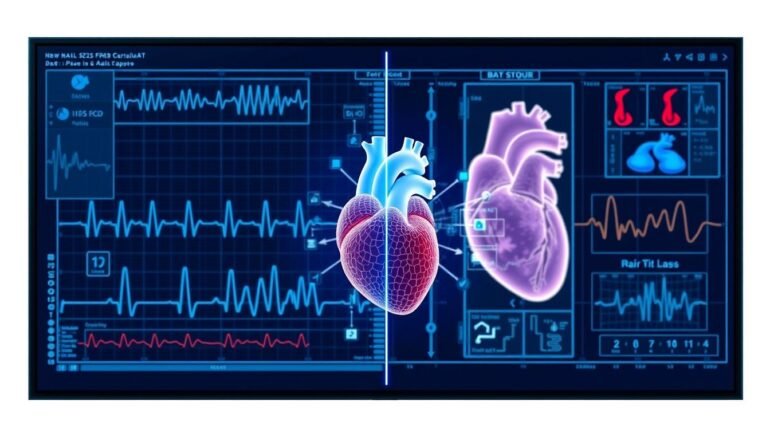
Electrocardiograms (ECGs) provide valuable diagnostic information about heart function, but traditional interpretation relies heavily on clinician expertise and experience. AI algorithms can now analyze ECG data with remarkable precision, detecting subtle abnormalities that might escape human observation.
Deep learning models trained on hundreds of thousands of ECG recordings can identify patterns associated with various cardiac conditions. For example, researchers at Mayo Clinic developed an AI algorithm capable of detecting left ventricular dysfunction from standard 12-lead ECGs with an accuracy of 85.7%. More impressively, the algorithm could identify patients at risk of developing ventricular dysfunction in the future, even when their current ECG appeared normal to human interpreters.
Similarly, AI-enhanced ECG analysis can detect atrial fibrillation during normal sinus rhythm, potentially identifying patients with paroxysmal atrial fibrillation that might otherwise go undiagnosed. These capabilities significantly enhance the diagnostic value of this widely available, low-cost test.
Medical Imaging Analysis
Cardiac imaging techniques such as echocardiography, cardiac MRI, and coronary CT angiography generate complex visual data that AI can analyze with exceptional detail and consistency. Machine learning algorithms can automatically quantify cardiac structures and function, identify abnormalities, and even predict future cardiovascular events based on imaging findings.
For instance, deep convolutional neural networks can automatically measure left ventricular ejection fraction from echocardiograms, reducing the time required for analysis while maintaining accuracy comparable to expert human readers. AI can also detect regional wall motion abnormalities with precision similar to experienced cardiologists.
In coronary CT angiography, AI algorithms can identify and quantify coronary artery plaque and stenosis, providing detailed assessments of atherosclerotic burden and potential risk. Some models can even predict future myocardial infarction risk based on subtle imaging features that might not be apparent to human observers.
Risk Factor Analysis and Prediction Models
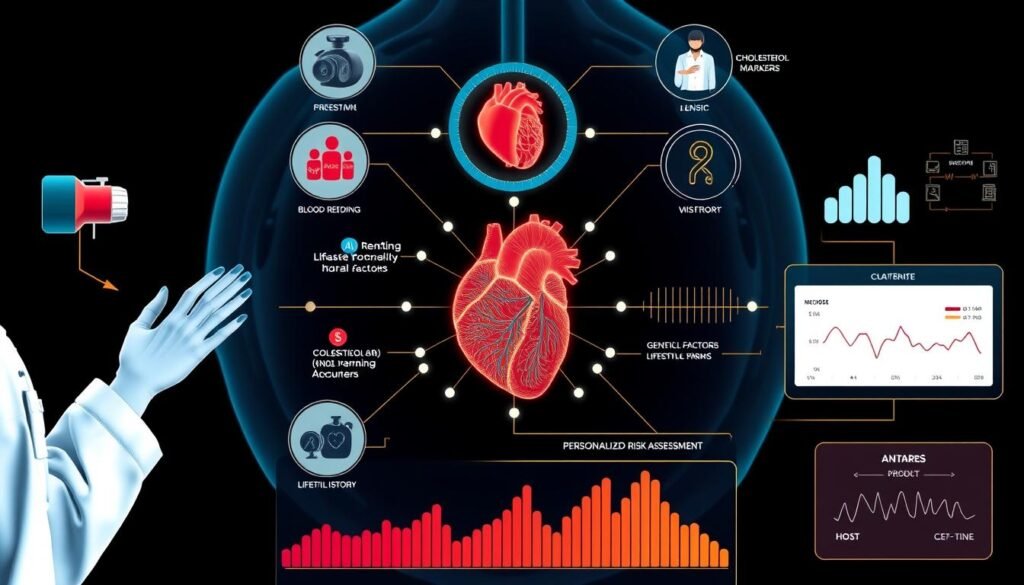
Traditional cardiovascular risk assessment tools like the Framingham Risk Score rely on a limited set of variables and may not capture the complex interplay of factors that contribute to heart disease. Machine learning models can integrate diverse data types—including clinical parameters, laboratory values, genetic information, and social determinants of health—to create more comprehensive and personalized risk predictions.
These AI-powered risk prediction models often outperform conventional statistical approaches. For example, a multi-center cohort study found that an exposome-based machine learning model achieved significantly better performance in cardiovascular disease risk estimation compared to the Framingham risk score (AUC = 0.77 versus AUC = 0.65).
Moreover, AI can identify novel risk factors and unexpected correlations within data that might not be apparent through traditional analysis. This capability enables more nuanced risk stratification and potentially reveals new targets for preventive interventions.
Early Detection of Subclinical Disease
Perhaps one of the most valuable applications of AI in cardiovascular medicine is the ability to detect disease in its earliest, subclinical stages. By identifying subtle patterns that precede overt clinical manifestations, these technologies enable intervention before significant cardiac damage occurs.
For example, AI algorithms can detect asymptomatic left ventricular dysfunction, valvular heart disease, and hypertrophic cardiomyopathy from standard ECGs, potentially enabling screening in primary care settings. Similarly, deep learning models applied to retinal images can identify signs of cardiovascular risk, offering another non-invasive screening approach.
The ability to detect disease before symptoms develop represents a paradigm shift from reactive to proactive cardiovascular care, potentially reducing the burden of advanced heart disease through early intervention.
Benefits and Challenges of AI in Heart Disease Prediction
Benefits
- Improved diagnostic accuracy through pattern recognition capabilities that exceed human perception
- Enhanced risk stratification with more personalized and comprehensive assessment models
- Earlier detection of subclinical disease, enabling preventive intervention before significant cardiac damage
- Increased efficiency in healthcare delivery through automated analysis of complex data
- Democratization of expertise, bringing specialized diagnostic capabilities to underserved areas
- Continuous learning and improvement as algorithms process more data over time
- Integration of diverse data types for more holistic patient assessment
Challenges
- Data privacy concerns regarding the collection and use of sensitive health information
- Need for diverse, representative training datasets to ensure algorithms perform equally well across different populations
- Potential for algorithmic bias that could perpetuate or amplify existing healthcare disparities
- Regulatory hurdles and unclear approval pathways for AI-based medical technologies
- Integration challenges with existing healthcare IT infrastructure and clinical workflows
- “Black box” problem limiting interpretability of complex AI models
- Resistance to adoption among healthcare professionals concerned about role displacement
Addressing Algorithmic Bias in Cardiovascular AI

A critical challenge in implementing AI for heart disease prediction is ensuring these technologies perform equitably across diverse populations. Several studies have identified performance disparities in cardiovascular AI algorithms across demographic groups, particularly regarding age, sex, race, and ethnicity.
For example, a multi-center cohort study found that an ECG deep learning model for detecting valvular heart disease performed worse in older adults and showed numerically inferior performance in Black patients compared to White patients. Similarly, machine learning models for predicting coronary heart disease risk demonstrated bias against female patients, with lower true positive rates and positive predictive ratios compared to male patients.
Addressing these biases requires deliberate strategies throughout the AI development lifecycle, including:
- Using diverse, representative training datasets that include adequate representation of all demographic groups
- Incorporating social determinants of health as predictor variables to improve model performance across populations
- Implementing rigorous validation across different demographic subgroups
- Continuous monitoring and updating of algorithms to address emerging biases
- Engaging diverse stakeholders, including patients and community representatives, in AI development
These efforts are essential to ensure that AI technologies reduce rather than exacerbate existing healthcare disparities in cardiovascular care.
Case Studies: AI in Action for Heart Disease Prediction
Case Study 1: Mayo Clinic’s AI-ECG Algorithm for Early Detection
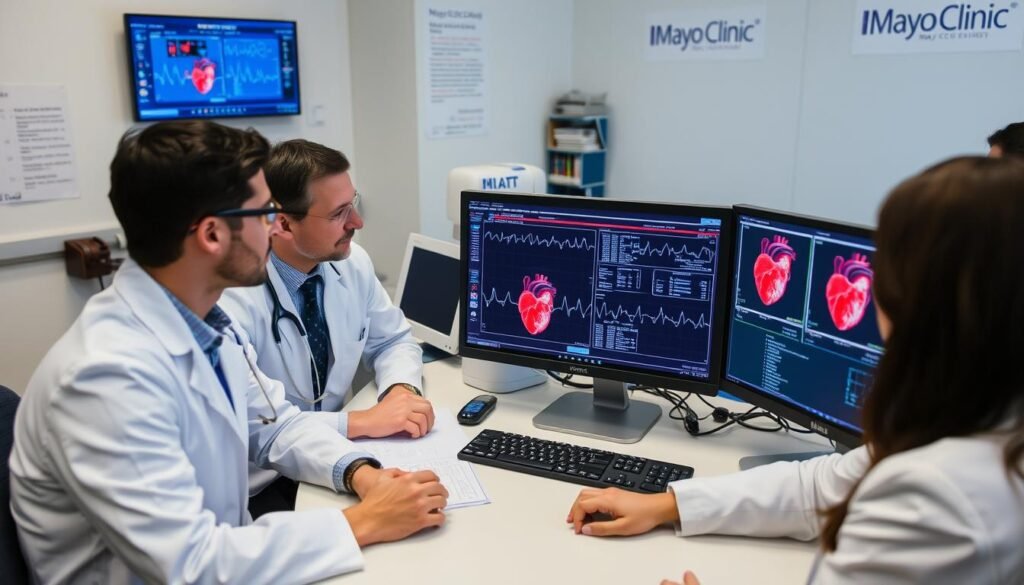
Mayo Clinic researchers developed a groundbreaking AI algorithm that can identify patients with asymptomatic left ventricular dysfunction—a precursor to heart failure—using standard 12-lead ECGs. This condition, characterized by a weakened heart pump without obvious symptoms, affects approximately 7% of the general population and often goes undiagnosed until heart failure symptoms develop.
The research team trained a convolutional neural network using nearly 45,000 paired ECG-echocardiogram records, teaching the algorithm to recognize ECG patterns associated with reduced ejection fraction. When tested on an independent set of over 52,000 patients, the algorithm demonstrated remarkable performance, with an area under the curve of 0.93 and an accuracy of 85.7%.
Most significantly, the algorithm could identify patients at risk for developing future ventricular dysfunction. Patients with positive AI-ECG results but normal echocardiography at baseline had a fourfold higher risk of developing ventricular dysfunction during follow-up compared to those with negative AI-ECG results.
This capability for early detection could revolutionize heart failure prevention by identifying at-risk patients before clinical symptoms develop, enabling earlier intervention with protective medications and lifestyle modifications. The algorithm has since been implemented in a randomized clinical trial (EAGLE) to evaluate its impact on clinical outcomes in primary care settings.
Case Study 2: Google Health’s AI for Cardiovascular Risk Prediction from Retinal Images
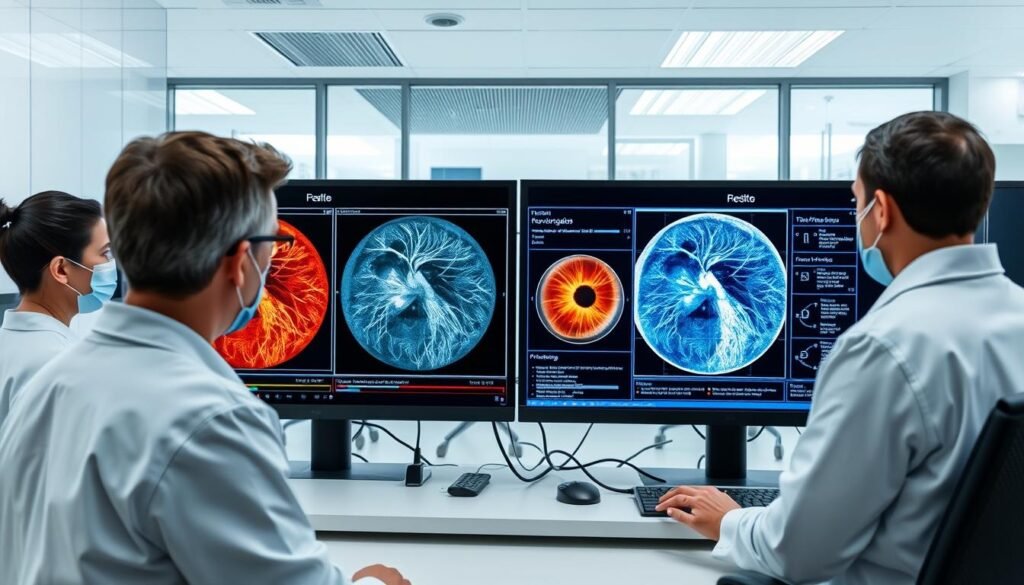
In a pioneering study, researchers from Google Health demonstrated that deep learning algorithms could predict cardiovascular risk factors from retinal fundus photographs. The eye’s blood vessels provide a unique window into vascular health, and the research team hypothesized that AI could extract relevant cardiovascular information from these readily accessible images.
The team trained deep neural networks using retinal images from nearly 300,000 patients, along with their corresponding medical data. The resulting algorithm could predict multiple cardiovascular risk factors, including age, gender, smoking status, blood pressure, and HbA1c levels, with surprising accuracy. Most impressively, the algorithm could predict the risk of major adverse cardiovascular events within five years with performance comparable to the established SCORE risk calculator.
This approach offers several advantages over traditional risk assessment methods. Retinal imaging is non-invasive, widely available, and doesn’t require blood tests or specialized cardiac equipment. The technology could be particularly valuable in resource-limited settings where access to comprehensive cardiovascular risk assessment is limited.
Furthermore, the researchers used attention techniques to identify which aspects of the retinal images were most important for the predictions, enhancing the interpretability of the model. The algorithm focused on blood vessels, providing biological plausibility to its predictions and offering potential insights into novel biomarkers of cardiovascular risk.
Google Health has continued to refine this technology and explore its potential clinical applications, highlighting how AI can leverage existing medical imaging for novel diagnostic purposes in cardiovascular care.
Future Trends in AI for Heart Disease Prediction
Integration with Wearable Technology
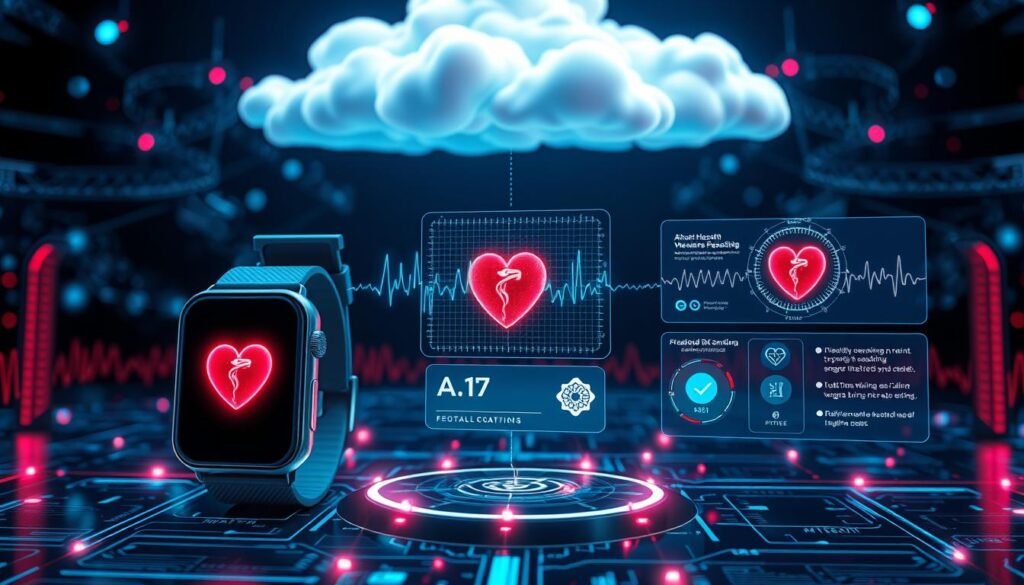
The convergence of AI with wearable technology represents one of the most promising frontiers in cardiovascular disease prediction. Modern wearable devices can continuously monitor various physiological parameters—including heart rate, heart rate variability, activity levels, sleep patterns, and even single-lead ECG—generating unprecedented volumes of real-time health data.
AI algorithms can analyze these continuous data streams to detect subtle deviations from normal patterns that might indicate emerging cardiovascular issues. For example, machine learning models can identify atrial fibrillation from smartwatch data with high accuracy, potentially enabling earlier detection and treatment of this common arrhythmia.
Future wearable technologies may incorporate additional sensors for blood pressure, pulse wave velocity, and even blood biomarkers, further enhancing their predictive capabilities when coupled with sophisticated AI analysis. This approach could transform cardiovascular monitoring from periodic clinical assessments to continuous, real-time risk evaluation and early warning systems.
Multimodal AI Models
While current AI applications often focus on single data types (e.g., ECGs, imaging, or clinical parameters), future models will increasingly integrate multiple data modalities for more comprehensive risk prediction. These multimodal approaches combine diverse information sources—including clinical data, imaging, genomics, proteomics, wearable data, and social determinants of health—to create holistic patient profiles.
By leveraging the complementary strengths of different data types, multimodal AI can potentially achieve greater predictive accuracy than any single-modality approach. For example, combining ECG analysis with clinical risk factors and imaging findings could provide more nuanced risk stratification than any of these elements alone.
The development of sophisticated data fusion techniques and federated learning approaches will accelerate this trend, enabling AI systems to integrate information across previously siloed healthcare data sources while maintaining privacy and security.
Generative AI for Synthetic Patient Data
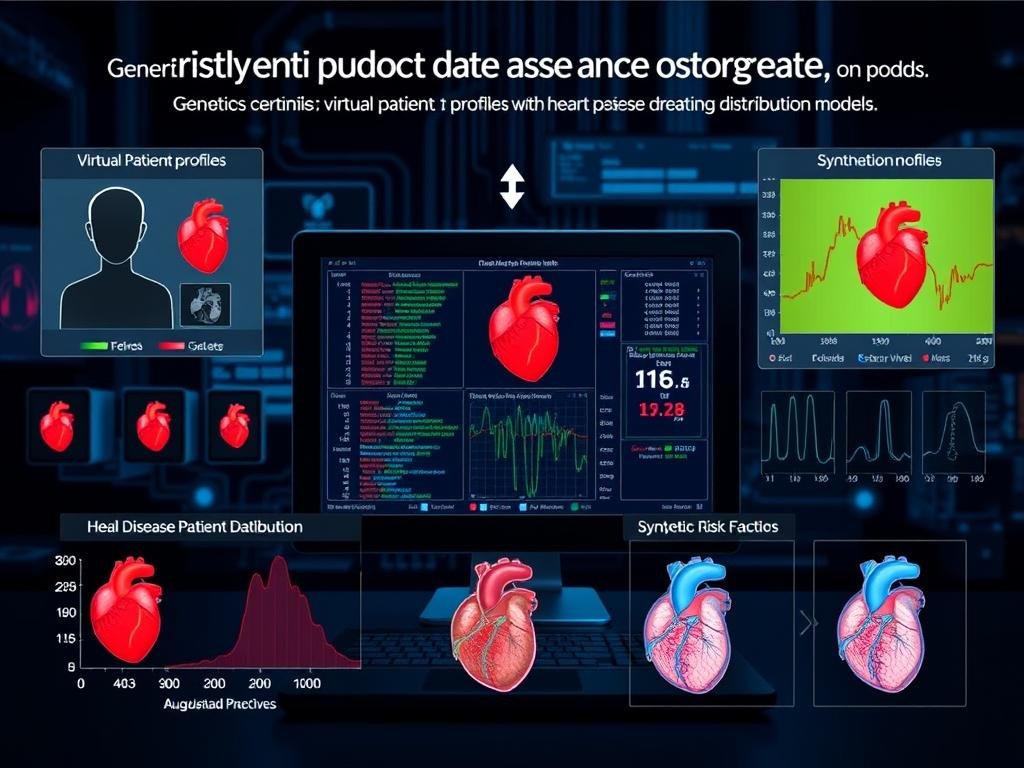
A significant challenge in developing robust AI models for heart disease prediction is the limited availability of diverse, representative training data. Generative AI technologies, such as generative adversarial networks (GANs) and variational autoencoders, offer a potential solution by creating synthetic patient data that preserves the statistical properties of real data while protecting privacy.
These synthetic datasets can augment existing data, particularly for underrepresented demographic groups, helping to address algorithmic bias. They can also simulate rare cardiovascular conditions or disease trajectories that might be underrepresented in available clinical data.
Furthermore, synthetic data generation could facilitate the sharing of “data” across institutions without transferring actual patient information, potentially accelerating collaborative research while maintaining regulatory compliance and patient confidentiality.
Explainable AI for Clinical Decision Support
As AI becomes more integrated into cardiovascular care, the need for interpretable, explainable models becomes increasingly important. Clinicians are unlikely to trust and adopt “black box” algorithms that cannot explain their predictions, particularly for high-stakes decisions about patient care.
Research in explainable AI (XAI) is developing techniques to make complex models more transparent and interpretable. These approaches can identify which features most strongly influence a prediction and provide clinicians with the rationale behind AI-generated recommendations.
Future cardiovascular AI systems will likely incorporate these explainability features as standard, enabling clinicians to understand, validate, and appropriately contextualize algorithmic predictions within their clinical judgment and patient-specific factors.
Federated Learning for Collaborative Model Development
Traditional AI development requires centralizing data from multiple sources, which raises significant privacy concerns and regulatory challenges in healthcare. Federated learning offers an alternative approach by training algorithms across multiple decentralized devices or servers holding local data samples, without exchanging the data itself.
This technique could enable collaborative development of robust cardiovascular AI models across multiple healthcare institutions, regions, and even countries, while keeping sensitive patient data secure within its original location. The resulting models would benefit from diverse training data, potentially improving generalizability and reducing bias.
Federated learning could be particularly valuable for developing globally applicable cardiovascular risk prediction models that perform well across diverse populations and healthcare settings.
Conclusion: The Transformative Potential of AI in Heart Disease Prediction
Artificial intelligence and machine learning are fundamentally transforming our approach to heart disease prediction, offering unprecedented capabilities for early detection, accurate risk stratification, and personalized preventive strategies. These technologies can analyze complex, multimodal data at scale, identifying subtle patterns and relationships that might escape human perception.
The potential benefits are substantial: earlier intervention for high-risk individuals, more efficient allocation of healthcare resources, reduced burden of advanced heart disease, and ultimately, improved cardiovascular outcomes across populations. AI-enhanced prediction tools could be particularly valuable in resource-limited settings, where access to specialized cardiac care is limited.
However, realizing this potential requires addressing significant challenges. Ensuring algorithmic fairness across diverse populations, maintaining data privacy and security, integrating AI tools into clinical workflows, and establishing appropriate regulatory frameworks are all critical considerations. Perhaps most importantly, AI should augment rather than replace clinical judgment, serving as a powerful tool that enhances rather than diminishes the human elements of cardiovascular care.
As we look to the future, the continued evolution of AI in heart disease prediction will likely be characterized by increasingly sophisticated, multimodal approaches that leverage diverse data sources—from molecular biomarkers to wearable sensors to social determinants of health—to create comprehensive, personalized cardiovascular risk profiles. These advances, coupled with parallel developments in preventive therapies and interventions, offer the promise of a future where heart disease is increasingly predicted and prevented rather than treated after it develops.
The journey toward this future will require continued collaboration between clinicians, data scientists, patients, policymakers, and industry partners. By working together to develop, validate, and responsibly implement these powerful new tools, we can harness the transformative potential of AI to reduce the global burden of cardiovascular disease.
References
- Yan Y, Zhang JW, Zang GY, Pu J. The primary use of artificial intelligence in cardiovascular diseases: what kind of potential role does artificial intelligence play in future medicine? J Geriatr Cardiol. 2019;16(8):585-591.
- Mihan A, Pandey A, Van Spall HGC. Artificial intelligence bias in the prediction and detection of cardiovascular disease. npj Cardiovasc Health. 2024;1:31.
- Sun X, Yin Y, Yang Q, Huo T. Artificial intelligence in cardiovascular diseases: diagnostic and therapeutic perspectives. Eur J Med Res. 2023;28:242.
- Attia ZI, Kapa S, Lopez-Jimenez F, et al. Screening for cardiac contractile dysfunction using an artificial intelligence-enabled electrocardiogram. Nat Med. 2019;25(1):70-74.
- Attia ZI, Noseworthy PA, Lopez-Jimenez F, et al. An artificial intelligence-enabled ECG algorithm for the identification of patients with atrial fibrillation during sinus rhythm: a retrospective analysis of outcome prediction. Lancet. 2019;394(10201):861-867.
- Poplin R, Varadarajan AV, Blumer K, et al. Prediction of cardiovascular risk factors from retinal fundus photographs using deep learning. Nat Biomed Eng. 2018;2:158-164.
- Yao X, Rushlow DR, Inselman JW, et al. Artificial intelligence-enabled electrocardiograms for identification of patients with low ejection fraction: a pragmatic, randomized clinical trial. Nat Med. 2021;27(5):815-819.
- Betancur J, Commandeur F, Motlagh M, et al. Deep learning for prediction of obstructive disease from fast myocardial perfusion SPECT: a multicenter study. JACC Cardiovasc Imaging. 2018;11(11):1654-1663.
- Elias P, Poterucha TJ, Rajaram V, et al. Deep learning electrocardiographic analysis for detection of left-sided valvular heart disease. J Am Coll Cardiol. 2022;80(6):613-626.
- Cheung CY, Xu D, Cheng CY, et al. A deep-learning system for the assessment of cardiovascular disease risk via the measurement of retinal-vessel calibre. Nat Biomed Eng. 2021;5(6):498-508.