January 31, 2026
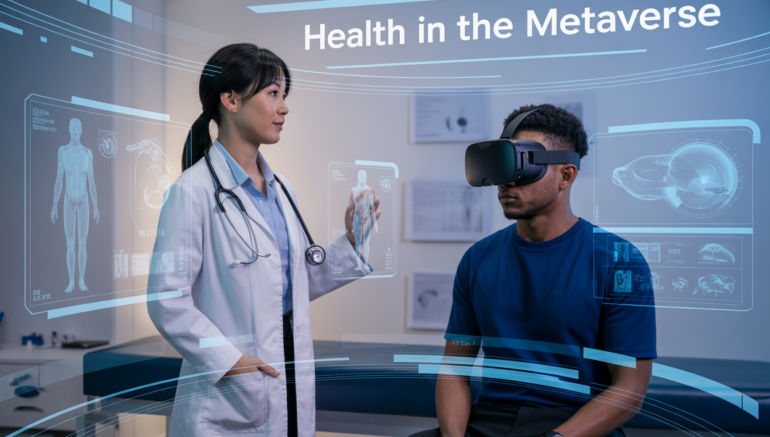
The metaverse healthcare revolution is happening right now, and it’s changing how we think about medical care, training, and wellness. This emerging digital landscape offers breakthrough solutions that go far beyond traditional telemedicine, creating immersive experiences that make healthcare more accessible, engaging, and effective.
This guide is for healthcare professionals, technology enthusiasts, patients curious about digital health applications, and anyone interested in how virtual reality medical training and VR therapy mental health treatments are reshaping our world. Whether you’re a doctor exploring new tools or someone seeking better wellness options, these innovations will likely impact your healthcare journey.
We’ll explore how revolutionary virtual wellness platforms are already transforming patient care through immersive treatments and remote consultations. You’ll discover the mental health breakthroughs happening in virtual environments, where VR therapy creates safe spaces for healing and growth. We’ll also dive into how virtual fitness programs and gamified wellness experiences are making healthy living more engaging and sustainable than ever before.
Healthcare innovation technology is moving fast, and the metaverse represents the next frontier in medical practice. Get ready to see how these virtual worlds are creating real-world health benefits.
Revolutionary Healthcare Applications Already Transforming Patient Care
Virtual Reality Therapy Sessions Reducing Treatment Time and Costs
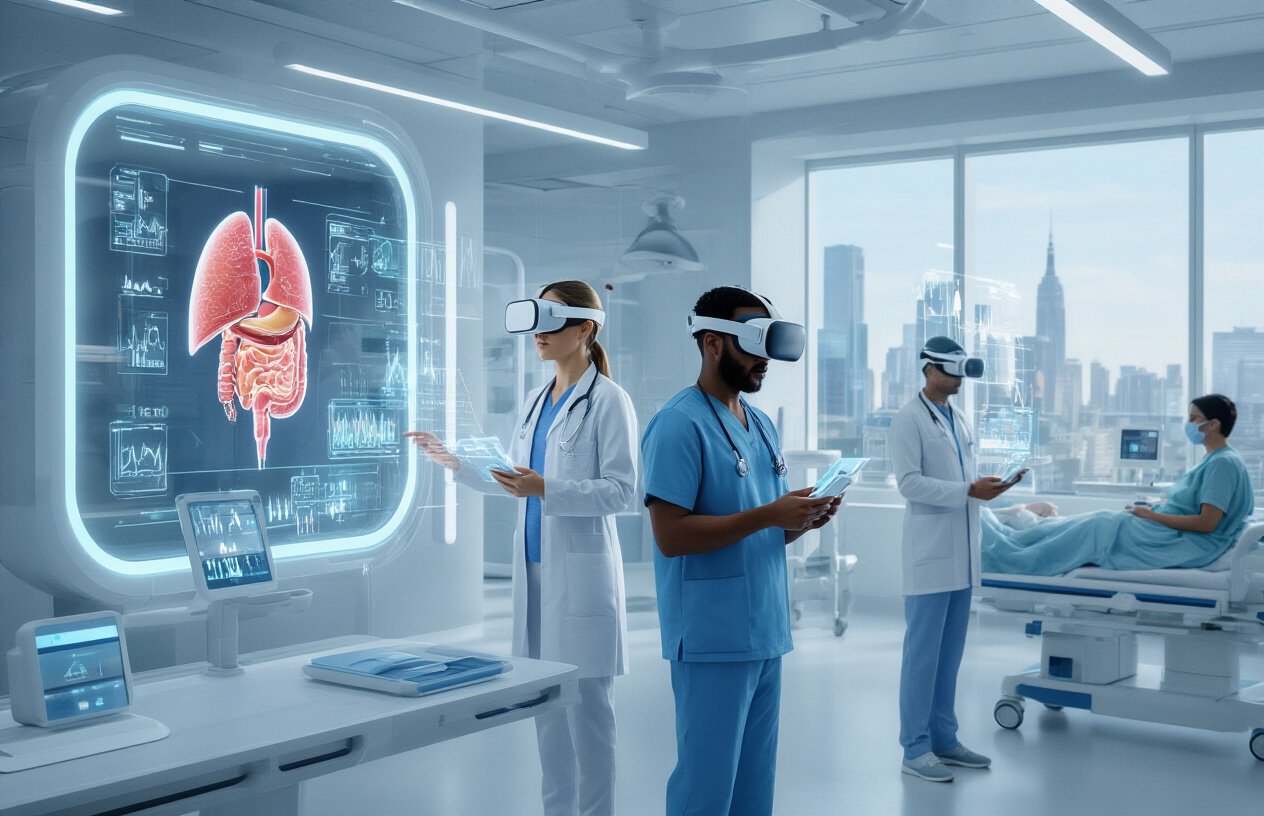
VR therapy mental health applications are revolutionizing how patients receive psychological treatment. Mental health professionals now use immersive virtual environments to treat phobias, PTSD, anxiety disorders, and depression with remarkable success rates. Patients can confront their fears in controlled virtual settings, allowing therapists to guide them through exposure therapy without real-world risks.
The cost benefits are substantial. Traditional therapy requires multiple in-person sessions over months or years, while VR-assisted therapy can achieve similar results in 40-60% fewer sessions. Insurance companies are taking notice, with several major providers now covering VR therapy treatments. Veterans Affairs hospitals report treating combat PTSD 50% faster using virtual reality environments that recreate battlefield scenarios in safe, therapeutic contexts.
Metaverse healthcare platforms enable group therapy sessions where patients from different locations meet in shared virtual spaces. This approach breaks down geographical barriers and reduces travel costs while maintaining therapeutic effectiveness. Therapists can customize virtual environments to match specific patient needs, creating personalized healing spaces that enhance treatment outcomes.
Remote Surgical Training Programs Improving Medical Expertise Globally
Virtual reality medical training programs are democratizing access to high-quality surgical education worldwide. Surgeons in remote locations can now practice complex procedures using haptic feedback systems that simulate real tissue resistance and surgical tool behavior. These immersive training environments eliminate the need for expensive cadavers or live patient practice during learning phases.
Leading medical schools partner with technology companies to create standardized virtual surgical curricula. Students can repeat procedures countless times without resource constraints, building muscle memory and confidence before entering operating rooms. The technology tracks performance metrics, providing detailed feedback on hand tremor, incision precision, and decision-making speed.
International collaboration flourishes through healthcare innovation technology platforms where experienced surgeons mentor trainees across continents in real-time. Rural hospitals benefit enormously, as their staff can access the same training quality as major metropolitan medical centers. This global knowledge sharing accelerates skill development and reduces training timelines from years to months.
Immersive Pain Management Solutions Eliminating Opioid Dependencies
Digital health applications in pain management offer breakthrough alternatives to addictive medications. Chronic pain patients use VR headsets to enter calming virtual environments that naturally reduce pain perception through distraction and relaxation techniques. Clinical studies show 30-50% pain reduction during VR sessions, with lasting effects extending beyond treatment periods.
Burn victims receive immediate pain relief during wound care procedures through immersive snow-covered landscapes that psychologically cool their sensations. Cancer patients undergoing chemotherapy find relief in virtual nature walks and meditation gardens that reduce nausea and anxiety. These interventions work by engaging multiple sensory pathways simultaneously, overwhelming pain signals sent to the brain.
Hospitals report dramatic reductions in opioid prescriptions when implementing VR pain management protocols. The technology provides measurable pain relief without side effects or addiction risks. Patients develop coping strategies they can apply outside clinical settings, creating long-term pain management solutions that improve quality of life while reducing healthcare costs.
Digital Twin Technology Enabling Personalized Treatment Plans
Digital health applications using digital twin technology create precise virtual replicas of individual patients’ organs, systems, and entire bodies. These detailed models incorporate real-time data from wearable devices, medical imaging, and genetic testing to predict how patients will respond to specific treatments before implementation.
Cardiologists use heart digital twins to test different surgical approaches virtually, selecting optimal procedures for each patient’s unique anatomy. Cancer specialists model tumor growth patterns and drug responses, personalizing chemotherapy protocols to maximize effectiveness while minimizing side effects. The technology reduces trial-and-error approaches that characterize traditional medicine.
Telemedicine metaverse platforms integrate digital twins with virtual consultations, allowing doctors to show patients exactly how proposed treatments will affect their specific conditions. This visual approach improves patient understanding and compliance while building trust in treatment recommendations. The technology transforms medicine from one-size-fits-all approaches to truly individualized care plans based on comprehensive patient modeling.
Mental Health Breakthroughs Leveraging Virtual Environments
Safe Exposure Therapy for Phobias and PTSD Recovery
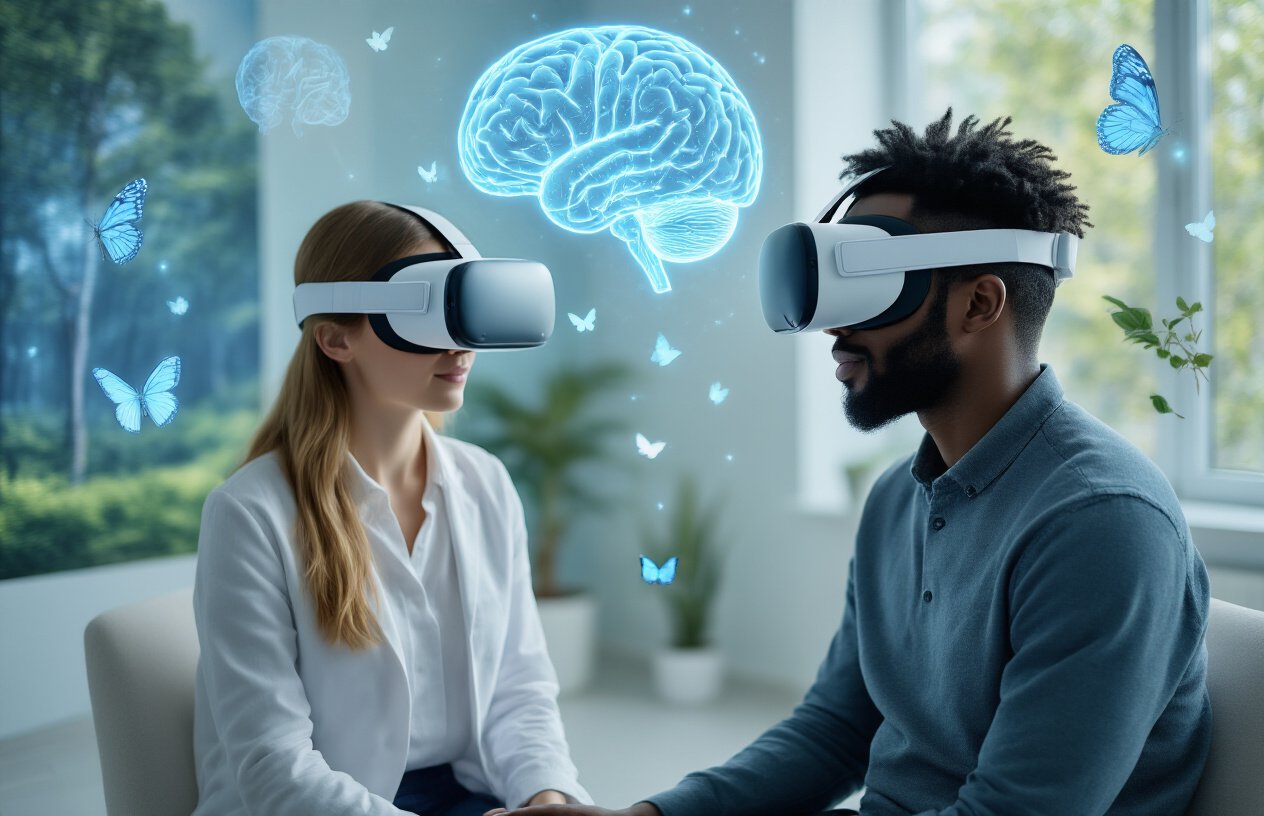
VR therapy mental health applications are revolutionizing how therapists treat phobias and PTSD. Virtual environments allow patients to face their fears in a controlled, safe setting where they can gradually build tolerance without real-world risks. A patient with a fear of flying can experience realistic airplane scenarios, complete with takeoff sounds and turbulence, while remaining firmly planted in a therapist’s office.
For PTSD recovery, veterans can revisit combat scenarios at their own pace, helping them process traumatic memories under professional guidance. The technology creates immersive experiences that trigger emotional responses similar to real situations, but therapists can instantly adjust intensity levels or stop sessions when needed.
Clinical studies show exposure therapy in virtual reality produces faster results than traditional methods. Patients often require fewer sessions to overcome specific phobias, and the controlled nature of virtual environments reduces dropout rates significantly. The ability to repeat scenarios exactly helps therapists track progress and identify specific triggers that need additional attention.
Social Anxiety Treatment Through Controlled Virtual Interactions
Digital health applications now offer virtual spaces where people with social anxiety can practice conversations and social situations. These environments simulate everything from job interviews to casual dinner parties, giving users opportunities to build confidence without fear of judgment.
Virtual reality platforms create diverse scenarios with AI-powered characters that respond naturally to user interactions. Patients can practice public speaking to virtual audiences, engage in small talk at simulated networking events, or navigate challenging workplace conversations. The beauty lies in the ability to restart difficult interactions and try different approaches.
Therapists can monitor these sessions remotely, providing real-time coaching through virtual reality headsets. They can adjust crowd sizes, environmental factors, and interaction complexity based on patient comfort levels. This personalized approach helps people gradually expand their social comfort zones.
The anonymity factor plays a huge role in success rates. Users feel more willing to take risks and make mistakes when interacting with virtual characters rather than real people. This practice translates into increased confidence during actual social encounters.
Meditation and Mindfulness Apps Creating Calming Digital Sanctuaries
Virtual wellness platforms transport users to serene environments that would be impossible to access daily. Imagine meditating on a peaceful mountaintop, beside a gentle waterfall, or in an ancient temple – all from your living room. These immersive experiences engage multiple senses to deepen relaxation states.
Metaverse healthcare applications now include guided meditation sessions led by virtual instructors in stunning 3D environments. Users can choose from forest clearings, ocean beaches, or floating space stations, each designed to promote different types of mindfulness practice. The visual and auditory elements work together to block out real-world distractions more effectively than traditional meditation apps.
Biometric integration takes these experiences further by monitoring heart rate, breathing patterns, and stress levels in real-time. The virtual environment responds to physiological data, adjusting lighting, sounds, and visual elements to optimize relaxation. Some platforms even sync with smart home devices to control room temperature and lighting during sessions.
Group meditation sessions in virtual spaces create community connections for people who might otherwise practice alone. Users can join meditation circles with others worldwide, sharing peaceful virtual spaces while maintaining privacy. These shared experiences reduce feelings of isolation and provide motivation to maintain consistent mindfulness practices.
The accessibility factor cannot be overstated – people with mobility limitations, busy schedules, or limited access to nature can still experience healing environments that promote mental wellness and emotional balance.
Fitness and Wellness Innovation Gamifying Healthy Lifestyles
Virtual Personal Trainers Providing 24/7 Customized Workouts
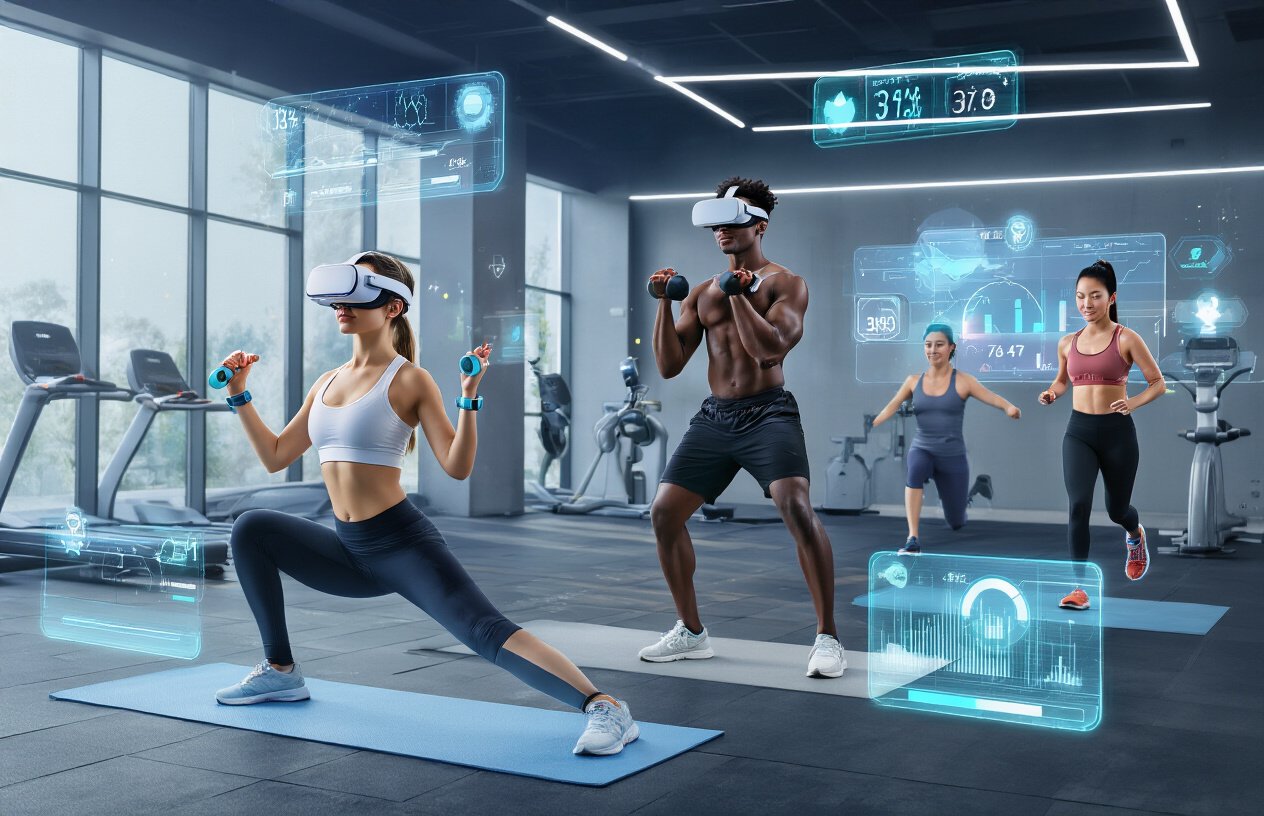
Virtual fitness programs are transforming how we approach personal training through AI-powered coaches that adapt to individual needs, schedules, and fitness levels. These digital trainers use motion tracking technology to monitor form, count repetitions, and provide real-time feedback during workouts. Unlike traditional personal training sessions limited by time slots and geographic location, metaverse healthcare platforms offer round-the-clock access to professional guidance.
Advanced algorithms analyze movement patterns, heart rate data, and performance metrics to create personalized workout routines that evolve based on progress. Virtual trainers can modify exercises instantly if they detect improper form or fatigue, reducing injury risk while maximizing effectiveness. The technology integrates seamlessly with wearable devices, creating comprehensive fitness profiles that inform future training sessions.
Immersive Group Exercise Classes Breaking Geographic Barriers
Group fitness has evolved beyond physical studios through virtual wellness platforms that connect participants worldwide. These immersive experiences transport users to exotic locations, futuristic environments, or peaceful natural settings while maintaining the social energy of traditional group classes. Participants can see and interact with other users in real-time, creating accountability and motivation that often surpasses in-person experiences.
Virtual reality technology enables innovative class formats impossible in physical spaces. Users might cycle through virtual landscapes, practice yoga on mountaintops, or participate in high-intensity interval training in gamified environments. Instructors can host classes for hundreds of participants simultaneously while providing individualized attention through AI assistance.
Real-Time Biometric Monitoring Optimizing Performance Results
Digital health applications now integrate sophisticated biometric monitoring that transforms raw data into actionable insights. Heart rate variability, oxygen saturation, muscle activation patterns, and stress indicators provide comprehensive pictures of physiological responses during exercise. This data feeds into machine learning algorithms that optimize workout intensity, recovery periods, and nutrition recommendations.
The technology extends beyond basic fitness tracking to include advanced metrics like lactate threshold estimation, VO2 max calculations, and biomechanical analysis. Users receive immediate feedback about their performance zones, allowing for precise training adjustments that maximize results while minimizing overexertion risks.
Habit Formation Games Making Wellness Engaging and Addictive
Gamification transforms mundane wellness routines into engaging experiences that trigger reward pathways in the brain. Virtual fitness programs incorporate elements like experience points, achievement badges, leaderboards, and progression systems that make healthy behaviors inherently rewarding. Users unlock new workout environments, equipment, or challenges as they meet fitness goals.
Social features add competitive and collaborative elements that boost engagement. Friends can join virtual workout challenges, share achievements, and participate in team-based fitness quests. The technology creates positive addiction patterns around healthy behaviors, replacing screen time with active participation in virtual wellness activities that benefit both physical and mental health.
Medical Education Revolution Accelerating Professional Development
Realistic Surgical Simulations Reducing Medical Errors
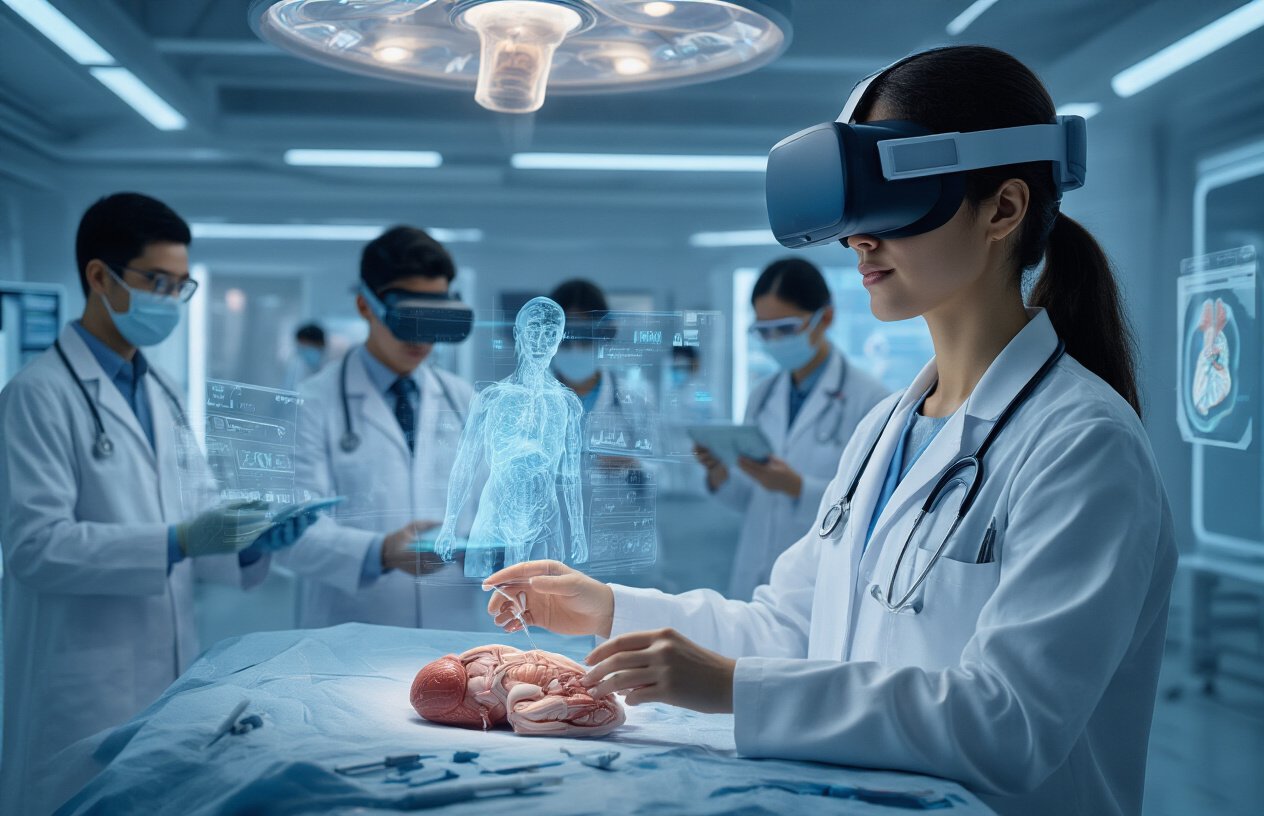
Virtual reality medical training has completely changed how surgeons prepare for complex procedures. Instead of practicing on cadavers or learning through trial and error in real operating rooms, medical students and experienced surgeons now step into incredibly detailed virtual environments that replicate actual surgical scenarios with stunning accuracy.
These simulations offer something traditional training methods simply can’t match: the ability to make mistakes without consequences. Surgeons can practice the same procedure dozens of times, encountering various complications and unexpected situations that might occur during real surgery. The medical education VR platforms track every movement, providing instant feedback on technique, precision, and decision-making.
Major medical institutions are reporting significant improvements in surgical outcomes after implementing VR training programs. Residents who trained with VR simulators before performing their first real procedures showed 40% fewer errors compared to those who received only traditional training. The technology allows for practicing rare procedures that surgeons might encounter only once or twice in their entire careers.
Healthcare innovation technology has made these simulations so realistic that they include haptic feedback – users can actually feel resistance when cutting through virtual tissue or suturing wounds. This tactile element bridges the gap between virtual practice and real-world application, making the transition from simulation to actual surgery much smoother for medical professionals.
Anatomy Visualization Tools Enhancing Learning Retention
Medical students have always struggled with understanding three-dimensional anatomical structures from two-dimensional textbooks and static models. Metaverse healthcare applications are solving this age-old problem by creating immersive environments where students can literally walk through the human body, examining organs, blood vessels, and neural pathways from every conceivable angle.
These digital health applications transform abstract concepts into tangible experiences. Students can shrink down to cellular level to observe how diseases affect tissue, or zoom out to see how entire organ systems work together. The interactive nature of these tools means students aren’t just memorizing anatomical terms – they’re experiencing how the body functions in real-time.
Research shows that students using VR anatomy tools retain information 75% longer than those using traditional study methods. The visual and spatial memory created through these immersive experiences helps students recall complex anatomical relationships years later when treating patients. Medical schools are finding that students who struggle with traditional learning methods often excel when using these visualization tools.
The technology also allows for customization based on individual learning styles. Visual learners can focus on detailed 3D models, while kinesthetic learners can manipulate virtual organs and systems to understand their function better.
Global Medical Conferences Eliminating Travel and Access Barriers
Virtual wellness platforms have revolutionized how medical professionals share knowledge and collaborate across the globe. Traditional medical conferences required expensive travel, hotel stays, and time away from practice – barriers that prevented many healthcare providers from accessing cutting-edge research and networking opportunities.
Virtual medical conferences in the metaverse create shared spaces where thousands of professionals can attend presentations, participate in discussions, and network with colleagues from around the world. These events feature interactive exhibition halls where pharmaceutical companies and medical device manufacturers showcase their latest innovations through immersive demonstrations.
The accessibility improvements are remarkable. Rural physicians who previously couldn’t attend major conferences due to geographical constraints now participate actively in global medical discussions. International speakers can present to audiences worldwide without visa complications or travel restrictions.
Telemedicine metaverse platforms have expanded these conferences beyond simple presentations. Attendees can join small group discussions, participate in hands-on workshops using virtual medical equipment, and even observe live surgical procedures being performed in different countries. The collaborative potential has created new opportunities for international medical partnerships and research initiatives that were previously impossible to coordinate.
The cost savings are substantial too – institutions save thousands of dollars in travel expenses while reaching broader audiences and providing more inclusive educational opportunities for their staff.
Future Healthcare Possibilities Reshaping Medical Practice
AI-Powered Diagnostic Assistants Improving Accuracy and Speed
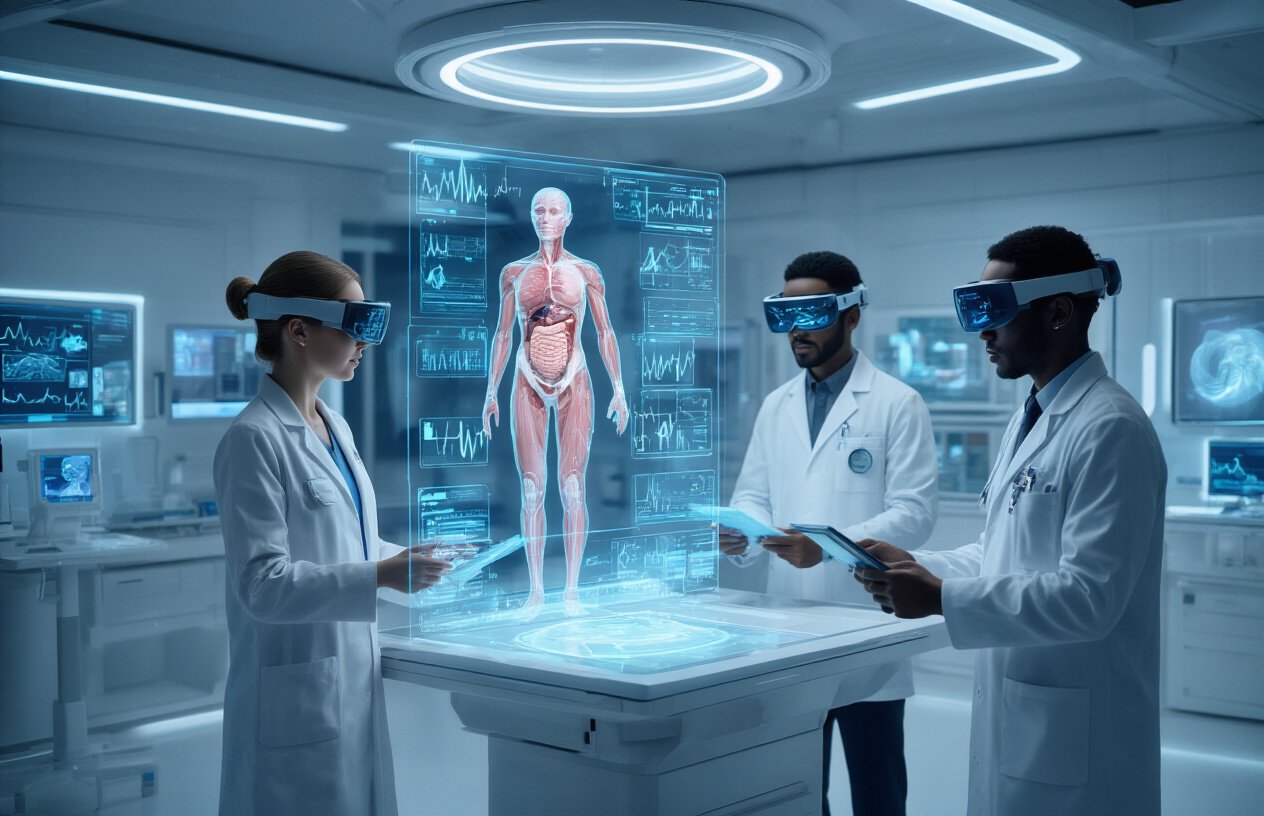
Machine learning algorithms integrated into metaverse healthcare platforms are transforming diagnostic capabilities. These AI assistants analyze medical imaging, lab results, and patient symptoms in real-time, often detecting patterns human eyes might miss. Virtual diagnostic environments allow physicians to manipulate 3D representations of organs, tumors, and anatomical structures, providing unprecedented visualization tools.
Advanced AI systems can process thousands of medical cases simultaneously, cross-referencing symptoms with vast databases of medical literature. This healthcare innovation technology reduces diagnostic errors by up to 40% and cuts diagnosis time from hours to minutes. Radiologists working in virtual spaces can collaborate instantly with AI systems that highlight suspicious areas in scans and suggest potential conditions based on statistical probabilities.
Virtual Hospital Environments Expanding Access to Specialist Care
Remote hospital environments in the metaverse break down geographical barriers to specialist care. Patients in rural areas can access world-class specialists without traveling hundreds of miles. Virtual hospital rooms replicate physical examination capabilities through haptic feedback technology and high-resolution cameras.
These digital spaces enable multiple specialists to examine patients simultaneously, fostering collaborative diagnosis and treatment planning. Emergency consultations become possible 24/7, with specialists logging into virtual environments from anywhere in the world. The technology is particularly revolutionary for rare disease consultations, where expertise is scarce and geographically dispersed.
Blockchain Health Records Ensuring Data Security and Portability
Blockchain technology creates immutable, secure health records that patients control completely. Medical data stored on distributed ledgers prevents unauthorized access while ensuring seamless sharing between healthcare providers. Patients can grant specific permissions to doctors, researchers, or insurance companies, maintaining privacy while enabling care coordination.
Smart contracts automatically execute health insurance claims and treatment approvals based on predetermined criteria. This eliminates administrative delays and reduces healthcare costs. International patients can access their complete medical histories instantly, regardless of where they received previous care.
| Blockchain Benefits | Traditional Systems | Blockchain Systems |
|---|---|---|
| Data Ownership | Hospital/Provider Controlled | Patient Controlled |
| Security Level | Centralized Vulnerabilities | Distributed Security |
| Portability | Limited Transfer Capabilities | Universal Access |
| Processing Time | Days/Weeks | Minutes/Hours |
Predictive Health Analytics Preventing Diseases Before Symptoms Appear
Digital health applications powered by continuous monitoring devices predict health issues months before symptoms manifest. Wearable sensors track hundreds of biomarkers, feeding data into AI systems that recognize early disease patterns. Virtual reality interfaces present this complex health data in easily understandable visual formats.
Predictive models analyze genetic information, lifestyle factors, and environmental exposures to calculate disease risks. Patients receive personalized prevention recommendations through immersive virtual coaching sessions. These systems have successfully predicted heart attacks, strokes, and diabetes onset with over 85% accuracy in clinical trials.
Telemedicine Integration Creating Seamless Patient Experiences
Telemedicine metaverse platforms create comprehensive virtual care experiences that surpass traditional video consultations. Patients enter virtual examination rooms where doctors can perform detailed assessments using AR and VR technologies. Physical examination tools translate into virtual counterparts, allowing doctors to check reflexes, evaluate mobility, and assess symptoms remotely.
Integration with home diagnostic devices enables real-time vital sign monitoring during consultations. Prescription management becomes automated, with virtual pharmacies dispensing medications directly to patient homes. Follow-up appointments occur in personalized virtual spaces tailored to individual patient preferences and medical needs.
Virtual waiting rooms reduce anxiety by offering calming environments, educational content, and connection with other patients facing similar conditions. The seamless integration of scheduling, consultation, prescription, and follow-up care creates a holistic healthcare experience that patients can access from anywhere.
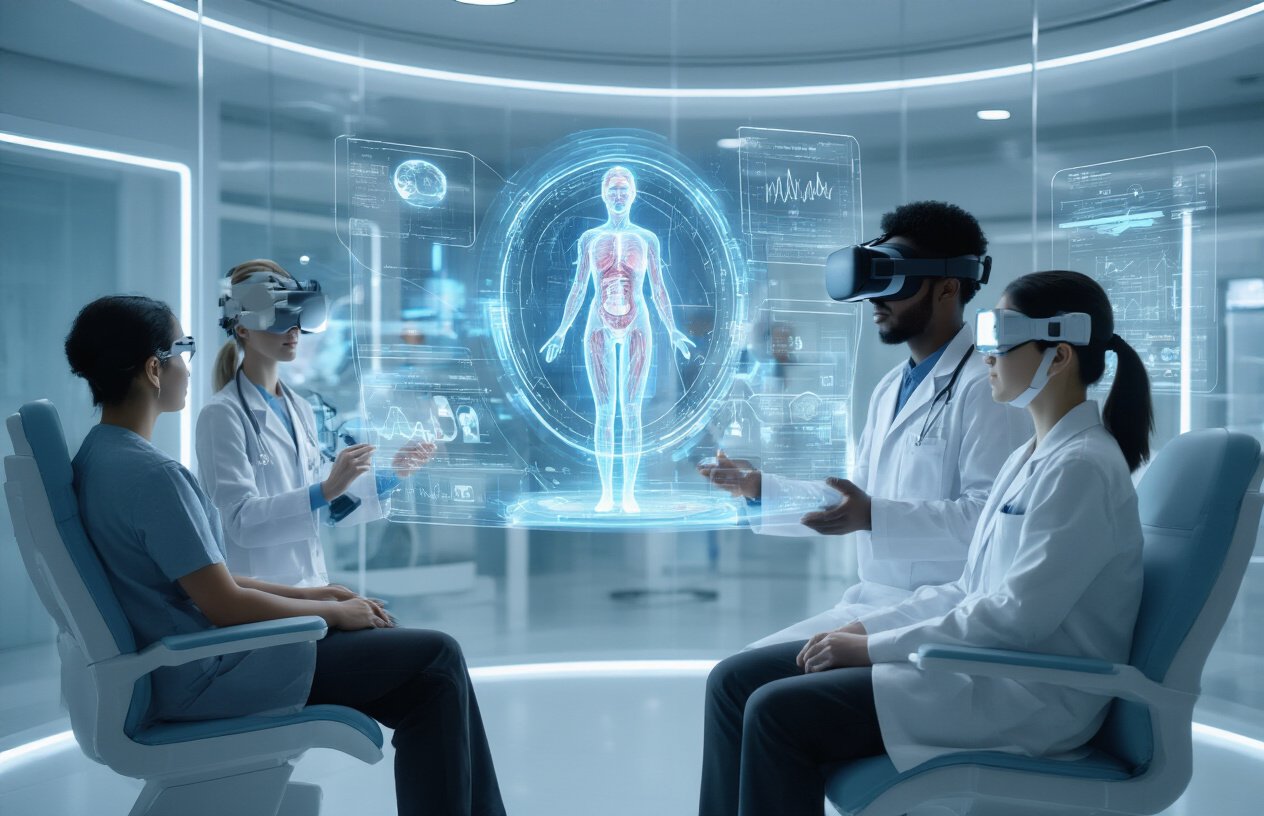
The metaverse is already making waves in healthcare, and we’re just getting started. From virtual therapy sessions that help people feel more comfortable opening up about mental health struggles to gamified fitness apps that make working out actually fun, this technology is changing how we think about wellness. Medical students can now practice surgeries in virtual operating rooms without any real-world risks, while patients receive more personalized care through innovative virtual applications.
Looking ahead, the possibilities seem endless. As virtual reality becomes more accessible and sophisticated, we’ll likely see even more creative solutions for everything from chronic pain management to remote consultations with specialists. If you’re curious about how this might affect your own healthcare journey, start paying attention to what your healthcare providers are offering – many are already integrating these tools into their practice. The future of health isn’t just digital; it’s immersive, and it’s happening right now.