June 15, 2025
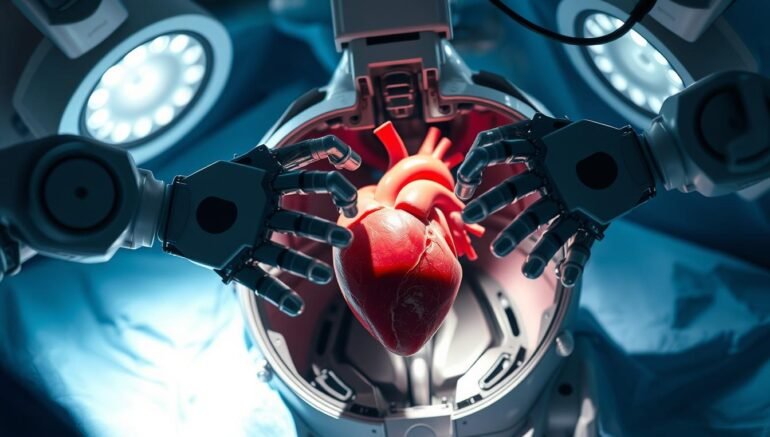
You might have heard about big changes in medical tech, like in cardiology. Robotic heart surgery is a big deal. It’s a new way to treat the heart that’s less invasive.
Imagine having a heart surgery that’s less painful and you heal faster. Thanks to cardiology advancements, this is now possible. Robotic systems help surgeons do detailed work with more accuracy.
This means you get a treatment that’s less invasive and has better results. In this article, we’ll dive into what robotic heart surgery is and its benefits.
Key Takeaways
- Robotic heart surgery is a minimally invasive treatment option.
- It offers reduced trauma, less pain, and faster recovery times.
- The technology enables surgeons to perform complex procedures with greater precision.
- Patients can benefit from improved outcomes.
- Robotic heart surgery represents a significant advancement in cardiology.
Understanding Robotic Heart Surgery
Robotic heart surgery has changed cardiology a lot. It gives surgeons new tools and helps patients get better results. This surgery uses robots to help with tough heart operations.
Definition and Basic Concepts
Robotic heart surgery uses robots, like the da Vinci Surgical System, to help surgeons. It lets them make smaller cuts and work more precisely. This means they can do detailed surgeries with better accuracy.
The system has a console for the surgeon, robotic arms for the patient, and a 3D vision system. This setup offers many benefits, like smaller cuts and less harm to the patient. It also lowers the chance of problems during surgery.
Historical Development of Robotic Cardiac Surgery
The first robotic heart surgeries happened in the late 1990s. The technology has grown a lot, with better systems and techniques. The da Vinci Surgical System has been key, getting FDA approval for many heart surgeries.
Robotic heart surgery is now more common, with many hospitals using it. This technology keeps getting better, opening up new ways to treat heart problems.
How Robotic Heart Surgery Works
Robotic heart surgery has changed cardiology a lot. It gives surgeons new tools for detailed operations. This method uses advanced tech to improve accuracy and cut down on invasiveness.
The da Vinci Surgical System
The da Vinci Surgical System is key in robotic heart surgery. It offers clear 3D images and robotic arms that move like the surgeon’s hands. The system has a surgeon’s console, a cart for the patient, and a 3D display.
Key Components of the da Vinci Surgical System:
- Surgeon’s console for intuitive control
- Patient-side cart with robotic arms
- High-definition 3D visualization system
Surgeon's Control and Interface
The surgeon’s console makes it easy to control the robotic arms. It’s designed to help surgeons do complex tasks with great precision. The system’s 3D images help a lot.
| Feature | Description | Benefit |
|---|---|---|
| High-Definition 3D Visualization | Provides clear and detailed images of the surgical site | Enhanced precision and accuracy |
| Intuitive Control Interface | Allows for natural hand movements translated into precise robotic actions | Reduced surgeon fatigue and improved dexterity |
| Robotic Arms | Mimics the surgeon’s movements with high fidelity | Precise dissection, suturing, and tissue manipulation |
Robotic Arms and Instruments
The da Vinci’s robotic arms have special tools for heart surgeries. These tools move like the surgeon’s hands, making surgery precise and delicate.
Using the da Vinci System, surgeons can do complex heart surgeries better. This means less harm to the patient and quicker recovery times.
Revolution in Cardiology: What Is Robotic Heart Surgery?
Robotic heart surgery is changing cardiology with a new approach. It makes surgeries less invasive, leading to quicker healing. Surgeons use advanced robots for precise and accurate procedures.
Minimally Invasive Approach
The minimally invasive nature of robotic heart surgery means smaller cuts. This reduces damage and speeds up healing. It also lowers the risk of complications and lessens pain after surgery.
Patients can get back to their lives faster. They enjoy a better quality of life.

Technological Innovations in Cardiac Care
Technological advancements have been key in robotic heart surgery. High-definition 3D views and precise tools help surgeons. These improvements lead to better results for patients.
Robotic systems in heart surgery are a big step forward. They combine new tech with skill. This offers patients less scarring, shorter stays, and quicker recovery.
Types of Heart Procedures Performed Robotically
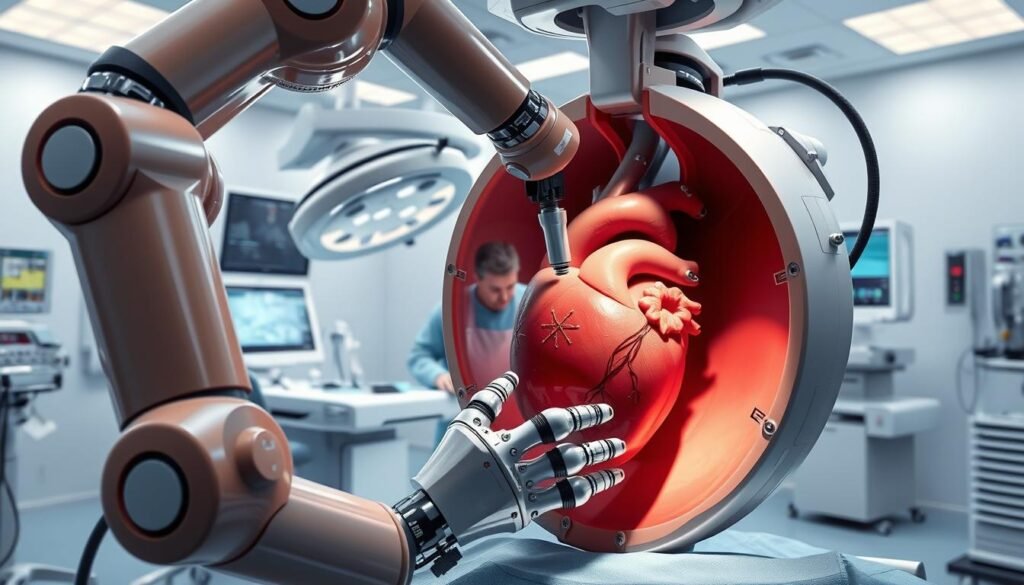
Robotic systems have changed heart surgery. Now, surgeons can do many procedures with more accuracy and control. This means patients have new, less invasive options for treating heart problems.
Mitral Valve Repair and Replacement
Mitral valve repair and replacement are key robotic surgeries. The mitral valve is vital for blood flow between heart chambers. Robotic surgery makes these repairs precise, cutting down on risks and speeding up recovery.
Robotic mitral valve repair uses the da Vinci Surgical System. It makes small incisions for precise repairs. This method reduces scarring and trauma, leading to shorter hospital stays and quicker recovery.
Coronary Artery Bypass Grafting (CABG)
Robotic CABG has also seen big improvements. It bypasses blocked arteries to improve heart blood flow. Robotic systems help with precise grafting and suturing, improving the surgery’s success.
Robotic CABG reduces complications and improves patient results. It allows for more accurate surgery, possibly avoiding future surgeries.
Atrial Septal Defect Repair
ASD repair fixes holes in the heart’s upper chambers. Robotic ASD repair is a less invasive option. It reduces the need for big incisions and long recovery times.
Robotic systems for ASD repair offer better precision and control. This leads to better patient results and fewer complications after surgery.
| Procedure | Benefits of Robotic Surgery | Outcomes |
|---|---|---|
| Mitral Valve Repair/Replacement | Minimally invasive, precise repairs | Faster recovery, reduced scarring |
| CABG | Enhanced precision, reduced trauma | Improved outcomes, fewer complications |
| ASD Repair | Minimally invasive, precise defect closure | Shorter hospital stays, quicker recovery |
Benefits and Advantages Over Traditional Surgery
Robotic heart surgery is a big step forward. It makes operations more precise and less invasive. As a patient, you’ll see many benefits over traditional surgery.
Reduced Trauma and Smaller Incisions
Robotic heart surgery uses smaller incisions and causes less tissue damage. This means you’ll feel less pain and have less scarring. Your recovery will be more comfortable.
Enhanced Precision and 3D Visualization
The robotic system offers enhanced precision with its 3D visualization. Surgeons can see the heart clearly in high definition. This helps them make more accurate repairs.
Faster Recovery and Shorter Hospital Stays
Robotic heart surgery leads to a faster recovery because of the smaller incisions. You’ll likely have a shorter hospital stay. This means you can get back home and recover faster.
| Benefits | Robotic Heart Surgery | Traditional Open-Heart Surgery |
|---|---|---|
| Incision Size | Smaller | Larger |
| Pain and Scarring | Less | More |
| Recovery Time | Faster | Slower |
| Hospital Stay | Shorter | Longer |
The benefits of robotic heart surgery make it a great choice for cardiac care. Knowing these advantages can help you decide on your treatment.
Patient Selection and Recovery Process
Choosing the right patient is key for robotic heart surgery success. As this surgery method grows, knowing who’s a good fit and what recovery is like is vital.
Ideal Candidates for Robotic Heart Surgery
Not everyone can have robotic heart surgery. It’s best for those with certain heart problems. These include mitral valve issues, some coronary artery bypasses, or atrial septal defects. Your doctor will check your health and condition to see if you’re a good candidate.
Potential Limitations and Contraindications
Robotic heart surgery has many benefits but also some limits. It’s not for everyone, like those with complex heart issues or previous surgeries. Also, severe obesity or lung disease can make it harder. Your team will look at these factors to decide if it’s right for you.
What to Expect During Recovery
Recovery from robotic heart surgery is usually quicker and less painful than traditional surgery. You’ll have smaller cuts, less blood loss, and less body trauma. Most people stay in the hospital for a few days to a week.
After surgery, you’ll get help with pain, watch for any problems, and start doing normal things again slowly. Your healthcare team will give you specific advice to help you heal well.
Knowing who’s a good fit and what recovery is like helps you make smart choices about your heart health. Robotic heart surgery is a big step forward in treating heart disease, bringing hope and better results for many.
Conclusion
Robotic heart surgery is a big step forward in cardiology. It offers better results and a gentler way to treat patients. This technology could greatly improve care and life quality for those with heart issues.
The use of robots in heart surgery has changed the game. Surgeons now have better precision and can see in 3D. As this technology grows, it will play a bigger role in cardiology, opening up new options for patients and doctors.
As cardiology keeps getting better, robotic heart surgery will likely play an even bigger part. It will help treat more heart problems in a less invasive way. Knowing about robotic heart surgery can help you make better choices for your heart health.
FAQ
What is robotic heart surgery?
Robotic heart surgery uses robotic systems, like the da Vinci Surgical System. It helps surgeons do complex procedures with more precision and accuracy.
What are the benefits of robotic heart surgery?
It offers less trauma, less pain, and faster recovery. This is because it’s a minimally invasive method. The robotic system also provides better 3D visualization.
What types of heart procedures can be performed robotically?
Robotic heart surgery can be used for many procedures. These include fixing the mitral valve, bypassing coronary arteries, and repairing atrial septal defects.
How does the da Vinci Surgical System work?
The da Vinci System has a surgeon’s console, a patient cart, and a 3D visualization system. It lets surgeons control robotic arms for precise procedures.
Who is a suitable candidate for robotic heart surgery?
People with specific heart conditions, like mitral valve disease or coronary artery disease, are good candidates. They should not have complex heart anatomy or previous heart surgery.
What can I expect during the recovery process after robotic heart surgery?
Expect less pain, less scarring, and shorter hospital stays. You’ll also get clear instructions on post-operative care and rehabilitation for a smooth recovery.
Are there any other limitations or contraindications for robotic heart surgery?
Yes, complex heart anatomy or previous heart surgery might be limitations. These need to be evaluated to see if robotic surgery is suitable.