
May 30, 2025
Modern nutrition is complex, and a paradox has appeared. Many teenagers are overfed yet undernourished. They eat a lot of calories but miss out on key nutrients for growth.
The digital age has changed how teens eat. Processed snacks are now a big part of their diet. This shift has big effects on their health, leading to more micronutrient deficiency.
We will look into how these eating habits, shaped by digital snacking, impact teens’ health. We’ll also see what it means for their future.
Key Takeaways
- Teens are often overfed but lack essential nutrients.
- Processed snacks are a significant contributor to poor nutrition.
- Digital snacking habits are changing the way teens eat.
- Micronutrient deficiency can have long-term health implications.
- Understanding the causes is crucial to addressing the issue.
The Paradox of Modern Teen Nutrition
Today’s teens face a nutritional paradox. They eat high-calorie foods that lack important nutrients. This issue is at the core of the growing problem of micronutrient deficiency in teens. It shows that the problem isn’t just how much they eat, but what they eat.
Overfed Yet Undernourished: Understanding the Contradiction
The term “overfed yet undernourished” points out the gap between calories and nutrients in teens. Many teens eat high-calorie, nutrient-poor foods. This leads to a lack of vital vitamins and minerals. It can cause health problems like fatigue, weak immune systems, anemia, and osteoporosis.
- High consumption of processed and fast foods
- Lack of essential micronutrients like iron, vitamin D, and calcium
- Increasing prevalence of diet-related health issues
The Digital Age Impact on Teen Eating Patterns
The digital age has changed how teens eat. Social media and screen time play big roles. Teens see unhealthy food ads, leading to cravings for convenience and processed foods. Digital distractions also cause mindless eating, making the nutrient deficiency worse.
Understanding Micronutrient Deficiency in Teens
It’s important to know about micronutrient deficiency in teens. This issue can affect their health and happiness. During adolescence, teens need the right mix of nutrients to grow and develop well.
What Are Micronutrients and Why They Matter
Micronutrients are important vitamins and minerals. They help our bodies work right, from making energy to fighting off sickness. Iron, vitamin D, and calcium are especially important for teens.
Prevalence Rates Among American Teenagers
Research shows many American teens don’t get enough nutrients. A big number of them lack key vitamins and minerals. Here’s a look at how common these deficiencies are:
| Micronutrient | Prevalence Rate |
|---|---|
| Iron | 15% |
| Vitamin D | 40% |
| Calcium | 25% |
The Critical Role of Micronutrients During Adolescent Development
Micronutrients are key for teens’ growth, health, and brain development. A top nutrition expert says,
“Adequate micronutrient intake is essential for ensuring that teenagers reach their full potential and maintain optimal health.”
Getting enough nutrients during these years is vital for teens’ long-term health.
Most Common Micronutrient Deficiencies in Adolescents
Teenagers face many challenges, including micronutrient deficiencies. These are key for their growth. Deficiencies can harm their health and quality of life.
Iron Deficiency and Teen Development
Iron deficiency is common among teens. It causes anemia, fatigue, and affects learning. It’s important for teens to get enough iron.
Vitamin D: The Sunshine Nutrient Crisis
Vitamin D deficiency is growing. It’s vital for bones and immune health. Teens often lack it due to less sun and diet.
Calcium Deficiency and Bone Health
Calcium is crucial for bones. Deficiency can weaken bones and increase osteoporosis risk. Teens need enough calcium for growth.
B Vitamins and Brain Function
B vitamins are key for the brain, energy, and nerves. Lack of them can cause fatigue and neurological issues. It affects both body and mind.
Zinc, Magnesium, and Other Critical Minerals
Zinc and magnesium are often lacking in teens. Zinc helps the immune system and healing. Magnesium is important for muscles, nerves, and bones.
| Micronutrient | Primary Function | Consequences of Deficiency |
|---|---|---|
| Iron | Oxygen transport and energy production | Anemia, fatigue, impaired cognitive function |
| Vitamin D | Bone health and immune function | Weakened bones, increased risk of infections |
| Calcium | Bone development and density | Weakened bones, risk of osteoporosis |
| B Vitamins | Brain function, energy production | Fatigue, weakness, neurological issues |
| Zinc | Immune function, wound healing | Impaired immune response, slow healing |
| Magnesium | Muscle and nerve function, bone health | Muscle cramps, weakness, bone issues |
Knowing about these deficiencies is the first step. A balanced diet can help teens avoid these issues. It supports their health and growth.
The “Digital Snacking” Phenomenon
Digital snacking is becoming more common among teens. It happens when they eat while using digital devices. This behavior is linked to more screen time and social media’s influence. It often leads to mindless eating and unhealthy food choices.
How Screen Time Affects Eating Habits
Teens spend a lot of time in front of screens. They watch videos, scroll through social media, or play games. This can lead to mindless eating. They might not notice when they’re full or make unhealthy choices.
Mindless Eating in the Age of Social Media
Social media can influence what teens eat. Food ads and meal sharing online can encourage impulsive eating behaviors. Digital distractions also make teens less aware of their hunger or fullness.
The Psychology Behind Digital Distraction and Food Choices
Digital distractions affect food choices in complex ways. When teens are distracted, they eat more unhealthy snacks. Studies show that distracted eating leads to overeating.
| Factors Influencing Digital Snacking | Effects on Teen Nutrition |
|---|---|
| Increased screen time | Mindless eating and overeating |
| Social media influence | Impulsive food choices and unhealthy eating habits |
| Digital distraction | Disconnection between hunger and eating |
Processed Foods: The Micronutrient Thieves
Teenagers are eating more processed foods, which can lead to a lack of important nutrients. These foods are often full of calories but short on vitamins and minerals. They have become a big part of many teens’ diets.
Nutritional Profile of Popular Teen Snacks
Snacks like chips, cookies, and energy bars are full of added sugars, sodium, and unhealthy fats. They are made from refined grains and don’t have the vitamins and minerals teens need.
| Snack | Calories | Sodium (mg) | Sugar (g) |
|---|---|---|---|
| Chips (1 oz) | 160 | 170 | 1 |
| Cookies (1 medium) | 120 | 50 | 7 |
| Energy Bar (1 bar) | 250 | 200 | 15 |
Food Processing and Nutrient Depletion
Food processing can strip away nutrients. For example, refining grains takes out fiber, vitamins, and minerals. High-heat processing can also destroy vitamins like C and B.
Nutrient depletion makes foods less healthy. It’s a big problem because it reduces the nutritional value of what we eat.
Marketing of Processed Foods to Teenagers
Marketing to teens is clever, using appealing packaging and celebrity endorsements. Social media campaigns also play a big role. These tactics make processed foods seem cool and easy to grab.
To fight micronutrient deficiency, knowing what teens eat and how they’re marketed is key. It helps us make better choices for their health.
Physical Consequences of Micronutrient Deficiencies
Micronutrient deficiencies can harm teenagers’ health and growth. They can cause both short-term and long-term problems. These issues affect how well a teen feels and grows.
Short-term Effects on Teen Bodies
The short-term effects of not getting enough nutrients include feeling tired, having a weak immune system, and slow healing. For example, not enough vitamin C can cause scurvy. This makes teens feel weak and tired.
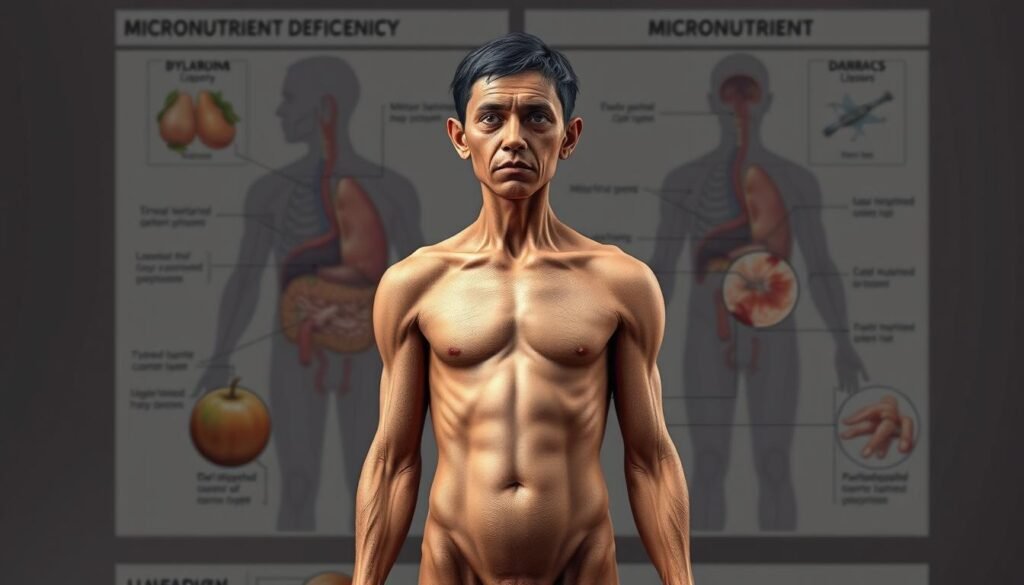
Long-term Health Implications
Long-term, not getting enough nutrients can lead to serious health problems. Not enough calcium and vitamin D can cause bones to weaken and break easily. It’s important to fix these problems early to avoid these issues.
Impact on Athletic Performance and Physical Development
Micronutrient deficiencies also hurt teens’ sports performance and growth. For example, not enough iron can make it hard to keep going during sports. It’s key for teens who play sports to get the right nutrients.
“Nutrition is the key to optimal performance, and deficiencies can significantly hinder athletic potential.”
Cognitive and Emotional Impact of Poor Micronutrition
Poor micronutrition can harm teenagers’ minds and feelings deeply. It’s not just about physical health. It also affects mental health and school performance.
Academic Performance and Concentration
Not getting enough nutrients can make it hard for teens to focus and do well in school. Iron, zinc, and B vitamins are key for the brain. For example, not enough iron can lower IQ and hurt school grades. It’s vital to eat enough of these nutrients for good brain work.
| Micronutrient | Role in Cognitive Function | Effects of Deficiency |
|---|---|---|
| Iron | Essential for healthy brain development and function | Poor concentration, lower IQ |
| Zinc | Critical for neuronal function and synaptic plasticity | Impaired cognitive development, memory issues |
| B Vitamins | Important for neurotransmitter synthesis and energy production | Fatigue, decreased academic performance |
Mood Regulation and Mental Health
The emotional side of not getting enough nutrients is big. Not enough omega-3s and vitamin D can lead to more depression and anxiety in teens. These nutrients help keep mood stable and mental health good.
Sleep Quality and Micronutrients
Nutrients also help with sleep. Magnesium and calcium help relax and improve sleep. Bad sleep can hurt brain work and feelings, showing why nutrients are key for health.
Knowing how poor nutrition affects teens helps us support them better. This support is crucial for their success in school and life.
Identifying Deficiencies: Signs Parents Should Watch For
Parents are key in spotting micronutrient deficiencies in teens. They should watch for changes in behavior and health. Catching these signs early can stop long-term health problems.
Physical Symptoms of Common Deficiencies
Some common signs of micronutrient deficiencies in teens include fatigue, pale skin, and brittle hair. For example, iron deficiency can cause pale skin and fatigue. Lack of vitamin D can lead to bone pain and muscle weakness. It’s important to watch for these signs and see a doctor if they don’t go away.

Behavioral Changes That Signal Nutritional Problems
Behavioral changes can also show micronutrient deficiencies. Teens might get irritable, have trouble focusing, or feel moody. This could be due to a lack of omega-3 fatty acids or B vitamins. Keeping a food diary can help spot diet and behavior links.
- Irritability and mood swings
- Lack of concentration and focus
- Changes in appetite or eating habits
When to Consult a Healthcare Provider
If your teen shows lasting physical or behavioral changes, see a doctor. They can do tests to find out what’s missing. Early action can greatly help your teen’s health.
Practical Strategies for Improving Teen Micronutrient Intake
To boost micronutrient intake in teens, we need a mix of diet changes, supplements, and less screen time. Micronutrient gaps can harm their health, growth, and school success.
Rebuilding Healthy Eating Habits
It’s key to get teens to eat more nutrient-rich foods. This means encouraging fruits, veggies, whole grains, lean proteins, and healthy fats. Parents can help by eating well themselves and getting teens involved in cooking.
Smart Supplementation: When and How
Supplements can help with specific nutrient gaps. But, we should use them carefully and with a doctor’s advice. For example, iron and vitamin D are often given to teens, based on their needs.
Digital Detox for Better Nutrition
Less screen time at meals can make eating better. Mindful eating helps teens eat healthier. This means no phones at dinner and a nice place to eat.
Family-Based Approaches to Nutrition Improvement
Getting the whole family involved in healthy eating is great. Sharing meals and planning together can make it fun. Families can also cut down on junk food and focus on whole foods.
With these steps, we can help teens get the nutrients they need. This supports their health and growth.
Working With Healthcare Providers
Healthcare providers are key in tackling micronutrient deficiencies in teens. They offer expert advice and support. This ensures teens get the nutrients they need for good health and growth.
Nutritional Assessment and Testing Options
Healthcare providers do detailed nutritional assessments to spot micronutrient gaps. These assessments might include:
- Dietary evaluations
- Blood tests to check for specific nutrient deficiencies
- Physical examinations to identify signs of malnutrition
These tests help healthcare providers figure out the extent of the deficiency. They then create a treatment plan.
Treatment Approaches for Specific Deficiencies
Treatment plans are made to tackle specific micronutrient gaps. For example, iron deficiency might be treated with iron supplements. Vitamin D deficiency could need vitamin D supplements or more sun.
Healthcare providers suggest the best treatment based on the diagnosis.
Creating a Long-term Nutrition Plan
A long-term nutrition plan is vital for keeping micronutrient levels right. Healthcare providers work with families to create personalized plans. These plans include dietary changes, supplements, and regular check-ups to track progress.
Conclusion: Nourishing the Next Generation
Micronutrient deficiency in teens is a big problem. It affects their health now and their future well-being. The issue of being overfed but undernourished shows we need a better way to tackle this.
We can start by teaching teens to eat healthily. We should also watch how digital snacking affects them. Working with doctors to find and fix these deficiencies is key. Making sure teens get the right nutrients is essential for their growth.
Helping teens get the nutrients they need can boost their health. It gives them the energy and focus to do well in school and sports. By working together, we can help our teens grow strong and healthy.
FAQ
What are the most common micronutrient deficiencies in adolescents?
The most common deficiencies are iron, vitamin D, and calcium. B vitamins, zinc, and magnesium are also key. They are vital for our bodies and growth.
How does digital snacking affect teen nutrition?
Digital snacking leads to eating without thinking. Teens often choose processed foods. These foods are high in calories but low in nutrients.
What are the physical consequences of micronutrient deficiencies in teens?
Deficiencies can cause fatigue and affect bone health. They can also lower athletic performance.
Can micronutrient deficiencies affect a teen’s mental health and academic performance?
Yes, they can. Deficiencies can harm cognitive function and mood. They can also affect sleep and academic success.
How can parents identify micronutrient deficiencies in their teens?
Look for signs like pale skin, fatigue, or brittle hair. Also, watch for mood swings or trouble focusing. If worried, see a doctor.
What strategies can improve micronutrient intake among teens?
Encourage healthy eating and smart supplements. Try to reduce screen time. Involve the whole family in nutrition efforts.
How can healthcare providers assist in addressing micronutrient deficiencies?
Doctors can check nutritional levels and find deficiencies. They can then create plans for treatment, including supplements and diet changes.
Are there any long-term benefits to addressing micronutrient deficiencies in teens?
Yes, fixing these issues can improve health and development. It can also lower the risk of chronic diseases later.