March 27, 2025
Did you know heart disease is the top killer for adults in the US1? This fact shows how vital it is to keep your heart healthy with the right food. By choosing wisely, we can lower heart disease risks and stay well.
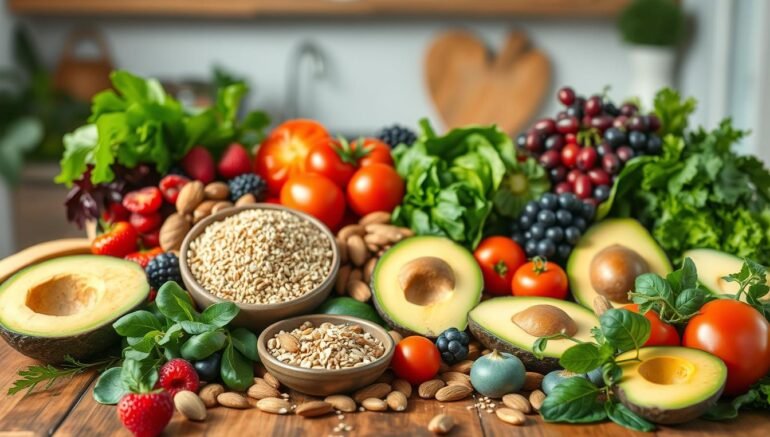
Eating heart-healthy isn’t about cutting out food. It’s about picking foods that are good for you and your heart. Foods like colorful veggies, lean proteins, and whole grains are key. Let’s look at how these foods can help your heart.
The American Heart Association says to eat lots of fruits, veggies, whole grains, lean proteins, and healthy fats for a healthy heart2. By eating less sodium, saturated fats, and sugars, you can help your heart stay strong.
In this guide, we’ll talk about the best foods for your heart and the ones to avoid. You’ll learn how to make better food choices and control your portions. Remember, small changes can make a big difference in your heart health.
Key Takeaways
- Heart disease is the leading cause of death for US adults
- A heart-healthy diet focuses on fruits, vegetables, whole grains, and lean proteins
- Limiting sodium, saturated fats, and added sugars is crucial
- Increasing leafy green vegetable intake is linked to lower heart disease risk
- Whole grains can significantly reduce coronary heart disease risk
- Portion control and smart food choices are key to heart health
Understanding the Basics of Heart-Healthy Nutrition
A heart-healthy diet is key to keeping your heart in top shape. By choosing the right foods, we can lower our risk of heart disease. This improves our overall health.
The Role of Diet in Cardiovascular Health
Why Portion Control Matters
Essential Nutrients for Heart Health
Some nutrients are crucial for heart health:
- Dietary fats: Choose unsaturated fats from olive oil and nuts.
- Antioxidants: Found in fruits and veggies, they protect heart cells.
- Fiber intake: Aim for 25-30 grams daily for heart health5.
| Nutrient | Recommended Daily Intake | Benefits |
|---|---|---|
| Fiber | 25-38 grams | Lowers cholesterol, regulates blood sugar |
| Omega-3 Fatty Acids | 2 servings of fatty fish per week | Reduces inflammation, lowers triglycerides |
| Antioxidants | 5+ servings of fruits and vegetables | Protects cells from damage, reduces heart disease risk |
By grasping these basics and making smart food choices, we can greatly boost our heart health through nutrition.
Heart-Healthy Foods: What to Eat and What to Avoid
Your food choices are key to a healthy heart. With heart disease being a top killer in the U.S., knowing what to eat is crucial6.
Vegetables and Fruits to Embrace
Fruits and vegetables are packed with nutrients good for your heart. The American Heart Association says to eat 4-5 servings of each every day6. They’re full of fiber, vitamins, and minerals that help your heart stay healthy.
Whole Grains and Fiber-Rich Foods
Whole grains and foods high in fiber are great for your heart. Men should get 38 grams of fiber daily, and women 25 grams6. Add oats, quinoa, and brown rice to your meals to hit these targets.
Lean Proteins and Plant-Based Options
Choose lean proteins and plant-based foods for heart health. The American Heart Association recommends eating fatty fish twice a week to lower heart disease risk6. Plant-based diets, with lots of legumes, nuts, and seeds, are also good for protein and reducing sodium.
Healthy Fats and Oils Selection
“Let food be thy medicine and medicine be thy food.” – Hippocrates
A heart-healthy diet is all about balance and moderation. By choosing the right foods, focusing on plant-based diets, reducing sodium, and getting enough omega-3 fatty acids, you can greatly improve your heart health and overall well-being.
Smart Substitutions for Better Heart Health
Making smart food choices is key to a healthy heart. Swapping out certain ingredients can greatly improve your nutrition. This supports your heart health. Let’s look at some easy substitutions that can make a big difference.
Replacing Saturated Fats with Healthy Alternatives
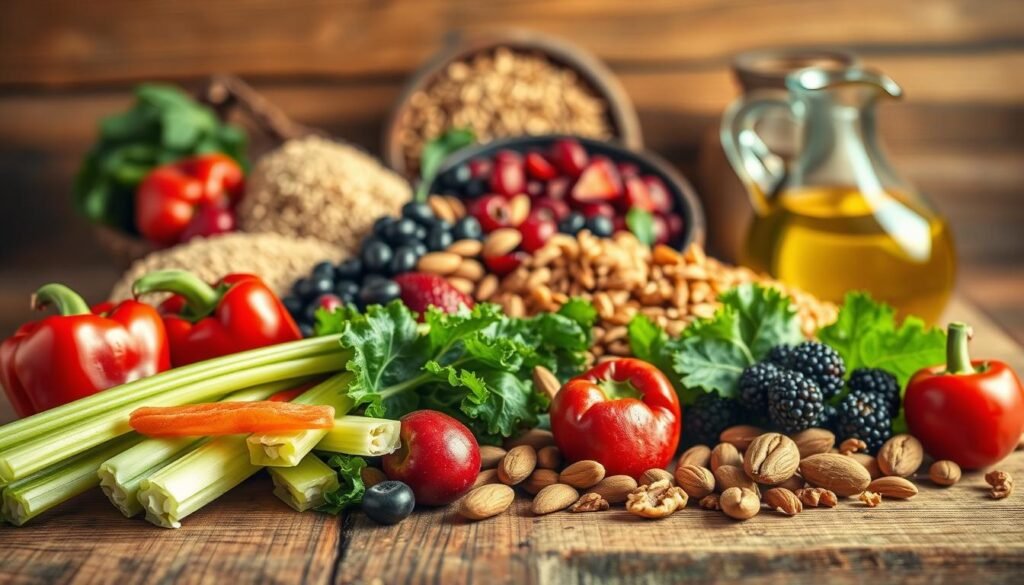
Reducing saturated fats is crucial for heart health. Try using fat-free or low-fat milk with a tablespoon of liquid vegetable oil8. For baking, swap butter with soft tub margarine low in saturated fat or use vegetable oil8. These changes can help lower your “bad” cholesterol levels, a major risk factor for heart disease9.
Low-Sodium Alternatives
Sodium reduction is essential for heart health. Replace fried tortilla chips with baked, low-sodium versions8. Opt for no-salt pretzels or baked potato chips instead of regular potato chips8. When dining out, ask for sauces on the side to control your sodium intake8. These small changes can significantly impact your overall salt consumption.
Heart-Friendly Dairy Options
Dairy products can be part of a heart-healthy diet when chosen wisely. Replace sour cream with low-fat, unsalted cottage cheese mixed with fat-free yogurt8. For a creamy soup alternative, try low-sodium, broth-based soups packed with vegetables8. These substitutions maintain flavor while supporting better nutrition and heart health.
Remember, small changes can lead to big results. Incorporating nuts into your diet may lower your risk of cardiovascular disease by 14%, while enjoying chocolate in moderation could reduce the risk of heart-related issues by 11%9. By making these smart substitutions, you’re taking significant steps towards a healthier heart.
Creating a Heart-Healthy Meal Plan
Building a heart-healthy meal plan is key to improving cardiovascular health. The right balance of nutrients can make a big difference. A diet rich in plant-based foods and low in processed items can lower heart disease risk by 16%10.
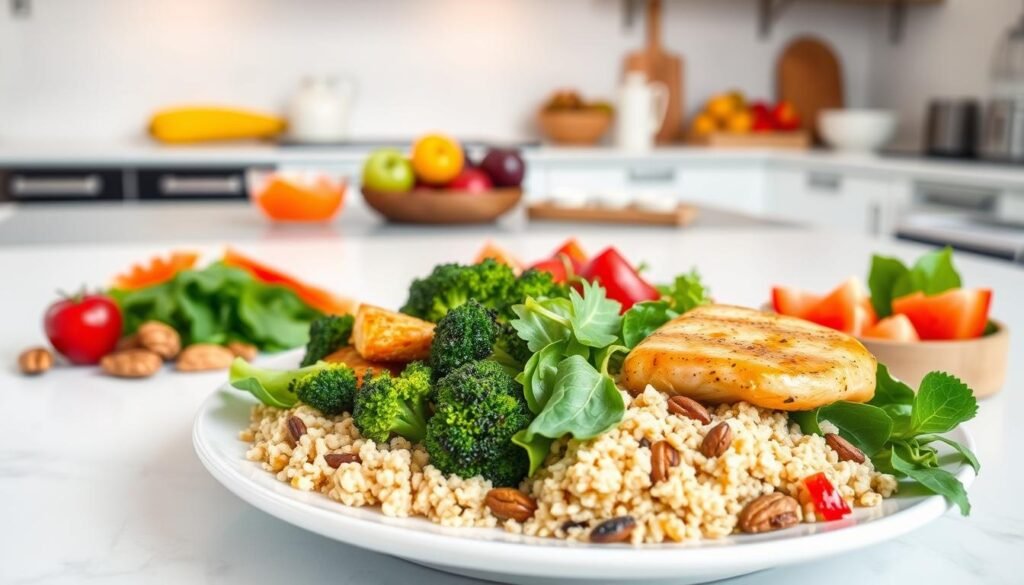
Start by filling half your plate with colorful fruits and vegetables. Add a quarter of whole grains and a quarter of lean protein. This mix provides essential nutrients and helps with portion control. Aim for at least 28 grams of fiber daily to support heart health11.
Remember, a heart-healthy diet isn’t just about restrictions. It’s about enjoying nutritious, tasty foods that nourish your body. With smart choices and portion control, you can create meals that are both delicious and good for your heart.
Conclusion
Eating heart-healthy foods is a big step towards better heart health. The American Heart Association suggests eating 4-5 servings of veggies daily and 2 servings of oily fish weekly. These steps can greatly lower your risk of heart disease.
Even small changes can make a big difference. Cutting down on added sugars to 10% of your daily calories and choosing whole grains can help a lot14. Heart-healthy eating is about making good choices, not cutting out foods. By focusing on nutrient-rich foods and portion control, you’re not just eating right. You’re investing in your health and happiness for the long run.
FAQ
What are the top heart-healthy foods I should include in my diet?
Include leafy greens, berries, and fatty fish in your diet. Also, add whole grains, nuts, seeds, and legumes. These foods are full of nutrients that help your heart stay healthy.
How does portion control affect heart health?
Portion control is key for heart health. It helps keep your weight in check and stops overeating. Eating the right amount can lower risks of obesity, high blood pressure, and high cholesterol.
What types of fats are best for heart health?
Choose unsaturated fats for heart health. These include monounsaturated and polyunsaturated fats. Find them in olive oil, avocados, nuts, seeds, and fatty fish. They help lower bad cholesterol and reduce inflammation.
How can I reduce sodium in my diet for better heart health?
Use herbs and spices for flavor instead of salt. Pick fresh or frozen veggies over canned ones. Read labels for low-sodium options. Limit processed and restaurant foods. Slowly getting used to less salt can help.
Are plant-based diets beneficial for heart health?
Yes, plant-based diets are great for heart health. They’re rich in fiber, vitamins, and antioxidants. They’re also low in saturated fats. This diet can lower heart disease risks.
How much fiber should I aim for in a heart-healthy diet?
Aim for 25 to 30 grams of fiber daily. Find it in whole grains, fruits, veggies, legumes, and nuts. Enough fiber can lower cholesterol and improve heart health.
Can I still eat dairy products on a heart-healthy diet?
Yes, you can eat dairy on a heart-healthy diet. Choose low-fat or fat-free options for less saturated fat. Plant-based milk alternatives are also good choices.
What are some easy heart-healthy food substitutions I can make?
Make easy swaps like olive oil for butter and whole grain bread for white. Choose nuts over chips and Greek yogurt over sour cream. Opt for lean meats or plant-based proteins.
Source Links
- 17 Incredibly Heart-Healthy Foods – https://www.healthline.com/nutrition/heart-healthy-foods
- 8 steps to a heart-healthy diet – https://www.mayoclinic.org/diseases-conditions/heart-disease/in-depth/heart-healthy-diet/art-20047702
- Heart-Healthy Foods: Shopping List – MyHealthfinder – https://odphp.health.gov/myhealthfinder/health-conditions/heart-health/heart-healthy-foods-shopping-list
- Heart-Healthy Diet Plans – https://health.clevelandclinic.org/heart-healthy-diet
- Eating Right for Your Heart – https://www.ucsfhealth.org/education/eating-right-for-your-heart
- Foods to Eat & Foods to Avoid for a Heart Healthy Diet – https://www.unitypoint.org/news-and-articles/foods-to-love-foods-to-avoid-for-a-heart-healthy-diet-infographic
- The American Heart Association Diet and Lifestyle Recommendations – https://www.heart.org/en/healthy-living/healthy-eating/eat-smart/nutrition-basics/aha-diet-and-lifestyle-recommendations
- Smart Substitutions to Improve Nutrition Without Sacrificing Taste – https://www.heart.org/en/healthy-living/healthy-eating/cooking-skills/cooking/smart-substitutions-to-eat-healthy
- 5 Heart-Healthy Food Swaps – https://www.hopkinsmedicine.org/health/wellness-and-prevention/5-hearthealthy-food-swaps
- Heart Healthy Diet: Tips, Meal Plan to Prevent Heart Disease – https://www.healthline.com/nutrition/a-heart-healthy-diet-food-lists-diet-tips-and-more
- 7-Day Heart-Healthy Meal Plan, Created by a Dietitian – https://www.eatingwell.com/article/289245/7-day-heart-healthy-meal-plan-1200-calories/
- A Heart-Healthy Diet for Cardiovascular Disease Prevention: Where Are We Now? – https://pmc.ncbi.nlm.nih.gov/articles/PMC10128075/
- What should I eat to avoid heart disease? – https://www.escardio.org/The-ESC/Press-Office/Press-releases/what-should-i-eat-to-avoid-heart-disease
- Cardiac diet: What is it? Foods to eat and limit, plus planning a diet – https://www.medicalnewstoday.com/articles/cardiac-diet